Skip to content
maxnews
Rankings

What 'Monster: The Lizzie Borden Story' Gets Right (But Mostly Wrong)

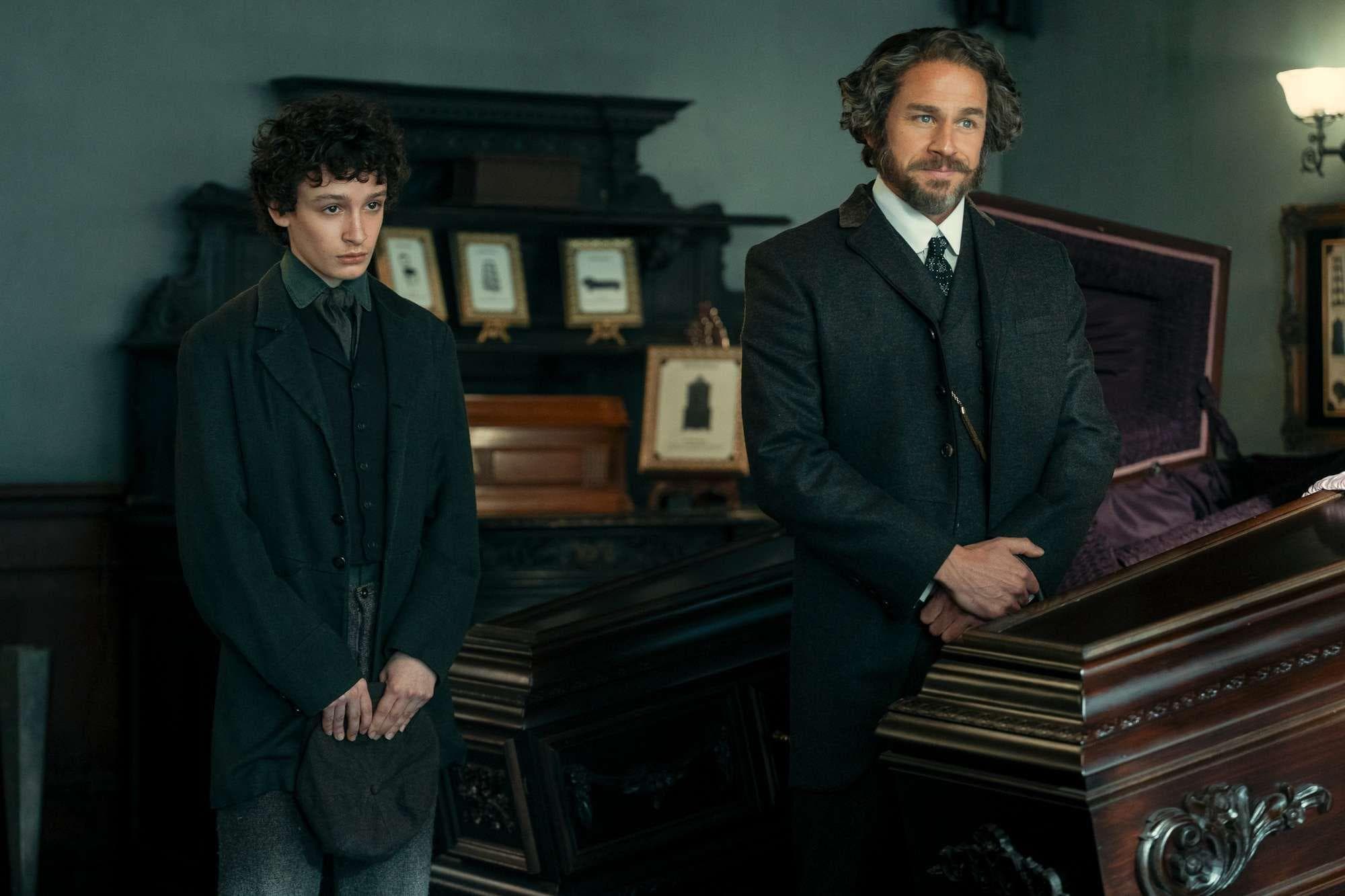
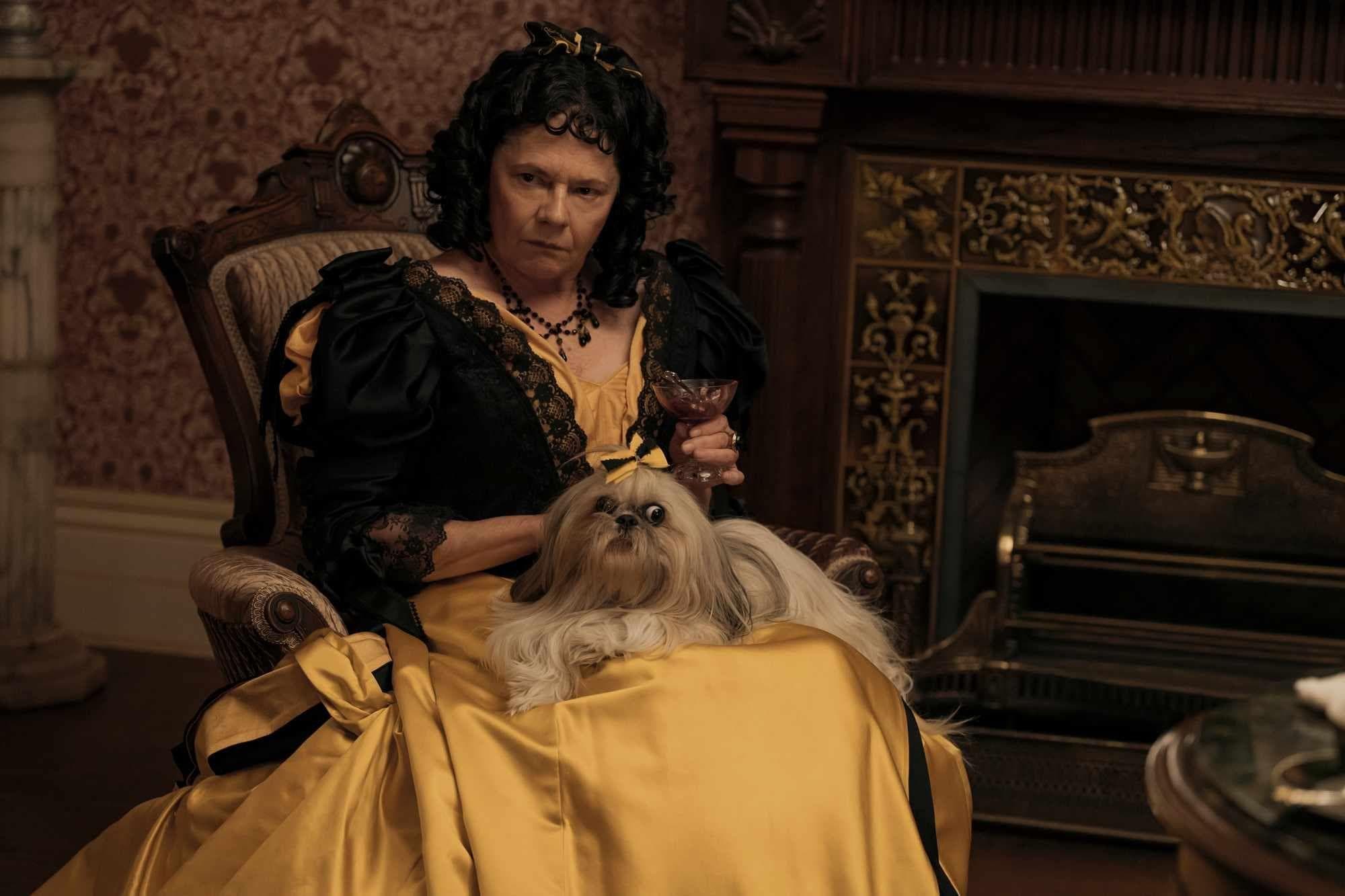
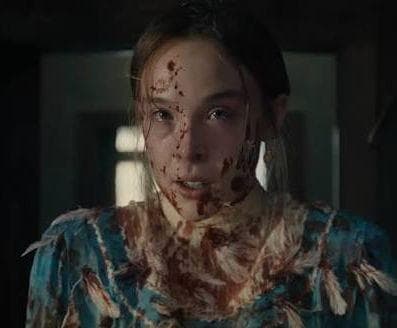
Monster: The Lizzie Borden Story, the fourth iteration of the anthology series, purports to tell what happened to Andrew and Abby Borden on the day they were killed. The show opens up with their murders - at the hands of Lizzie Borden. Lizzie Borden was later put on trial for killing both Andrew and Abby, ultimately acquitted for the crimes. That may be the biggest error in Monster: The Lizzie Borden Story - the implication that Lizzie did it. There are numerous other elements introduced into The Lizzie Borden Story that incorrect. Morsels of truth exist the eight-episode arc, but what the show gets wrong largely outweighs what it got right.

Entries
10
Votes
1.1K
Updated
yesterday

Tap upor downto vote. Your vote is added to Ranker's counts.

Voting identifies your browser with an anonymous fingerprint, stored only as a salted hash, to count one per visitor. Privacy

Source: Ranker, ranked by its voters.

  1. 1

    Emma Borden Defended Lizzie During Her Trial And For The Rest Of Their Lives
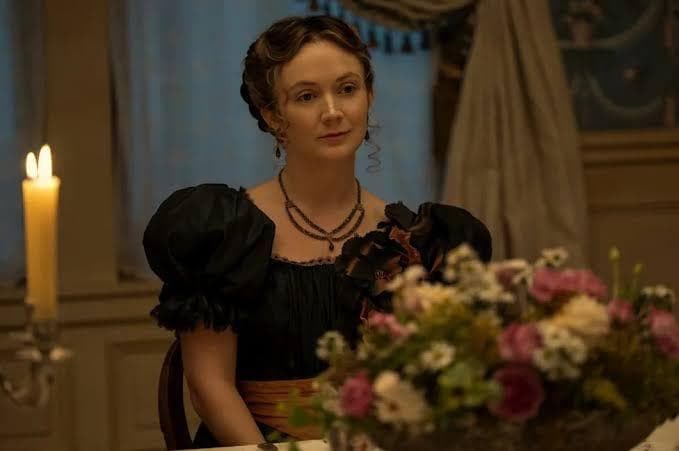
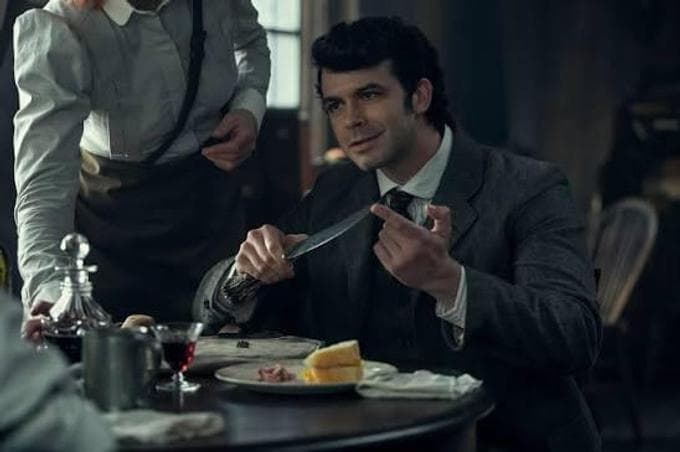
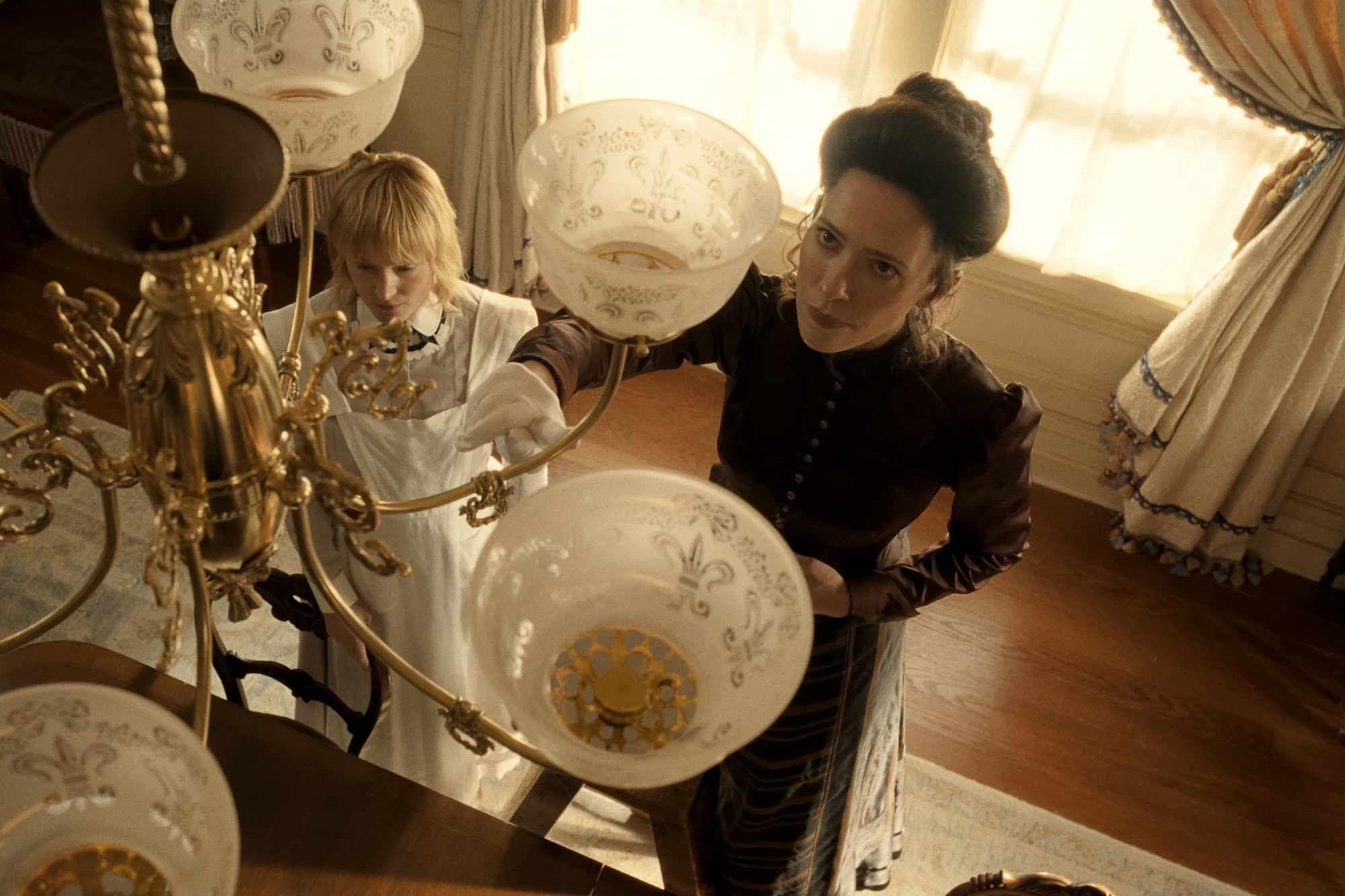
    The part of Monster: The Lizzie Borden Story where Emma Borden screams and accosts Lizzie for killing their parents never happened. Emma was steadfast in her defense of Lizzie, testifying on her behalf and even using her inheritance money to help pay her sister's legal fees. Both Emma and Lizzie came into money after the death of their father and stepmother, even though the former died without a will. Andrew Borden, depicted as a furniture and coffin maker - as well as part-time undertaker - did take part in those vocations. He made his money working in banking and various business ventures, however, and his wealth was one of the theories about why Lizzie may have had a motive to kill him and Abby. At Lizzie's trial, Emma was asked whether or not "relations between you and Lizzie and your stepmother as cordial" after their father their father paid $1,500 to help Abby secure a house she had inherited. Emma confirmed that Lizzie did stop calling Abby "Mother" around the time of that occurrence, but didn't go as far as to say there was obvious animosity between Lizzie and Abby. One of the major points of contention during the trial was the fate of Lizzie's "bloodstained" dress. Emma countered statements made by the Borden's neighbor, Alice Russell, that Lizzie, in fact, burned a dress that had been soiled. That said, Russell did not say she saw blood on the dress. She did, later, tell Lizzie that burning the dress was "the worst thing you could have done." According to Emma, Lizzie disposed of the dress because it was "very dirty, very much soiled and badly faded" as well as had paint on it. After Lizzie was acquitted, Emma was perhaps more reclusive than her sister. Roughly a decade older than Lizzie, Emma never married. She died less than a fortnight after Lizzie passed away in 1927.
    99% upvoted
  2. 2

    John Morse, Lizzie's Uncle, Was A Suspect In The Killing Of Andrew And Abby Borden

    John Morse, the brother of Andrew Borden's first wife, Sarah, arrived at the Borden household on the day before his former brother-in-law and his second wife were killed. As a result, he was one of the last people to see either one of them alive. He was subsequently considered as a suspect in their deaths, but he provided an alibi. Morse was a butcher, something that remains talked about in contemporary speculation about the Borden deaths, and needed money. Morse, who was a witness for the prosecution, was described as "elusive" in a 2004 volume of The Hatchet: Journal of Lizzie Borden Studies. On the morning of the murders, Morse, went to the post office; then to Weybosset Street, to see my nephew and niece. It is about a mile and a quarter distant, and I walked. My nephew was out, but I called on my niece, staying until about 11:20. When he returned to the Borden house, per his testimony, Morse was told: that something had happened. I went in and saw the body of Mr. Borden; then I went up the front stairs far enough so I could look under the bed and see Mrs. Borden. This was the bed where I slept the night before. When I had gone up the stairs so that my head was four or six inches above the floor, I could see her body. I had been told she was there.

    95% upvoted
  3. 3

    Nothing Suggests Lizzy's Stepmother, Abby, Was Physically Abusive

    Lizzie Borden and her stepmother, Abby, did not have a good relationship, but it wasn't physically abusive according to historical evidence. Abby married Andrew Borden just over two years after the loss of his first wife, Sarah. Abby was controlling but didn't verbally or physically abuse Lizzie; her older sister, Emma; or any of their servants. At Lizzie's trial, prosecutors stated: There was or came to be between prisoner and stepmother an unkindly feeling. From the nature of the case it will be impossible for us to get anything more than suggestive glimpses of this feeling from outsiders. The daughters thought that something should be done for them by way of dividing the property after they had learned that the stepmother had been amply provided for. Then came a division and ill-feeling, and the title of "mother" was dropped. This essentially means there was tension over money and the like, but not that there was more going on behind closed doors that could be substantiated. The tension that existed between Abby and the Borden sisters was characteristic of the whole household. That said, nothing suggests Abby tried to leave Andrew, as suggested by Monster: The Lizzie Borden Story. At her inquest, even Lizzie said she had no reason to believe her father and stepmother were anything but happily united.

    93% upvoted
  4. 4

    Lizzie Borden Tried To Buy Poison But There's No Proof She Used It On Her Parents

    Just one day before Andrew and Abby Borden were killed, Lizzie Borden visited a pharmacy and tried to buy prussic acid - a form of hydrogen cyanide. Eli Bence, the drug clerk at Smith's Pharmacy in Fall River, Massachusetts, stated: She asked me for ten cents worth of prussic acid. I told her we didn't sell it without a doctor's prescription. She said she wanted to use it on a sealskin cape and I again told her we couldn't sell it without a prescription, and she said she had bought it before. Then she went out. This all took place on the morning of August 3, 1892, a day that Bridget Sullivan stated the Bordens were both ill. This suggested to some observers they had been poisoned, but no evidence of prussic acid was found.

    91% upvoted
  5. 5

    Andrew Borden Never Had An Affair With Bridget "Maggie" Sullivan

    From the outset, there's the presentation of a sexual relationship between Andrew Borden and Bridget "Maggie" Sullivan - one that resulted in a pregnancy. There is nothing to suggest this was the case. Sullivan had been working for the Bordens for "two years and nine months", "washing ironing and cooking and sweeping." As a witness for the prosecution, Sullivan was called "the strongest witness" on the day she appeared at the trial: But while her testimony placed Lizzie Borden, the accused, in the home at the hour of the murders, the effect of it was weakened by the statement, reiterated with emphasis, that between the accused and her stepmother there had never been, to witness's knowledge, an unkind word.

    91% upvoted
  6. 6

    Lizzie Borden Never Killed Any Of Her Neighbors

    Bertha Manchester, seen as a neighbor of the Bordens in Monster: The Lizzie Borden Story, was killed with an axe in her home in May 1893. Because this took place in Fall River, Massachusetts, and there were perceived commonalities between Manchester's death and that of the Bordens, the two events have been connected in the minds of many observers. In truth, there is no connection and - despite what is seen in the show - Lizzie Borden had nothing to do with it. Manchester was killed in a robbery. Her money and watch were taken in what appeared to be a confrontation between the 22-year-old and the thief. By tracking down Manchester's missing items, police determined that she had been killed by Jose Correa de Mello, a Portuguese immigrant. De Mello had recently been fired by the Manchesters and went to collect the money he believed he was owed. He later told investigators Bertha attacked him when she found him looking for valuables. Because he said he was defending himself, De Mello initially pleading not guilty. In the end, de Mello retracted that and plead guilty to murder in the second degree. He was sentenced to life in prison. De Mello was later released, however, and subsequently deported.

    92% upvoted
  7. 7

    There's No Evidence Of A Romance Between Lizzie And Bridget

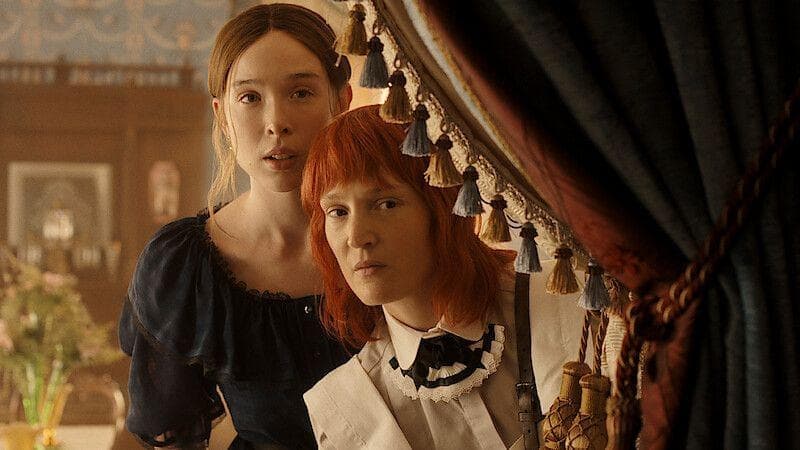
    Any romantic connection between Lizzie Borden and Bridget Sullivan, like the one seen in Monster: The Lizzie Borden Story, is fiction. There has been speculation about Borden's sexuality for decades, with some speculation that she may have been a lesbian. This has been exacerbated by works like Ed McBain's novel LIzzie, within which he suggested that Borden and Sullivan were, in fact involved. According to McBain's work, as summarized in in Magazine, When Andrew and Abby found out about the affair, their reaction drove Lizzie to murder them either out of rage or to hide her secret—or both. Impossible to prove, it's a theory that has continued to appear across presentations of the Lizzie Borden story. In Lizzie, a 2018 movie with Chloe Sevigny and Kristen Stewart, the fictional affair between Borden and Sullivan is suggested as being the impetus for murder. Lizzie Borden never married, perhaps only adding to questions about her sexuality. Borden was 32 at the time of the murders of Andrew and Abby, and, in many ways, past marrying age for the time period. Rumors about Borden's relationship with actress Nance O'Neil has also been assessed over time. Their time together between 1904 and 1906 includes numerous stories, Which are wrapped in the negative context of drunkenness and raucousness, [but] there are no records of the women’s daily habits or quiet moments together. Like Lizzie’s silence in the courtroom, the historical silence surrounding the women’s private relationship is frustrating for those who seek absolutes. Sullivan, for her part, wed in 1905 at the age of 38. The Irish immigrant (no Irish accent was included the show, however) seems to have lied on her marriage license, although the reason isn't clear.

    88% upvoted
  8. 8

    It's Not Clear If Ever Lizzie Borden Kept Pigeons As Pets

    In Monster: The Lizzie Borden Story, the titular Borden is shown confronting her father after Abby Borden killed her pigeons. The inclusion of pigeons seems to draw from one passing interaction from Lizzie Borden's inquest. When asked if she could "tell of the killing of any animal" when asked about the hatchet and axe, Lizzie responded all she knew about anything that would bring about blood on those tools was when her father "killed some pigeons in the barn last May or June." Even then, she said she "thought he wrung their necks." Lizzie Borden's exact relationship with animals is unclear. According to Arnold R. Brown, in Lizzie Borden, The Legend, The Truth, The Final Chapter, No one ever questioned Lizzie's love of animals... these pigeons were her pets and the only pets she had. Borden was a supporter of the Fall River Animal Rescue League later in her life, leaving them $30,000 when she died. This has been considered an additional indication that Borden liked animals. One story has been circulated that Borden once killed a cat but, much like the assertions about pigeons, that's not something that's been substantiated.

    88% upvoted
  9. 9

    The Maid, Bridget "Maggie" Sullivan, Couldn't Have Had A "Vendee Vibrator" Or A "Chattanooga"

    When Bridget Sullivan enters the service of the Bordens in Ryan Murphy's Monster: The Lizzie Borden Story, it's after Abby Borden had already summarily - and abusingly - dismissed their previous maid, Maggie. Bridget was subsequently called "Maggie" by Abby because, as the show depicts, she couldn't be bothered to learn a new name. The real reason this was the case isn't known. Soon after her arrival, Bridget shows Lizzie the prototype of a "Vendee Vibrator" - a device she bought in Amsterdam. There's no truth to this, in large part because in 1892, when the show is set, it hadn't been invented yet. The Vendee Vibrator was advertised during the first years of the 1900s as a device used for "curative vibration, vibratory massage, nerve stimulation and blood circulation." In the second episode of Monster: The Lizzie Borden Story, Bridget introduces Lizzie to another device - the "Chattanooga." According to an article from The New York Times, they were touted as, the "Cadillac of vibrators"... which cost $200 plus freight charges in 1904... [with an] aggressive cantilevered design. This corresponds to a 1904 work called Mechanical Vibration and It's Therapeutic, which describes the Chattanooga as featuring an array of perpendicular bars, jointed arms, and a motor as well as "vibratodes." Additionally, The holder of the vibratode has a short shaft clamped by a nut on each side, which can be shifted in such a manner as to lengthen or shorten the stroke... The attachments employed with this instrument are a hard rubber rectal, a throat attachment, a hard rubber ball for spinal work, a soft rubber brush, or multiple point vibratode, and a rubber cup. It could be used while sitting or standing, depending on one's preference.

    85% upvoted
  10. 10

    Aileen Wuornos Never Stayed At Lizzie Borden's House

    The appearance of Aileen Wuornos is somewhat jarring when watching Monster: The Lizzie Borden Story, but the show depicts the convicted killer as a Borden superfan of sorts. That establishes a connection between the two notorious figures. In the show, Wuornos calls herself "Lizzie Borden" and even visited the Borden house. The timing of the latter doesn't line up with historical reality, however. The Borden House didn't become bed and breakfast for overnight guests until 1996. Wuornos was arrested in 1991, suspected in being behind the killings of "as many as seven middle-age male motorists." In 1996, Wuornos was on death row in Florida. That was the year the US Supreme Court denied her appeal, ultimately ending any effort to stop her execution in 2002.

    82% upvoted