Skip to content
maxnews
Rankings

What The Constitution Does [And Doesn't] Say About Elections In The US

Elections in the United States can be confusing. Municipal, county, state, and federal elections - among others - all seem to overlap while simultaneously taking place at different times and with varying degrees of engagement and attention. The role of the US federal government in elections has been controversial at times, especially during the 21st century. With constant talk of election fraud, theft, and interference, it's more important than ever to understand how the entire system of elections works. Exploring who has authority over elections, where that power comes from, and why it matters, traces back as far as the US Constitution. Numerous changes, clarifications, and updates have been made to election law and how it's carried out - none of which have been carried out or can be controlled by the US President. Regardless, the Constitution set up the foundations of how it all works. Here's what it says and why it matters.

Entries
7
Votes
0
Updated
21 hours ago

Tap upor downto vote. Your vote is added to Ranker's counts.

Voting identifies your browser with an anonymous fingerprint, stored only as a salted hash, to count one per visitor. Privacy

Source: Ranker, ranked by its voters.

  1. 1

    Article I Established State Control Of Elections For The US Congress
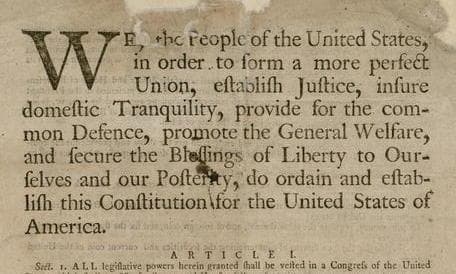
    Article I of the United States Constitution articulates how often members of the US House of Representatives and US Senate are voted into office (two and six years, respectively); the age requirements for serving in the US Congress (25 for the House, 30 for the Senate); the hierarchies within each; and several powers held by the House as well as by the Senate. Within this construct, members of the House of Representatives were chosen by "the people," while Senators were "chosen by the Legislature." The "Election Clause," as it's become known, corresponds to Section 4 of Article I and states: The Times, Places and Manner of holding Elections for Senators and Representatives, shall be prescribed in each State by the Legislature thereof; but the Congress may at any time by Law make or alter such Regulations, except as to the Places of choosing Senators. Put another way, the Election Clause gives power over House and Senate elections to the state legislative bodies, but it also allows Congress an avenue to regulate or override those regulations, within limits.

    0% upvoted
  2. 2

    Federal Power Over State Elections Is Secondary

    Since the writing of the Constitution, the secondary role of Congress has been used to implement mandates about when some elections take place. Similar to state guidelines and enforcement, all actions taken by Congress must not violate the Constitution. One of the most obvious ways the US Congress has influenced state-held elections is with the establishment of a national election day. In 1845, Congress created the uniform day for states to appoint presidential electors as "the Tuesday next after the first Monday in the month of November." This was done to streamline voting and remove confusion or potential corruption around varying election dates. Roughly three decades later, Congress established elections for members of the House of Representatives to take place alongside presidential elections: The Tuesday next after the 1st Monday in November, in every even numbered year, is established as the day for the election, in each of the States and Territories of the United States, of Representatives and Delegates to the Congress commencing on the 3d day of January next thereafter. Even with a national election day, states, cities, counties, school districts, and other subsets of people in regions across the US vote on different timelines various offices and initiatives.

    0% upvoted
  3. 3

    The US Supreme Court Has Clarified The Election Clause On Several Occasions

    The language of the Election Clause (Article I, Section 4) of the US Constitution has been interpreted by the US Supreme Court in response to questions and challenges that have arisen in its application and enforcement. In 1932, the US Supreme Court ruled that, in addition to the states' control over congressional elections with respect to time and places, they had authority with respect to, notices, registration, supervision of voting, protection of voters, prevention of fraud and corrupt practices, counting of votes, duties of inspectors and canvassers, and making and publication of election returns. Basically, this meant the states controlled the process leading up to and monitoring of congressional elections. One more part of the decision determined that states had the right to place "appropriate sanctions in the definition of offenses and punishment" related to their election control. Later cases from 1941 and 1972 held that states had authority over recounts and primaries. Through the 20th century, the US Supreme Court clarified that states could not go beyond protecting "the integrity and regularity of the election process" and did not have the power to determine voter qualifications, dictate term limits, decide "electoral outcomes, to favor or disfavor a class of candidates, or to evade important constitutional restraints."

    0% upvoted
  4. 4

    Several Constitutional Amendments Have Revised Voting Rights And Regulations In The US

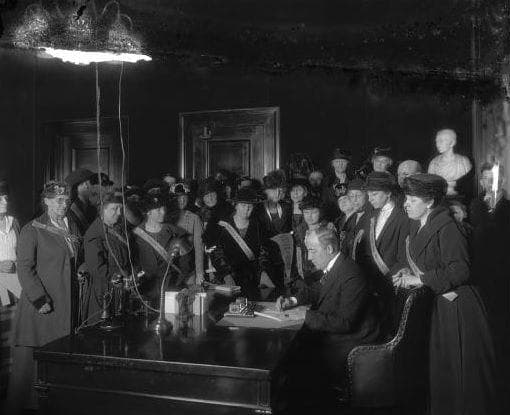
    Voting has been included in several Constitutional Amendments and they have required clarification at times, too. The 15th Amendment (1870) made it clear that no one could be "denied or abridged" the right to vote "by any state on account of race, color, or previous condition of servitude." The 19th Amendment (1920) similarly stated that voting could not be prevented or hindered by states "on account of sex." It wasn't until the passage of the 17th Amendment (1913) to the US Constitution that senators were chosen by popular state voting. The Constitution laid out how amendments could be made that included Congressional participation and approval as well as that of state legislatures. The 17th Amendment, specifically, was passed in Congress in 1911, was then sent to states for ratification, and went into effect in 1913. Additional amendments that influence voting in the US include the 23rd Amendment (1961), which not directly discussing states and voting, did address the number of electors in the District of Columbia; the 24th Amendment (1964) and the abolition of poll or other taxes as voting restrictions; and the 26th Amendment (1971) which set the 18 years old as the national voting age.

    0% upvoted
  5. 5

    Congress And The Supreme Court Have Influenced Redistricting And Gerrymandering In The States

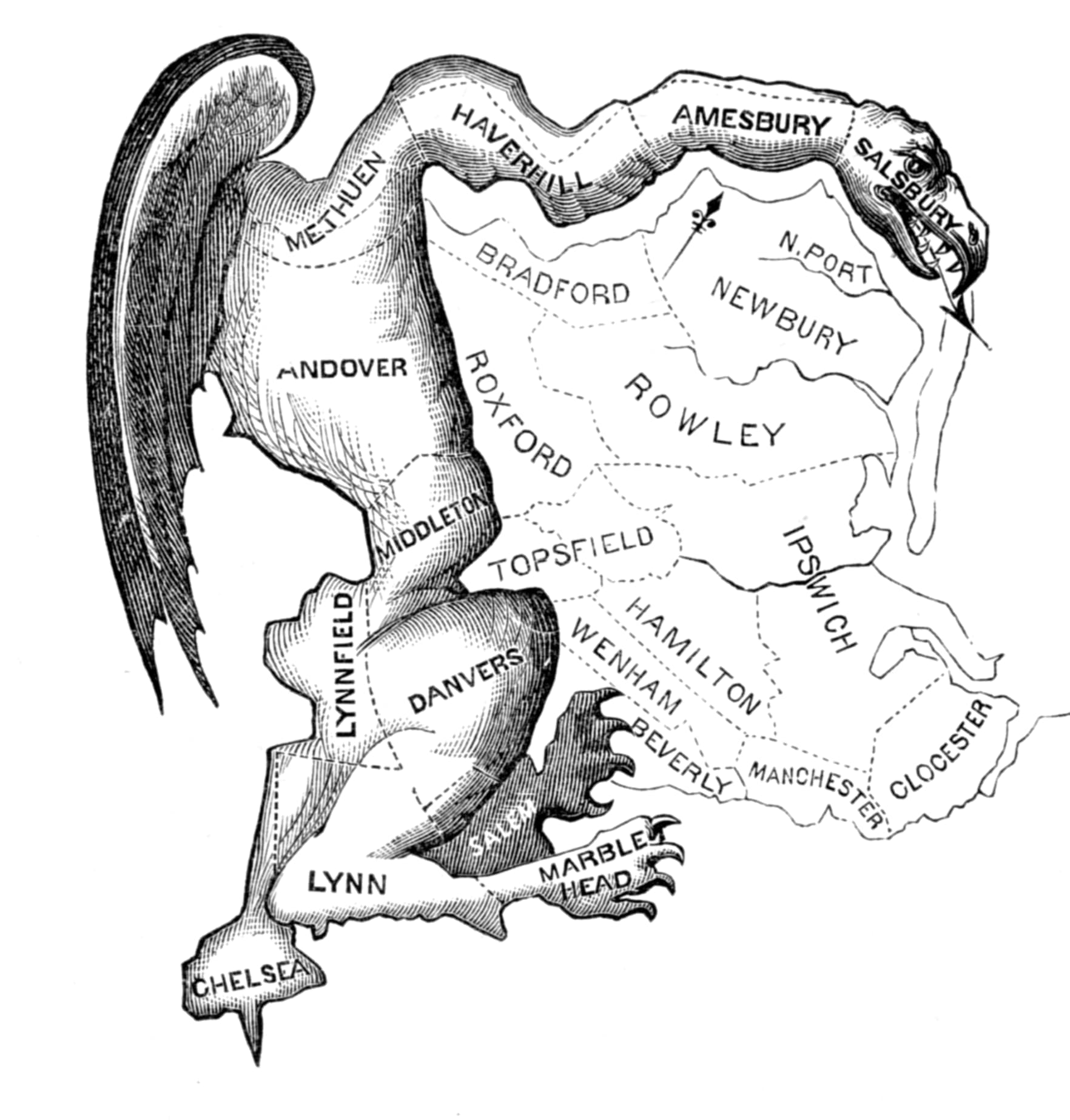
    On the whole, Congressional districts in each state are determined by individual states. That said, the increased size of the United States and of its population necessitated the passage of the Apportionment Act of 1842. This act essentially reshaped the House of Representatives by mandating that it: be composed of members elected agreeably to a ratio of one Representative for every seventy thousand six hundred and eighty persons in each State, and of one additional representative for each State having a fraction greater than one [half] of the said ratio, computed according to the rule prescribed by the Constitution of the United States. House districts were, by law, to be proportional nationwide, with only one Representative per district. This was done to combat gerrymandering, a phenomenon named after Governor Elbridge Gerry of Massachusetts in 1812. Gerry's redistricting was done to benefit his political party - called partisan gerrymandering - an issue that has been litigated several times over in the decades since the moniker was first used. As recently as 2019, the US Supreme Court held that "partisan gerrymandering claims present political questions beyond the reach of federal courts," thus leaving the matter to the states. This was tested in Texas and California, both states where new district maps were adopted in 2025. Congress has intervened with respect to matters of racial gerrymandering as well, notably with the passage of the Voting RIghts Act of 1965. Section 2 states: No voting qualification or prerequisite to voting, or standard, practice, or procedure shall be imposed or applied by any State or political subdivision to deny or abridge the right of any citizen of the United States to vote on account of race or color. In other words, racial gerrymandering was illegal. As recently as 2024, the US Supreme Court heard arguments in Louisiana v. Callais, a case involving a congressional map with only one majority-black district. A final decision in the case has not been handed down as of March 2026.

    0% upvoted
  6. 6

    Caucuses And Primaries Are Run By States

    Primaries as elections between candidates from the same party are a relatively recent development in the US. There's nothing about directly mentioned about primaries in the United States Constitution but the Election Clause does apply. As a result, states have determined their own rules, deadlines, and processes for state primaries. At first, presidential primaries weren't necessary in the United States because the individual with the second-highest number of electoral votes became Vice President. This changed with the 12th Amendment (1804). By the mid-20th century, individual political parties began picking candidates to run for president and, during the 1960s, the nomination process for the party-supported presidential nominee full form. The are different types of primaries and caucuses, the each state determines what they conduct. Caucuses may be public or done by secret ballot and are held at county, district, or precinct levels. Primaries, on the other hand, are held at the county level. Primary and caucus processes include open primaries, ones with no political party registration required; closed, with required party registration; or some mix of open and closed. State primary elections are comparable with respect to voter qualifications. That said, different numbers of candidates may move forward for various state-held offices. State primary dates are determined by state legislatures, while political parties set the dates for state primaries during a presidential election cycle.

    0% upvoted
  7. 7

    The Constitution Does Not Give Legal Authority Over Elections To The US President At Any Point

    At no point does the Constitution mention that the US President has any authority over state primaries or caucuses, nor does it state that the Commander-in-Chief has a role in any state elections. The issue of the President nationalizing elections arose in 2025 when President Trump issued an executive order attempting to change voter qualifications and election processes. According to the executive order: States fail adequately to vet voters’ citizenship, and, in recent years, the Department of Justice has failed to prioritize and devote sufficient resources for enforcement of these provisions. The executive order was immediately challenged in court. One federal court made it clear that: Our Constitution entrusts Congress and the States—not the President—with the authority to regulate federal elections... [and' [N]o statutory delegation of authority to the Executive Branch permits the President to short-circuit Congress’s deliberative process by executive order. After of the executive order was blocked by the courts, Trump threatened to end mail-in voting in August 2025 and, later, urged Congress to pass a revised version of the Safeguard American Voter Eligibility (SAVE) America Act in early 2026. Trump told House Republicans, "I'm not going to sign anything until this is approved." The SAVE American Act, • prohibits states from accepting and processing an application to register to vote in a federal election unless the applicant presents documentary proof of U.S. citizenship; • prohibits states from registering an individual to vote in a federal election unless, at the time the individual applies to register to vote, the individual provides documentary proof of U.S. citizenship • Each state must take affirmative steps on an ongoing basis to ensure that only U.S. citizens are registered to vote, which shall include establishing a program to identify individuals who are not U.S. citizens using information supplied by certain sources. The future of the SAVE America Act and how it would potentially affect elections in the states remains unclear as of March 2026.

    0% upvoted