Skip to content
maxnews
Rankings

Weird But True Historical Date Comparisons To Ruin Your Perception Of Time

History can seem really, really old but, in reality, history begins as soon as each moment passes. That alone is enough to put things into perspective, but when you look at the relationship between time and historical events, people, and phenomena, it becomes clear that the past - and time itself - can be incredibly tricky. It might be surprising to learn about historical events that happened at the same time or realize that historical figures were contemporaries. These kinds of facts will ruin your perception of time and might have you questioning what you think you know. History is amazing, but these facts might just make you completely reassess the meaning of time.

Entries
13
Votes
4.1K
Updated
yesterday

Tap upor downto vote. Your vote is added to Ranker's counts.

Voting identifies your browser with an anonymous fingerprint, stored only as a salted hash, to count one per visitor. Privacy

Source: Ranker, ranked by its voters.

  1. 1

    When Nintendo Was Founded, There Were Still Fewer Than 40 US States

    Initially a playing card company, Nintendo was established in Kyoto, Japan, by Fusajiro Yamauchi in September 1889. For decades, Nintendo focused on making hanafuda cards - literally "flower cards" - popular for playing various games, later including Western-style playing cards in their products in 1907. It wasn't until the 1960s that Nintendo produced its first electronic toy. As Nintendo developed, so, too, did the United States. When Nintendo opened its doors, there were 38 states in the union. The last to join, Colorado, became a state on August 1, 1876. In November of 1889, four additional states joined the union: North Dakota and South Dakota on November 2, Montana on November 8, and Washington on November 11.

    81% upvoted
  2. 2

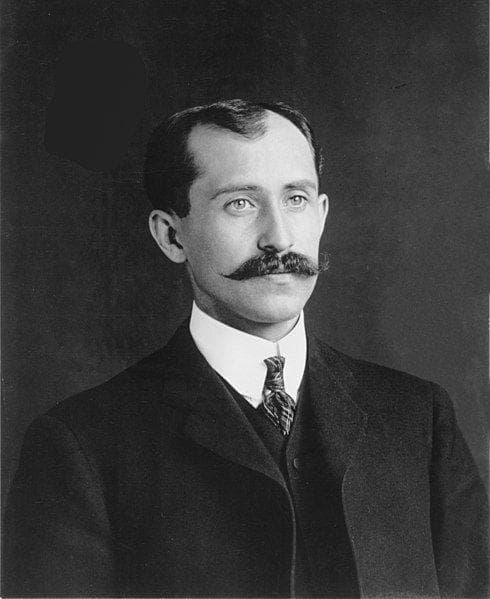
    Orville Wright Lived Long Enough To See A Plane Drop An Atomic Bomb And Break The Sound Barrier

    The Wright brothers - Orville and Wilbur - made their first successful flight in 1903. Born in Ohio, the Wright brothers had long been interested in flight and experimented with different designs and models throughout their early lives. Wilbur was the elder of the two, born in 1867, while Orville was born in 1871. After their successful flight in 1903, their efforts continued, and they became businessmen and celebrities in the US and Europe. Wilbur became ill in 1912 and perished, but Orville lived until January 30, 1948. As a result, Orville witnessed the vast gains made in aviation during the early 20th century, as well as the multifaceted uses for airplanes. Orville was alive when the Enola Gay dropped an atomic bomb over Hiroshima, Japan, on August 6, 1945, and when a second bomb was released over Nagasaki two days later. Chuck Yeager became the first pilot to break the sound barrier in an airplane on October 14, 1947, another time in history Orville Wright was alive to witness. Yeager reached the speed of sound 44 years after the Wright brothers flew for 12 seconds at a top speed of roughly 30 miles per hour. It was only 66 years after the Wright brother's revolutionary flight that the first man walked on the moon. While neither man lived to see Neil Armstrong's feat in 1969, their efforts set the foundation for continued progress in the world of flight.

    81% upvoted
  3. 3

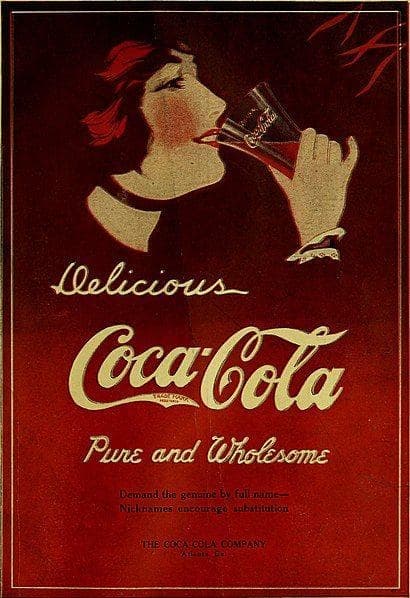
    Coca-Cola Is Only 31 Years Younger Than Italy

    Coca-Cola was developed by Dr. John Pemberton, an Atlanta-based pharmacist, in 1886. Initially intended for medicinal use, what became the popular soft drink grew in popularity, and as a result, the Coca-Cola Company was established in 1892. It was only about three decades earlier that Italy was recognized as a nation-state. Italy had, until the mid-19th century, been part of the Roman Empire, functioned as a network of independent city-states, and had only seen unsuccessful efforts toward unification. With the establishment of the Kingdom of Italy in 1861, the peninsula united - with the exception of Venetia and Rome. Venetia was added in 1866, while Rome became part of Italy in 1870.

    81% upvoted
  4. 4

    Prisoners Arrived At Auschwitz A Few Days After McDonald's Was Founded

    On May 20, 1940, the first 30 prisoners arrived at Auschwitz concentration camp. The initial detainees were German "professional criminals" relocated from Sachsenhausen concentration camp near Berlin. The following month, more than 700 Polish men and women joined them, the first of many large groups transported to the camp. In California, the McDonald brothers opened their first restaurant only five days earlier. Richard and Maurice McDonald, natives of New Hampshire, established an establishment that served slow-cooked barbeque, had no indoor seats, and served customers in the parking lot. They later focused on hamburgers, developed an assembly-line method of preparing "fast food," franchised, and ultimately sold their business to Ray Kroc in 1961.

    79% upvoted
  5. 5

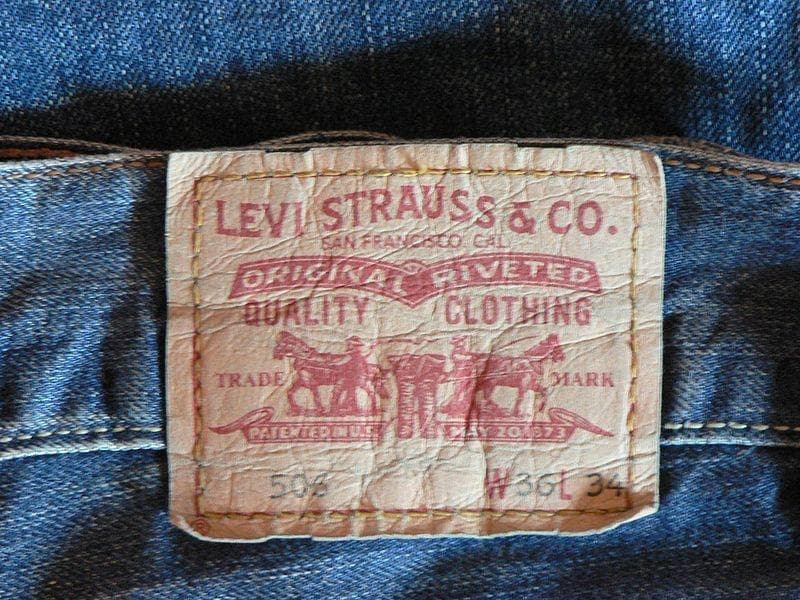
    Blue Jeans Are Older Than Dracula - And His Creator

    Irish author Bram Stoker (1874-1912) released Dracula in 1897. The genre-defining novel incorporated vampire legend and lore, and while it wasn't immediately a success, it was later adapted to the stage, for film, and other forums. One year before Stoker was born, Levi Strauss and Jacob Davis, received a patent for riveted pants. Strauss was a businessman in California, while Davis was a tailor in Nevada, men who united to produce and manufacture riveted pants - the original blue jeans. Their patent was issued on May 20, 1873, Strauss opened a factory in San Francisco soon after, and Davis oversaw the facility as they established their successful clothing brand.

    75% upvoted
  6. 6

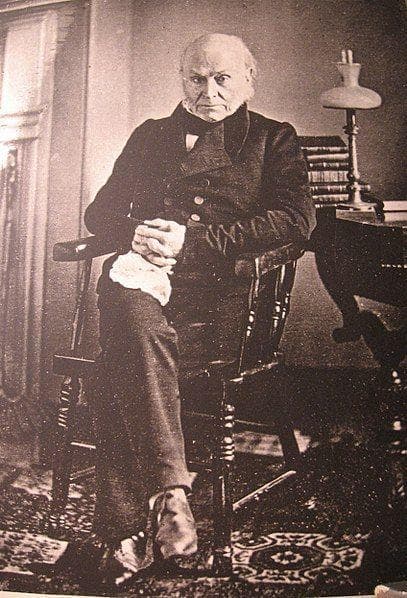
    John Quincy Adams Knew Both George Washington And Abraham Lincoln

    Born into a life of politics, John Quincy Adams was a young boy when his father, John Adams, carried out his role in the American Revolution, and just a teenager when he went to France with the elder Adams in 1778. The younger Adams attended Harvard during the 1780s, became a lawyer, and served as a foreign diplomat to the Netherlands when he was in his late 20s. It was under the auspices of President George Washington that Adams received the post. From 1825 to 1829, John Quincy Adams held the office of president of the United States, and afterward, he continued his career as a congressman. Elected to the House of Representatives by the residents of Massachusetts in 1836, Adams's time in Congress coincided with that of Illinois Representative Abraham Lincoln. While it's not clear what Adams thought of Lincoln, or vice versa (although Lincoln was a member of the Committee of Arrangements for Adams's funeral in 1848), Adams's son, Charles Francis, described Lincoln in 1861: ...a tall, ill-favored man... with little grace of manner or polish of appearance... plain, goodnatured, frank expression which rather attracts one to him.

    74% upvoted
  7. 7

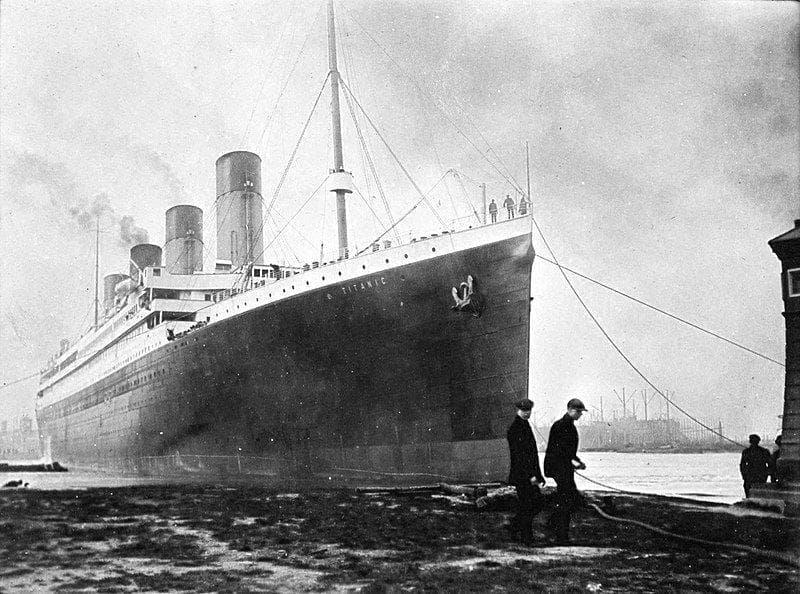
    Oreos Were Introduced The Same Year The 'Titanic' Sank

    While they weren't the first sandwich cookie on the market, Oreos hit store shelves in 1912. Introduced by Nabisco as a rival to Hydrox cookies - a similar creme-filled sandwich treat - Oreos soon dominated in popularity and sales. There were two versions of the first Oreo cookies - original and lemon - but the former proved far more successful. According to Time, the first Oreos were sold on March 9, 1912, just over one month before RMS Titanic launched from the shores of Southampton, England, on its fated voyage. Titanic left Southampton on April 10, made stops in France and Ireland, and then headed across the Atlantic Ocean on April 11, 1912. On the night of April 14, Titanic struck the iceberg that sent it to the bottom of the ocean the following day.

    72% upvoted
  8. 8

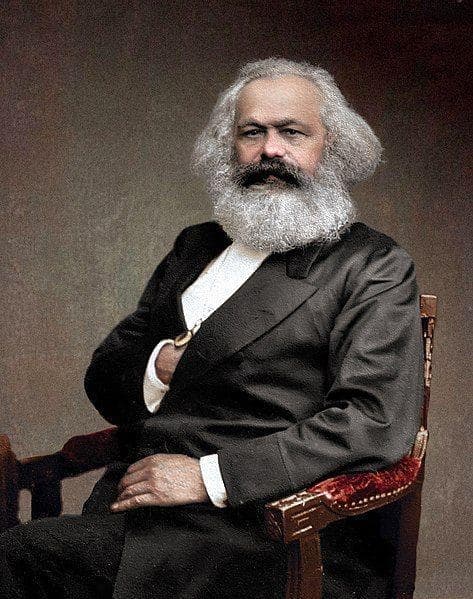
    Karl Marx And Abraham Lincoln Exchanged Letters

    As influential thinkers, political figures, and outspoken opponents of slavery, Karl Marx and Abraham Lincoln's lives overlapped by several decades. Marx, born in 1818, spent his life in Europe, while Lincoln, born in 1809, grew up in the rural American frontier. While they were separated by an ocean, there were similarities in their ideologies - so much so that the two wrote letters to one another during the American Civil War. Marx, perhaps best known for his 1848 Communist Manifesto, sent Lincoln a congratulatory letter after he was reelected in 1864. As an address offered by the International Workingmen's Association, the missive expressed solidarity for taking on "the matchless struggle for the rescue of an enchained race and the reconstruction of a social world." In response, Lincoln had the American ambassador issue a reply that Lincoln had, ...a sincere and anxious desire that he may be able to prove himself not unworthy of the confidence which has been recently extended to him by his fellow citizens and by so many of the friends of humanity and progress throughout the world.

    70% upvoted
  9. 9

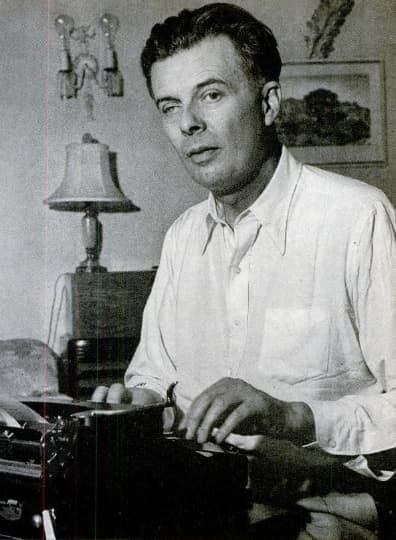
    John F. Kennedy, C.S. Lewis, And Aldous Huxley All Passed On The Same Day

    The assassination of President John F. Kennedy on November 22, 1963, sent shockwaves across the globe. It also meant that the deaths of authors C.S. Lewis and Aldous Huxley went little noticed by much of the world. Lewis, born in Belfast in 1898, was well-known for works like The Chronicles of Narnia as well as his theologically oriented texts. Lewis's writings spanned fiction and nonfiction, mythology and religion, and featured satire, as well. Reportedly, Lewis perished of cancer at the age of 64 - less than an hour before JFK was shot. Another casualty of that November day was Aldous Huxley. Huxley, too, wrote works of fiction and nonfiction, famously penning Brave New World in 1932. Born in England, Huxley arrived in the United States in 1937 and spent much of the rest of his life in California - where he passed a few hours after JFK.

    69% upvoted
  10. 10

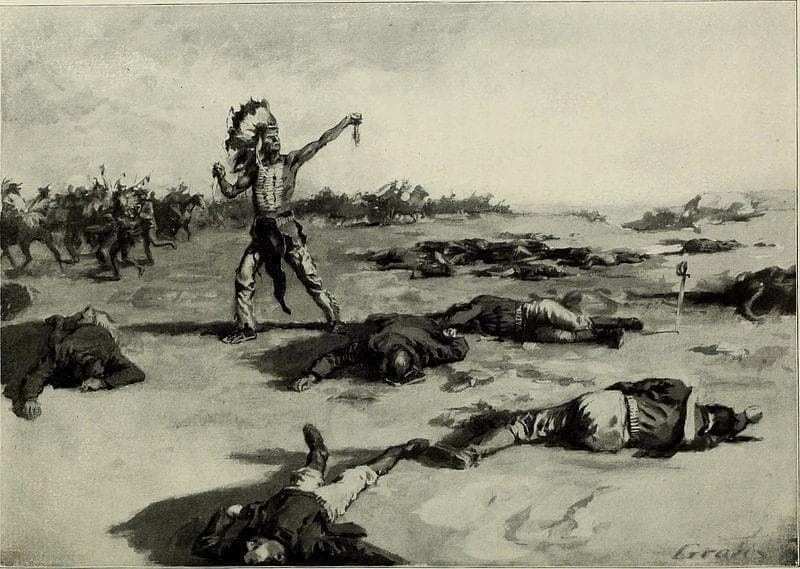
    The Dewey Decimal System Was Introduced While Custer Fought At Little Bighorn In 1876

    As a system for classifying information, the Dewey Decimal System came to fruition through the efforts of its namesake, Melvil Dewey. Developed in 1873, the Base-10 system Dewey came up with to catalog and index information was first published in 1876. The preface of the first edition is dated June 10 of that year. Dewey, himself a librarian, is considered fundamental in establishing a so-called "library economy," with his efforts to centralize how information was cataloged. Adoption worldwide has resulted in its use in at least 135 countries, and it remains the standard system present in most American public school libraries. As Dewey pushed his system out to the world, General George Armstrong Custer and his federal forces fought against members of the Lakota Sioux and Cheyenne Nations at Little Bighorn in the Montana Territory. On June 25 and June 26, 1876, Custer and roughly 200 of his men fought, and lost, against a force of some 3,000 Native Americans.

    66% upvoted