Skip to content
maxnews
People

Unexpected Unsung Historic Heroes Who Made Us A Little Misty-Eyed

Historical narratives are filled with brave tales of heroes who achieved celebrity status for their deeds. But for every generous or courageous act a famous figure like George Washington, Joan of Arc, William Wallace, and Alexander the Great accomplished to rightfully earn their time in the spotlight, many lesser-known heroes have also made monumental positive impacts on the world. Just as our favorite historical figures have had their stories shared on the silver screen, many lesser-known figures have tales so inspiring that they could be featured in their own biopics. From breaking cultural barriers and inspiring law reform to saving entire nations through their valiant efforts, the narratives below bring unexpected unsung heroes' lives to light.

Entries
12
Votes
5.9K
Updated
5 days ago

Tap upor downto vote. Your vote is added to Ranker's counts.

Voting identifies your browser with an anonymous fingerprint, stored only as a salted hash, to count one per visitor. Privacy

Source: Ranker, ranked by its voters.

  1. 1

    Sir Nicholas Winton Saved 669 Children From Nazis
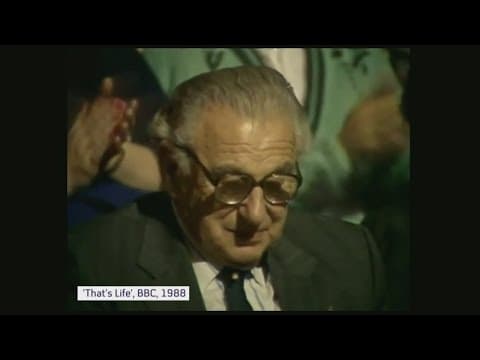
    Sir Nicholas Winton was born in London in 1909 to German-Jewish immigrant parents. When the stockbroker and Olympic-level fencer learned from a friend that the Nazi military was encroaching on Czechoslovakia in 1938, he canceled a ski trip to travel to the Jewish refugee camps. While other volunteers worked to relocate the adults, Winton felt called to accrue safe passage for the children being held there. Although the UK had agreed to allow a number of German and Austrian children into the country's borders for refuge under the Kindertransport program, Czech children had not been included in the plan. After Winton arranged that each child would be secured with a British family until they were 18, and their families would send £50 for their passage, he persuaded the British government to also allow Czech children into the country. Over several months, Winton and other volunteers (including his mother) successfully rescued 669 children from Nazi forces - raising funds to cover their costs, placing them on the correct trains, and securing families for them to live with once they arrived in Britain. His efforts went mostly unnoticed until he reached out to museums years later, hoping to donate the lists he and other volunteers had curated of the names of the children rescued - and their families. He's come to be regarded as a “British Schindler,” but Winton has never been overly proud of his heroic efforts. According to him, he was just “in the right place at the right time.” In 1988, Winton was surprised by the BBC when he was invited to a taping of That's Life, only to find that he was surrounded in the audience by the now-grown children he had saved decades before.

    99% upvoted
  2. 2

    Jonas Salk Invented The Polio Vaccine And Refused To Patent It

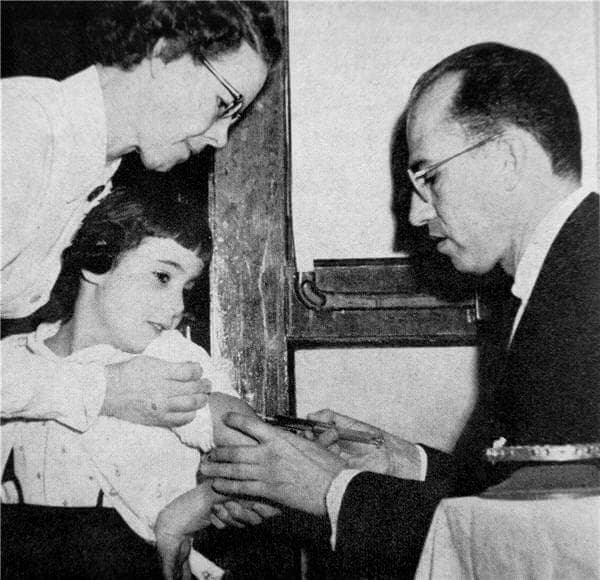
    After US President Franklin D. Roosevelt's legs were paralyzed from his 1921 bout with polio (although modern researchers speculate it could've been Guillain-Barré Syndrome), he established the National Foundation for Infantile Paralysis (later to become the March of Dimes) to find a cure for the disease. Soon, celebrities like Mickey Rooney, Elvis Presley, and even Mickey Mouse were raising money for Jonas Salk's polio vaccine trials, averaging more than $20 million per year by the 1940s. Despite other leading scientists arguing that Salk's approach to disease elimination was dangerous, the researcher first tested his "killed-virus" vaccine on his family and himself in 1953. When the experiment didn't produce any severe side effects, he began inoculating the public - including children. The initial 1.8 million volunteers became known as the "Polio Pioneers," and their efforts eventually allowed experts to brand the approach as "safe and effective." Because so many people had donated money and risked their health to develop the vaccine, Salk didn't believe in patenting his discovery. When CBS newsman Edward R. Murrow questioned the scientist on who owned the rights for the invention, Salk retorted: There is no patent. Could you patent the sun? His discovery (and his decision to allow its widespread manufacturing) ultimately helped eradicate polio almost entirely.

    98% upvoted
  3. 3

    Valeri Bespalov, Alexei Ananenko, And Boris Baranov Volunteered For A Mission At Chernobyl And Saved Europe

    When a test at the Chernobyl Nuclear Power Plant in Ukraine went horribly wrong on April 26, 1986, the mistake released 400 times more radiation than the nuclear bomb dropped on Hiroshima, creating millions of acres of contaminated land. The disaster could have been much worse, however, if not for engineers Valeri Bespalov and Alexei Ananenko, and supervisor Boris Baranov. The plan was relatively simple: on May 4, the men volunteered to enter the plant to manually turn a few valves that would drain water from the facility. A few days earlier, firefighters had flooded the basement to control a fire that threatened to cause a major explosion. While the mission was simple, it was also life-threatening. As nuclear waste oozed into the concrete floors and into the plant's cooling pools, it created the possibility of environmental contamination. The only option was manually draining the pools, and the trio bravely took on the task. Atomic experts estimate that if they were unsuccessful, most of Europe would have been uninhabitable for hundreds of thousands of years. The men lived through the mission, succeeding in saving the world from a possible nuclear catastrophe. As of May 2021, Bespalov and Ananenko were still alive; Baranov succumbed to a heart attack in 2005.

    98% upvoted
  4. 4

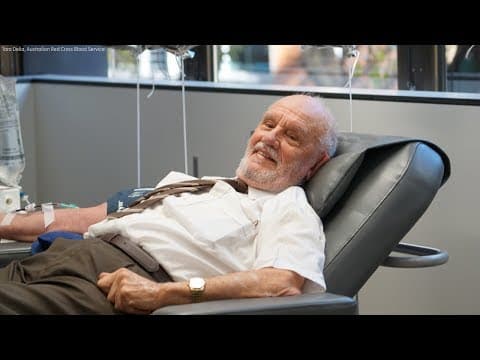
    James Harrison Donated Blood Every Week For 60 Years And Saved The Lives Of 2.4 Million Babies

    When he received a life-saving blood transfusion during chest surgery when he was 14, as an adult James Harrison committed to donating blood to an Australian blood bank every week. What he hadn't known was that his blood contained rare antibodies that can help create anti-D immunoglobulin, a trait only 50 known Australian residents carry. Experts are unsure exactly how Harrison's blood became so valuable, but they hypothesize it was the transfusion he received as a teenager that created the rare blood condition. Anti-D injections treat pregnant mothers whose Rh-negative blood fights to destroy the blood cells of their fetuses who inherited an Rh-positive blood type from their fathers. The condition can have dire consequences for unborn babies and newborns, including jaundice, anemia, brain damage, and even death. After donating blood and plasma every week for 60 years, Harrison saved the lives of an estimated 2.4 million babies - including his own daughter. According to Jemma Falkenmire of the Australian Red Cross Blood Service: In Australia, up until about 1967, there were literally thousands of babies dying each year, doctors didn’t know why, and it was awful. Women were having numerous miscarriages and babies were being born with brain damage. Australia was one of the first countries to discover a blood donor with this antibody, so it was quite revolutionary at the time… Every bag of blood is precious, but James’ blood is particularly extraordinary. His blood is actually used to make a life-saving medication, given to moms whose blood is at risk of attacking their unborn babies. Every batch of Anti-D that has ever been made in Australia has come from James’ blood. And more than 17% of women in Australia are at risk, so James has helped save a lot of lives.

    98% upvoted
  5. 5

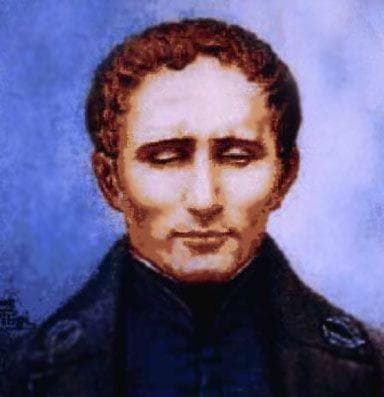
    Louise Braille Was Blinded At 3, But By 15 He Invented A System To Let The Blind Read

    Born in Coupvray, France, in 1809, 3-year-old Louis Braille was in his father's leather workshop when he accidentally poked himself in the eye with a stitching awl. The injury left him blind in one eye and later caused sympathetic ophthalmia, an inflammatory condition that also took the sight of his good eye. Still, Braille remained a music enthusiast and earned a scholarship in 1819 to Paris's National Institute for Blind Children for his skills as an organist. At 15, he was introduced to a coded system by Charles Barbier consisting of dots embossed on cardboard that created a message. In an effort to expand the code, Braille developed an entire system of dots he could convey with an easily used tool - allowing the sightless to read for the first time. He eventually expanded this new form of written language to musical scores, allowing his fellow students to read sheet music. The innovative Braille eventually became the first fully blind professor at the Paris school, teaching music, geography, grammar, and algebra. Throughout his tenure, he donated clothes, money, and other resources to students needing assistance. Although he developed tuberculosis in his 20s and had long spells of illness, he continued to dedicate his life to the education of blind children.

    98% upvoted
  6. 6

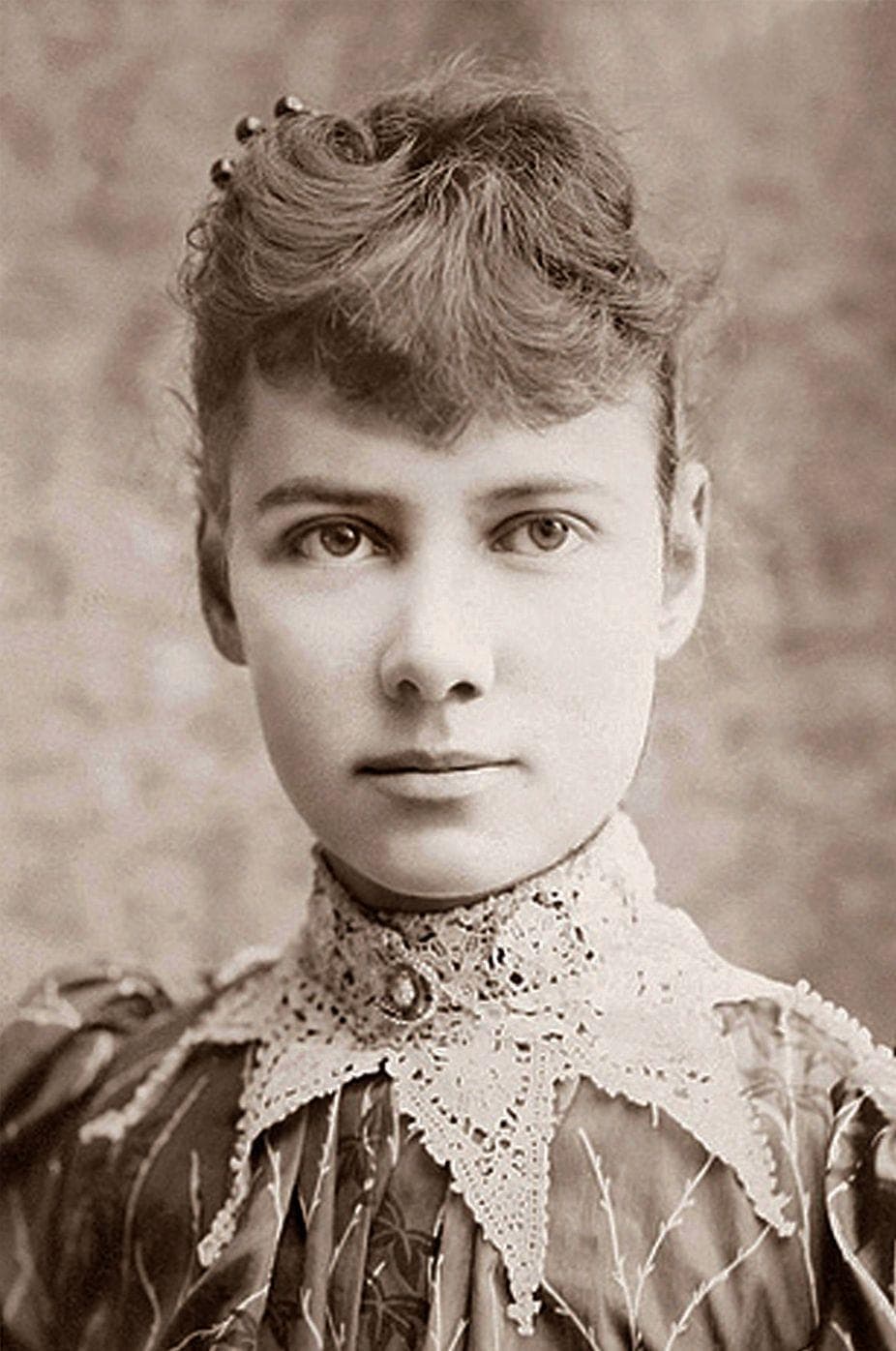
    Nellie Bly’s Pioneering Undercover Journalism Exposed Abuses In Mental Health

    Nellie Bly was the pseudonym of Elizabeth Cochran (also spelled Cochrane), a Pennsylvania native born in 1864. Bly's name became famous after she challenged herself to travel the world in fewer than 80 days, the fictitious record set by Phileas Fogg, the protagonist of Jules Verne's Around the World in Eighty Days. While her worldwide excursion brought her celebrity status, Bly's heroic work as a pioneering investigative journalist is what really made a mark on the world. Unlike other female journalists at the time, who focused mainly on topics to be featured in the “women's section” of a newspaper, Bly preferred to throw herself into the trenches to expose harmful living and working conditions. After spending several months in Mexico reporting on the unfit conditions of impoverished populations, she got herself committed to a New York asylum, pretending to be mentally ill. Without a real plan to achieve her goal, Bly first entered a women's boarding house under the name Nellie Brown and began mimicking the women there who displayed the most bizarre behaviors. It wasn't long before the matron called authorities to have her removed. The Essex Market Police Courtroom judge swiftly assigned Bly to the then-famous insane ward at New York City's Bellevue Hospital without much questioning or deliberation regarding the seriousness of her condition. During her time there, the undercover journalist discovered the women suffered much inhumane treatment, including bad food, fire hazards created by locked doors and windows, unsanitary living conditions, unsatisfactory care from asylum doctors, and physical abuse and neglect. Shortly after her reports were printed, the New York City municipal government designated more funds for the care of women at the hospital, and the conditions greatly improved.

    98% upvoted
  7. 7

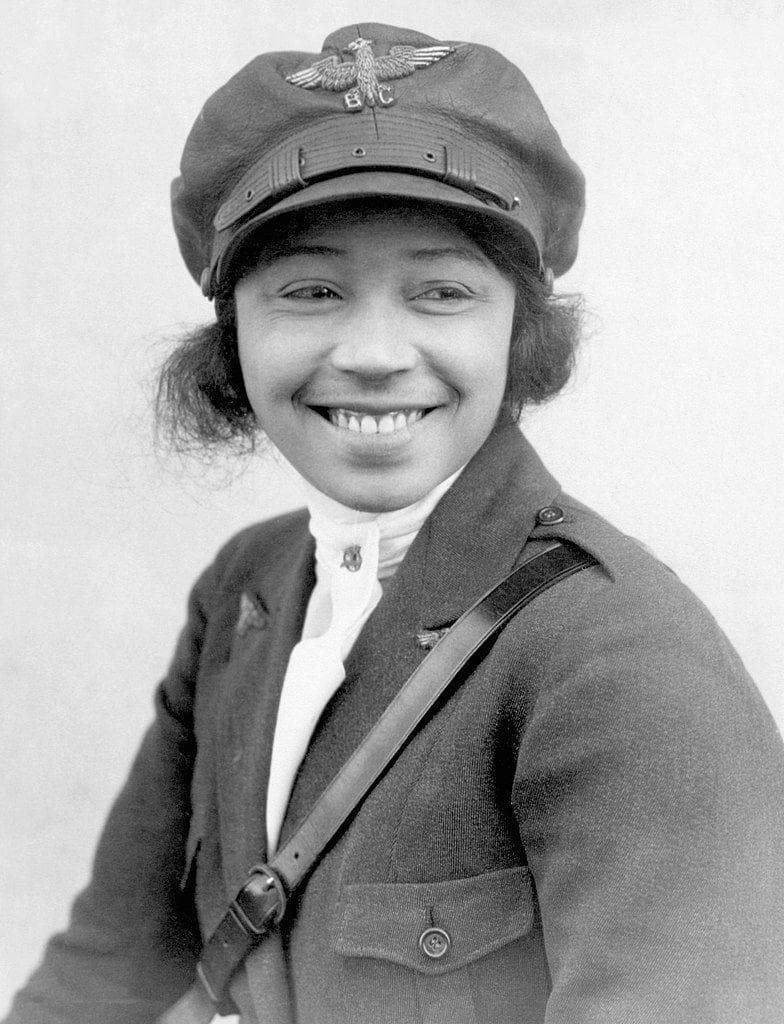
    Bessie Coleman Became The World's First Black And Native American Pilot In 1921

    Born to a family of Black and Native American sharecroppers in 1892, Bessie Coleman began working in the Texas cotton fields at a young age. When she was old enough to attend school, it was in a one-room, segregated building that taught children up to eighth grade. After graduating, Coleman received a scholarship to attend Missionary Baptist Church School, then worked to pay for her college education at Langston University in Oklahoma. Unfortunately, she spent all of her savings on the first semester and had to return home. By 1915, Coleman was ready to leave the segregated South and moved in with an older brother in Chicago. After hearing stories of brave pilots fighting in WWI, she knew she wanted to become an aviator. Because no American school would allow her entry, she taught herself French and enrolled in the Federation Aeronautique Internationale in France, where she became the world's first Black female pilot on June 15, 1921. Coleman returned to the US to perform in air shows and quickly earned nicknames like “Brave Bessie” and “Queen Bess.” Her only stipulation for performing was that audiences had to be desegregated. Although she passed prematurely in an airplane accident at the age of 34, her bravery paved the way for future women of color interested in aviation.

    96% upvoted
  8. 8

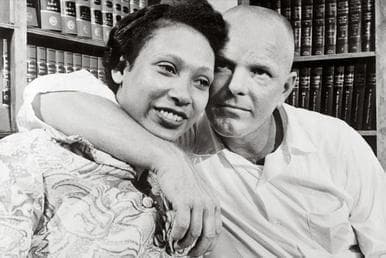
    The Lovings Fought To Make Their Interracial Marriage Legal In The Mid-20th Century

    When newlyweds Richard and Mildred Loving of Central Point, VA, heard a knock on their door the night of July 11, 1958, they weren't greeted by a family member or friend who wanted to congratulate them. Instead, it was the Caroline County sheriff coming to arrest the couple based on an anonymous tip that they were violating Virginia's Racial Integrity Act. It was only seven decades ago, but at the time, interracial marriages were still considered such an unforgivable offense in more than 20 states that violators were incarcerated. Because Richard was of Irish and English descent, and Mildred of African and Native American descent, the couple had married five weeks prior to their arrest in Washington, DC, where interracial marriages were legal. However, the Lovings were not protected outside of the capitol, and had to endure jail time before they were released and ordered to flee their hometown for 25 years or receive prison sentences. They left their home, families, and livelihood to create a new life in DC, but longed to return to their previous way of life in peace. Inspired by the civil rights movement unfolding, Mildred wrote to Attorney General Robert F. Kennedy in 1964, requesting advice. He directed her to the American Civil Liberties Union, which took the couple's grievances to the Supreme Court. On June 12, 1967, state laws against interracial marriages were deemed illegal. As the Lovings experienced the freedom of being legally wed in their home state for the first time, they couple the way for interracial marriages all over the US. Richard passed in a car accident in 1975, but Mildred lived to promote marriage equality for a new generation of couples in love. She also adamantly supported gay marriage, remarking on the 40th anniversary of the Loving case win in 2008: The older generation’s fears and prejudices have given way, and today’s young people realize that if someone loves someone, they have a right to marry.

    95% upvoted
  9. 9

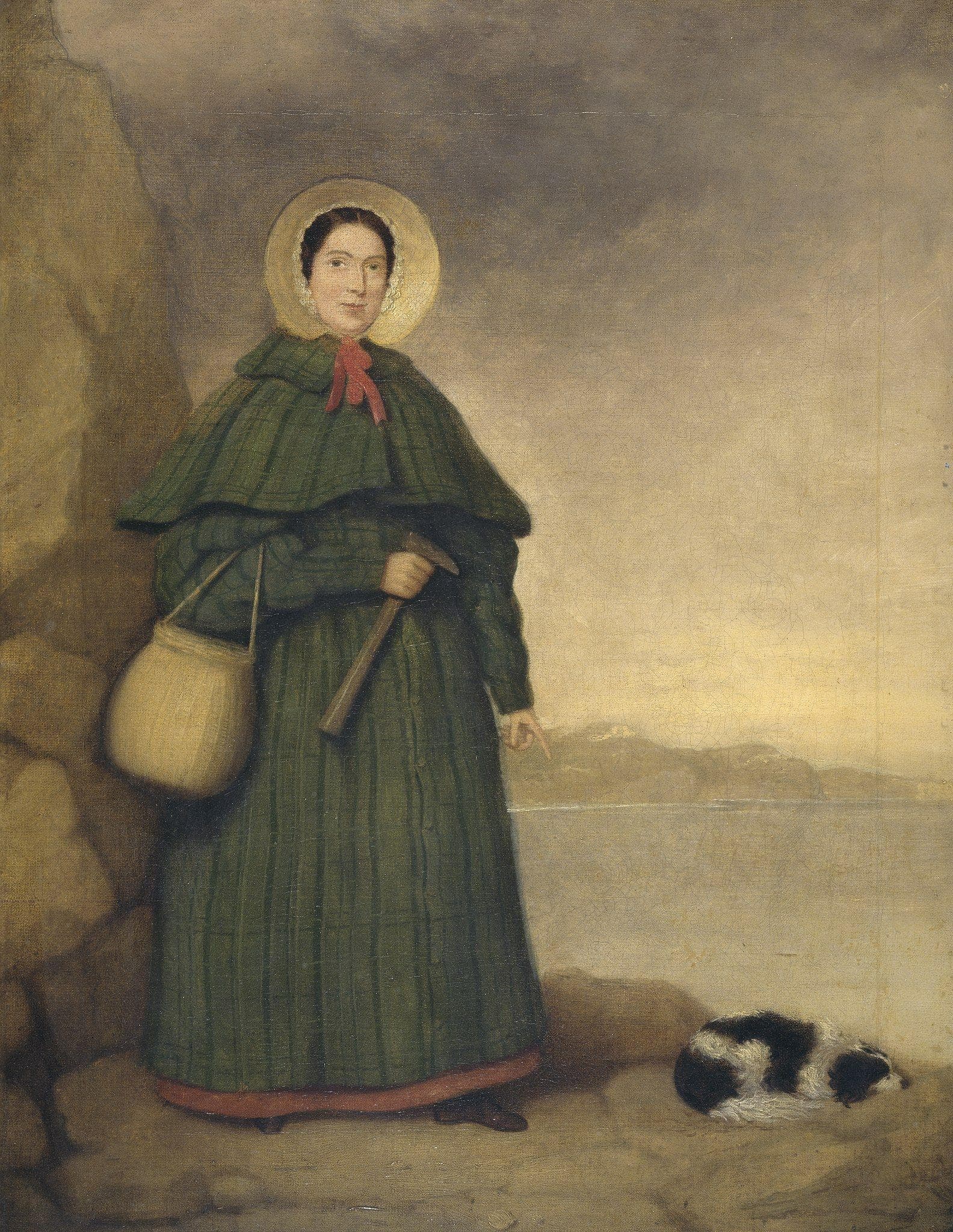
    Mary Anning May Have Been The Best Fossil Hunter Of All Time

    As a girl born in 1799 to a poor family in Lyme Regis, Dorset, England, without access to formal education, Mary Anning spent her days collecting fossils with her father, Richard, in their backyard. As he trained his young apprentice to search for, clean, and properly display the specimens to sell in the family's shop, Mary taught herself geology and anatomy as she dug for the mysterious treasures. When her father suddenly passed in 1812, Mary's mother Molly suggested she sell her collections to help pay the family's debts. As Mary continued digging for the sake of her family's welfare, her older brother Joseph stepped in now and then to help the process. When Mary was 12, Joseph stumbled upon a mysterious head. After months of extensive, careful digging, they unearthed a fossil that spread out more than 16 feet. Forty-eight years before Charles Darwin's evolutionary theories were published, and only a short time after Georges Cuvier published his extinction theory, many people believed Mary and Joseph had uncovered a monster. Scientists eventually named the specimen Ichthyosaurus ("fish-lizard"). Modern scientists have since identified the fossil as a prehistoric marine reptile. In 1823, Mary stumbled upon her next great discovery when she uncovered Plesiosaurus bones. As a young woman, the scientific community rejected her findings, with even Cuvier declaring the fossilized “near reptile” was a hoax. When he arranged a meeting among other geologists to examine and discuss the discovery, Mary was not invited. Cuvier eventually admitted the bones were legitimate. However, Mary never received credit for any of her discoveries. Instead, male geologists would purchase the fossils she found and claim them as their own work. Five years later, she came across the first Pterodactylus fossil ever found outside of Germany. As she continued to unearth ancient bones throughout what is now known as southern England's Jurassic Coast, fossils became the latest museum-curating trend. People arrived in droves to gaze at the discoveries, inspiring Mary's childhood friend and famed geologist, Sir Henry De la Beche, to create a painting depicting what the fossilized animals may have looked like when they roamed the earth. Mary never received the credit she deserved or any type of monetary compensation for her findings. She succumbed to breast cancer in 1847 at the age of 47. Instead of mourning the loss of an impressive geologist and woman, the townspeople mourned the fact that they would no longer be enjoying the copious amounts of tourists Mary's discoveries drew to the region. As explained by David Tucker, the current director of the Lyme Regis Museum: It's [the Jurassic Coast] the only visible and accessible coast that covers the whole age of the dinosaur. Think of layers of sedimentary rock laid down in the Triassic, Jurassic, and Cretaceous Ages - like a layer of sponge, cream, and another layer of sponge cake tilting on its side. You are going through 185 million years of history… She sold what she found. Her fossils are credited to the rich man who donated them to museums, rather than the poor woman that found them. It’s not so much about gender as class. Today, she would be running a department at Oxford or Cambridge.

    93% upvoted
  10. 10

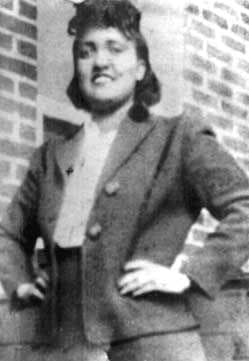
    Henrietta Lacks’s Stolen Cells Have Saved Countless Women's Lives

    Henrietta Lacks first visited Johns Hopkins Hospital's “colored” unit on February 1, 1951, complaining of a painful “knot” on her cervix that proved to be a cancerous tumor. Before sending her home, the residing gynecologist, Dr. Howard Jones, retrieved a sample of Lacks's cells without her consent. She returned for treatment again eight days later when Dr. George Otto Gey retrieved more cells before sending his patient home. By the time Lacks returned on August 8 of the same year, insisting she be admitted for treatment due to her extensive pain, it was too late - cervical cancer cells had spread throughout her body. She succumbed to her illness on October 4, at the age of 31. However, although Lacks was no longer alive, her stolen cells were thriving in the hospital's research lab. Unlike other cells that typically die shortly after being removed, her cells continued to grow. Gey eventually found a single cell he was able to regenerate and patented it as the HeLa cell line. The discovery led to numerous scientific breakthroughs, including milestones in cancer and AIDS research, the development of the polio vaccine, more successful in-vitro fertilization, the continuation of genetic and cloning research, and a deeper understanding of viruses and the effects of radiation on humans. Meanwhile, Lacks's family was unaware her cells had ever been retrieved, much less used to save countless lives as a result of testing conducted on them. They only learned of the extensive research conducted on the cells when, in 1976, Rolling Stone published an article covering the scientific findings. While Lacks's cells (along with cells from other family members that were also retrieved without consent) remain alive, the Lacks family has never benefited from the millions of dollars researchers earned from studying them.

    93% upvoted