A Virus In 'World of Warcraft' Caused Epidemiologists To Take Notice
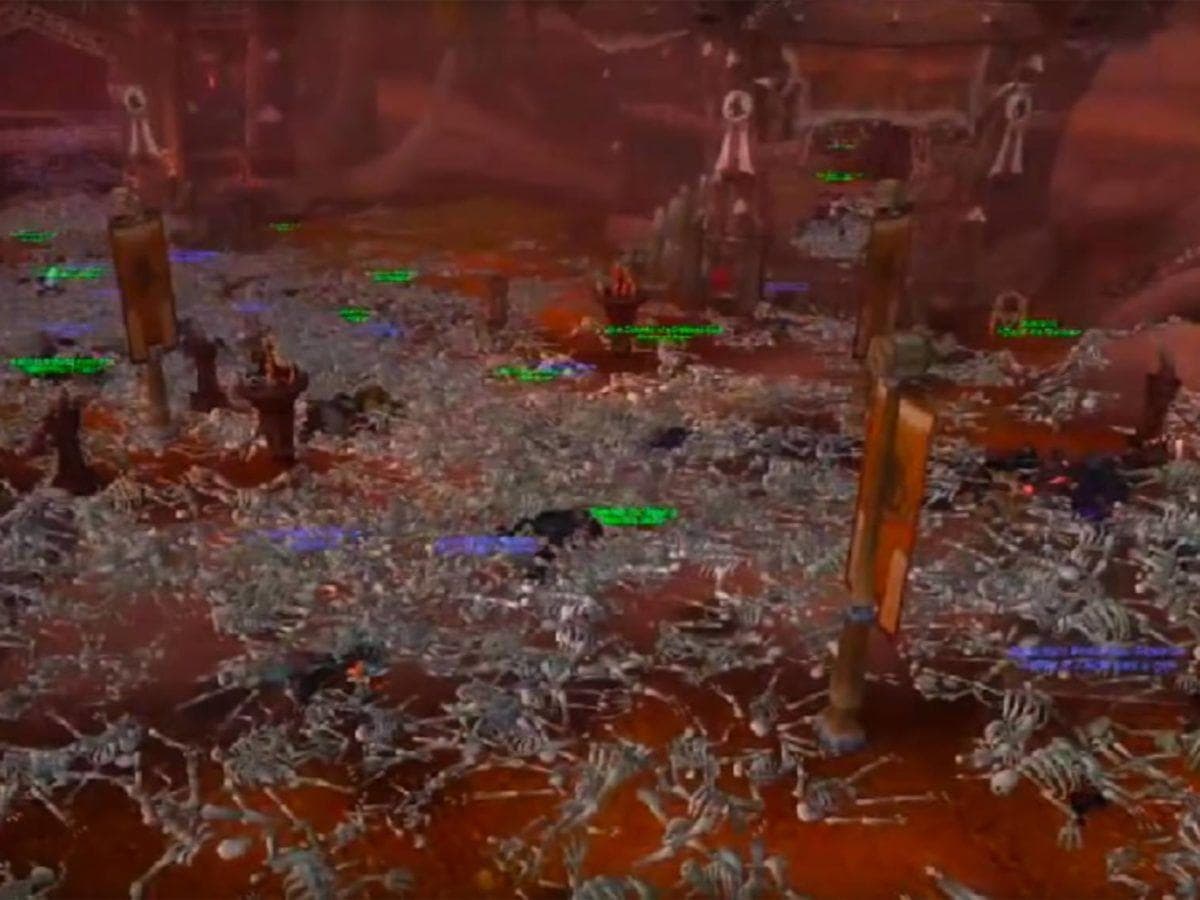
In 2005, a virtual pandemic called the Corrupted Blood incident tore through World of Warcraft to an extent that was well beyond what the programmers originally intended. This resulted in a spread similar to real-world epidemics, and epidemiologists took notice of what was happening. The epidemic first began with a new raid's end boss, Hakkar the Soulflayer. When attacked, Hakkar would fire off a "Corrupted Blood" debuff spell, which only lasted for a few seconds in the area - but it didn't remain there. Due to an oversight, Corrupted Blood spread beyond the area of Zul'Gurub to take on nearly the entire virtual world. This was due to an oversight that allowed a player's pets and minions to carry the disease beyond the area. A pandemic ensued, terminating low-level characters and completely mucking up the gameplay of WoW. Players had to try and avoid the infection while programmers imposed quarantines. Players abandoned cities, and the pandemic nearly brought the game to its knees. Fortunately, a series of patches and world resets brought the game back under the control of the programmers, but it was looking pretty grim for a little while. The incident was studied by epidemiologists to see how people might react to a real-world epidemic, so the game's outbreak had real-world implications. Nina Fefferman and Eric Lofgren, then working at Tufts University, studied the incident and co-authored a paper together - and have since worked on the emergence of COVID-19. Fefferman explained the incident and her research in an interview with PC Gamer: It led me to think really deeply about how people perceive threats and how differences in that perception can change how they behave. A lot of my work since then has been in trying to build models of the social construction of risk perception, and I don't think I would have come to that as easily if I hadn't spent time thinking about the discussions WoW players had in real-time about Corrupted Blood and how to act in the game, based on the understanding they built from those discussions.