Skip to content
maxnews
Rankings

The Actual, Real World Value Of All The Artifacts Indiana Jones Finds

Since his debut in 1981, Indiana Jones has been doing his part to rescue relics and save history from unsavory characters who wish to use the artifacts for malicious means. Watching Indy save the day and the treasure is always a treat, but do you ever wonder if that treasure actually existed, and if so, what it would be worth? We looked at the artifacts, treasures, and relics Indiana Jones saved and/or found over the years. By comparing them to real-world counterparts, or making real-world guesstimates based on the time period and materials used to create the relic, we came up with how much each treasure might be worth. From the ark of the covenant to the Eye of the Peacock, here are a few artifacts found by Indiana Jones and what they might be worth in the real world. Please vote up the rescued relics whose price tags could launch a crusade of their own.

Entries
11
Votes
1.8K
Updated
3 hours ago

Tap upor downto vote. Your vote is added to Ranker's counts.

Voting identifies your browser with an anonymous fingerprint, stored only as a salted hash, to count one per visitor. Privacy

Source: Ranker, ranked by its voters.

  1. 1

    Ark Of The Covenant - Priceless
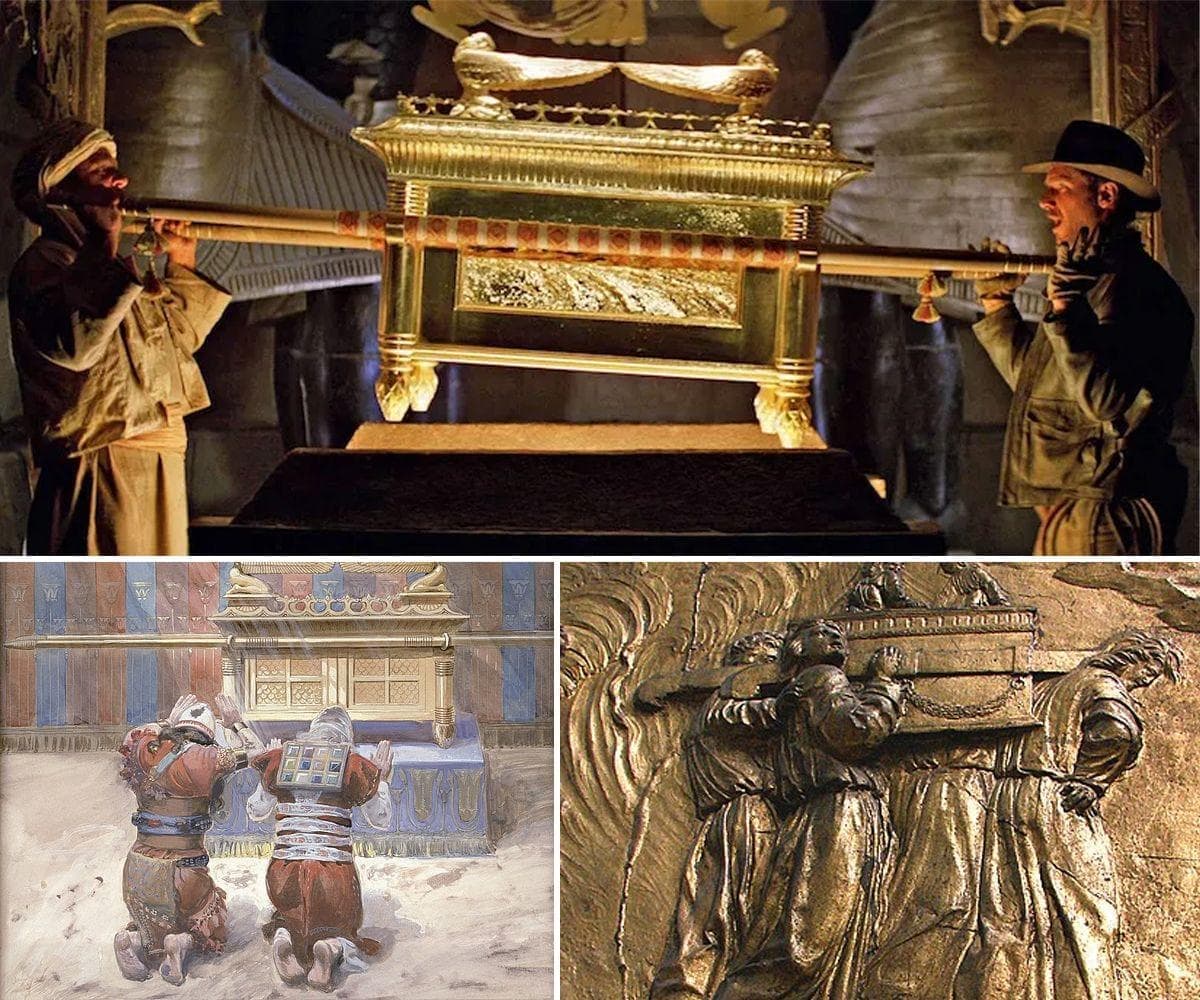
    Description/History: The legendary biblical ark of the covenant is where the pieces of the Ten Commandments were placed after Moses shattered the original tablets. A casket of gold and precious materials, the relic is supposed to have supernatural powers, allowing anyone with a proper heritage, means, and abilities to wield great power. However, if the ark deems the person attempting to use it as unworthy, it is rumored to become of volatile object of great destruction. Moses gave instruction on what the ark was to look like in Exodus 25:10-22: Now they shall construct an ark of acacia wood two and a half cubits long, one and a half cubits wide, and one and a half cubits high. You shall overlay it with pure gold, inside and out you shall overlay it, and you shall make a gold molding around it. You shall also cast four gold rings for it and fasten them on its four feet... And you shall make poles of acacia wood and overlay them with gold. You shall put the poles into the rings on the sides of the ark, to carry the ark with them… And you shall make an atoning cover of pure gold, two and a half cubits long and one and a half cubits wide. You shall make two cherubim of gold; make them of hammered work at the two ends of the atoning cover… Then you shall put the atoning cover on top of the ark, and in the ark you shall put the testimony which I will give to you. There I will meet with you; and… I will speak to you about every commandment that I will give you for the sons of Israel. Real-world equivalent: There is no real-world equivalent to the artifact today, but it is believed the movie's design of the ark is pulled from the Bible. Status: Possibly hidden by the US government in a warehouse. Possible worth: Absolutely priceless… Was there a real ark of the covenant? Possibly, but even if it did exist, it’s been lost to the sands of time for thousands of years. Should some lucky soul actually stumble upon it, they would have the most valuable artifact in the world in their hands, though good luck carrying it anywhere! Built to the specific dimensions laid out in the Bible, working out the weight of the gold alone is a challenge. At a minimum, the gold plating alone would be worth about $60 million, and you could easily mark that up a hundredfold based on the age of the artifact. As for the original stone tablets of the Ten Commandments, a copy from the Roman-Byzantine empire (circa fourth to seventh centuries) brought in $850,000, so the real deal would be worth far more. Even with a rough and conservative estimate of its value, actually buying or selling the ark would be impractical, and its discovery would likely ignite a major diplomatic row over where it should be kept. Even without the face-melting qualities, this is one secret best kept hidden for all time.
    93% upvoted
  2. 2

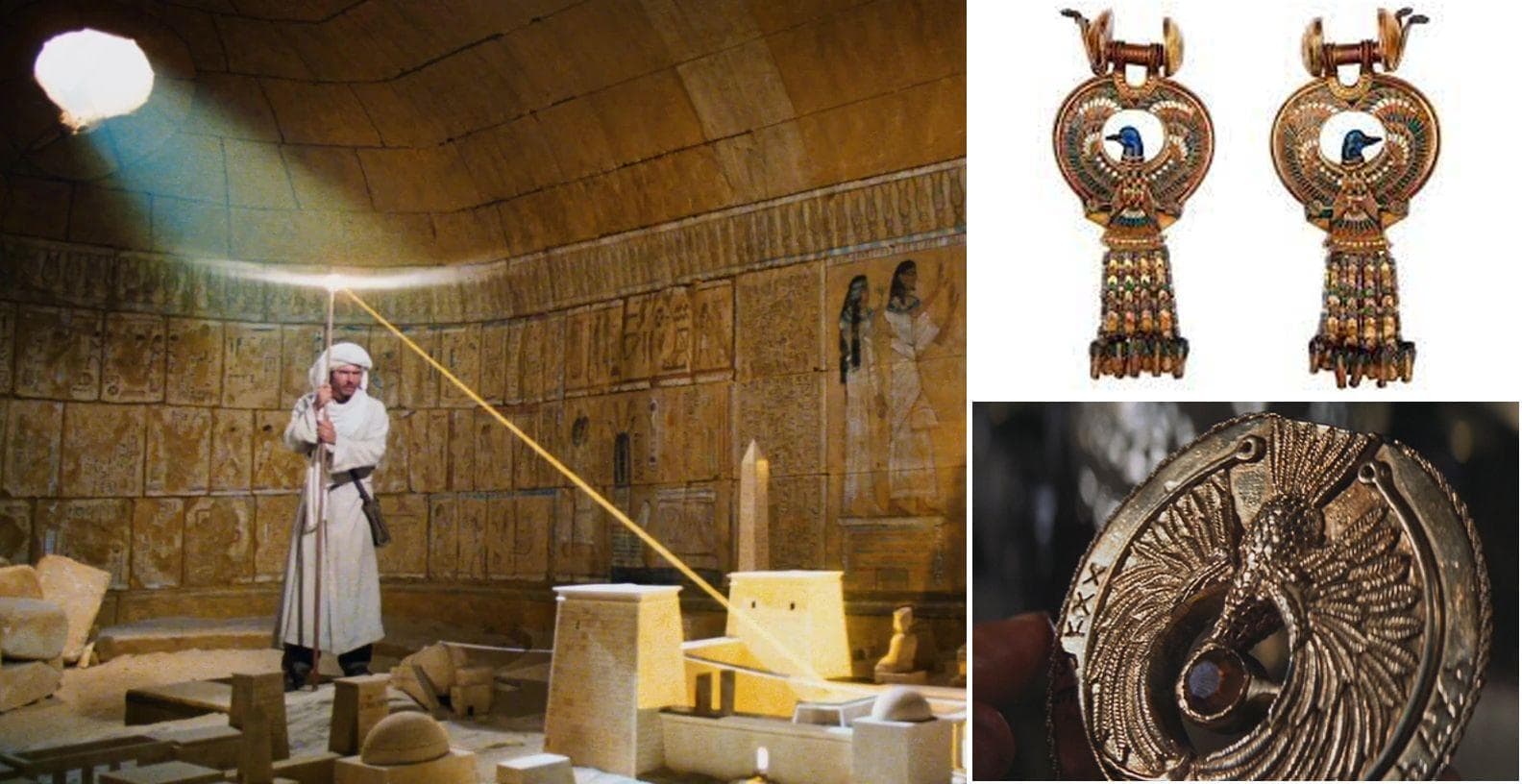
    Headpiece To The Staff Of Ra - $7 Million

    Description/History: Discovered by Abner Ravenwood in 1926, the Staff of Ra headpiece was a sought-after element for those looking for the Well of Souls, which would lead treasure hunters to the fabled ark of the covenant. The piece was supposedly created in 10th century BCE and covered in necessary information to find the ark. When placed in the right spot in the map room at the right time on a staff of the right length, a ray of light will show the location of the Well of Souls, the ark's final resting spot. Status: Unknown. Last seen in the possession of a seedy archeologist and German soldiers. Real-world equivalent: The headpiece's design was based on earrings found in King Tut's tomb. Possible worth: $7 million In the movie, Marion sells the headpiece to Indy for the pharaoh-ly sum of $300,000 in 1936. That puts it at $6.4 million in today’s money. Is that a fair price? The Staff of Ra headpiece is an Egyptian artifact from the 21st Dynasty. We know this because the piece is dated to the 10th century BCE, and it was found in Tanis, which served as the political capital for the 21st Dynasty during the Third Intermediate Period. A wooden coffin from the 21st Dynasty brought in $3.25 million at auction in 2019. A bronze medallion from the same era is surely comparable, and if we factor in the true purpose of the medallion, it’s going to be worth easily double that.

    88% upvoted
  3. 3

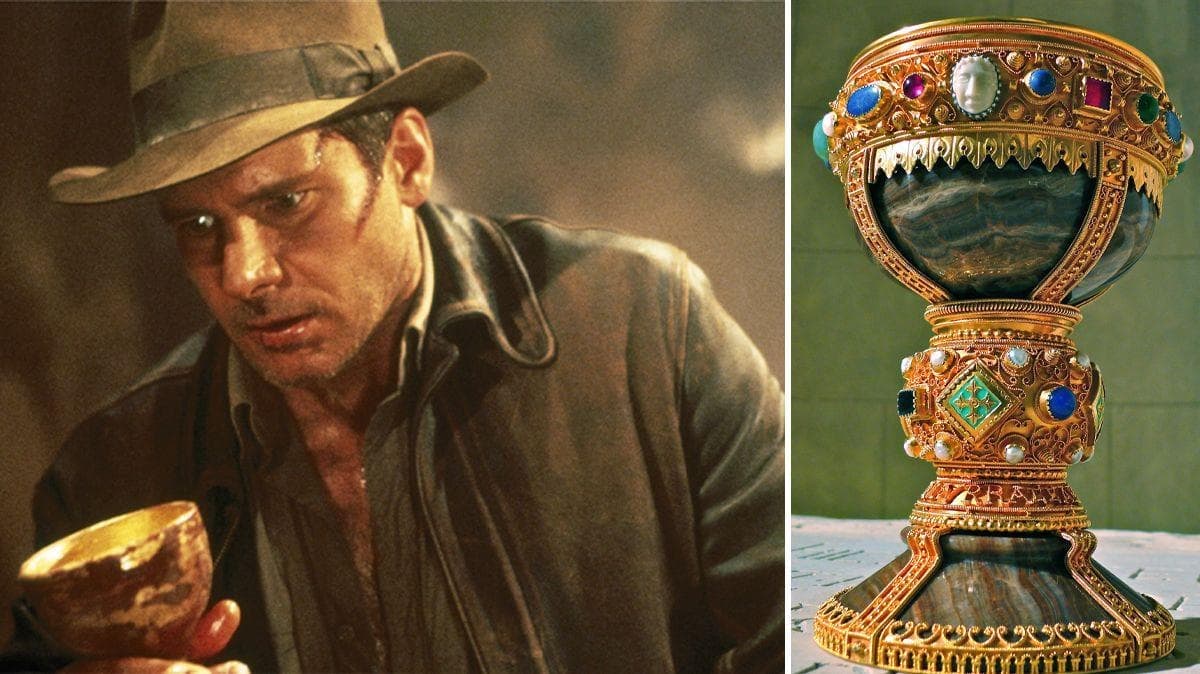
    The Holy Grail - Priceless

    Description/History: The legendary cup of Jesus Christ used during the Last Supper, the Holy Grail became the subject of Arthurian legend when King Arthur and his knights went on a grand quest to recover the relic. When it was discovered, King Arthur placed Sir Bedivere in charge of guarding the artifact. The cup is said to contain great powers, including immortality to those who drink from it and the ability to heal. However, if the cup is taken beyond the boundaries of the temple in which it currently resides, it will cause great destruction. Status: Thought to be in a temple located in the Canyon of the Crescent Moon, Hata, still guarded by the final knight. Real-world equivalent: Chalice of Doña Urraca. Possible worth: Priceless First, it’s possible there is no Holy Grail because the earliest sources pertaining to its existence are from the 12th century. Many historians believe the grail is a medieval literary creation, not a real treasure to be found. For such an apparently elusive artifact, however, the grail has been “found” hundreds of times all over the world. One of the latest claims came from two historians who identified it as the Chalice of Doña Urraca in a Spanish basilica in 2014. With no way to prove the goblet ever touched Christ’s lips, we’ll probably read stories of the latest “find” for years to come. So valuing the real deal is kind of a moot point.

    86% upvoted
  4. 4

    Peacock's Eye: $500 Million

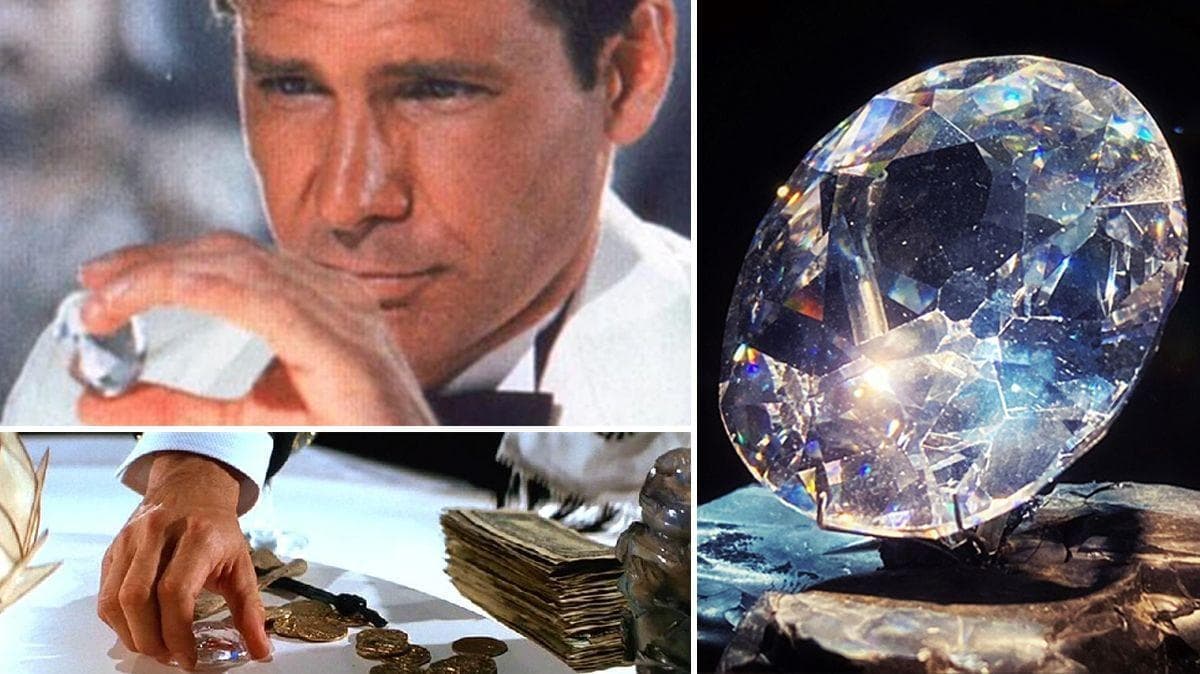
    Description/History: A massive 140-carat diamond once owned by Alexander the Great that was used in a gigantic, solid-gold peacock statue. According to the Indiana Jones mythology, the statue was destroyed after Alexander's demise and the Peacock's Eye removed. Eventually a Chinese emperor of the Tang Dynasty and an Indian emperor owned it. In the 1930s, it was traced to gangster Lao Che. Status: Lost in 1935; resurfaced in Hawaii in the possession of a native group on the Island of Niihau in 1957. Real-world equivalent: The Kohinoor, a 105.6-carat diamond that is part of the Royal Crown Jewels. Possible worth: $500 million A diamond's worth is determined by the four C's: carat, color, cut, and clarity. The closest real-life equivalent to the Peacock's Eye is the Kohinoor, a massive 105.6-carat diamond currently (and acrimoniously) owned by the British monarchy. The Kohinoor is the world's most expensive diamond, and the Peacock's Eye is both larger and older, though not quite at the same level of cut and clarity. Estimates for the real diamond range from $400 million to $600 million, so we can safely put the value of the eye somewhere in the middle of that range.

    83% upvoted
  5. 5

    Grail Knight's Sword - $500,000

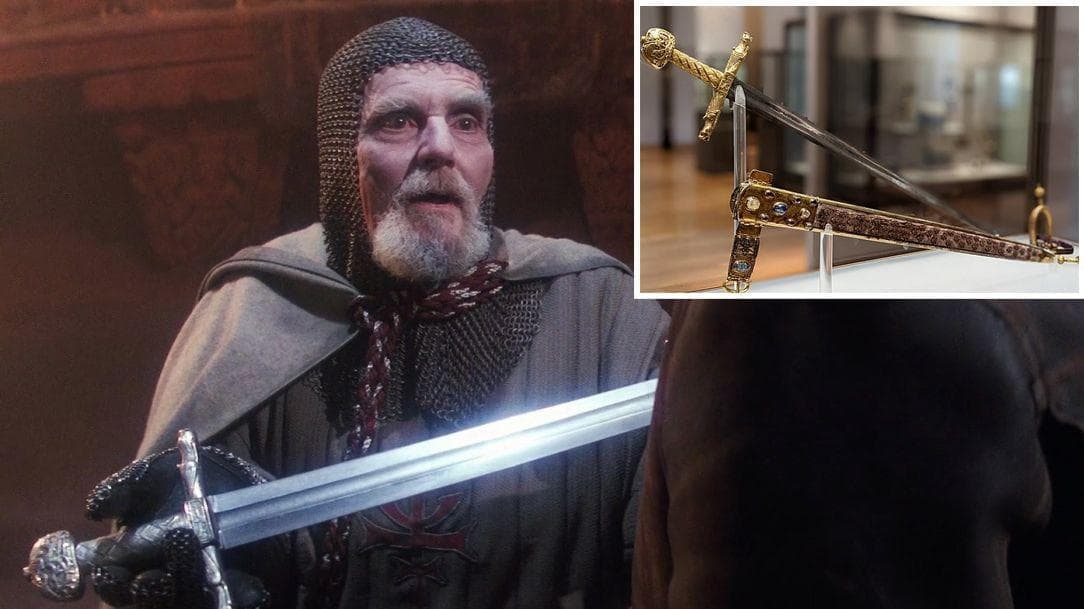
    Description/History: A two-handed broadsword owned by the Grail Knight, who protected the Holy Grail for seven centuries. The sword's pommel is beautifully decorated and the blade has been kept in excellent condition by the knight. Status: Offered to Indiana Jones, but he did not accept. Currently still in the crypt with the knight. Real-world equivalent: Joyeuse, the sword of Charlemagne. Possible worth: $500,000 The Grail Knight's sword was modeled after Joyeuse, the sword of Charlemagne, currently on display in the Louvre. Though similar in appearance, the Grail Knight's sword wouldn't have anything like Joyeuse's value because it was wielded by a knight, not royalty. The value of a real crusader sword is a much better indicator of the weapon's true worth. A 14th century crusader sword fetched just under $200,000 at auction in 2012, quite a bit more than the expected sale price. The Grail Knight Indiana Jones runs into was from a much earlier era (the 11th century) and is more rare. Factor in the age, inflation, and excellent condition of the sword, and it could probably get about half a million at auction.

    81% upvoted
  6. 6

    Sir Richard's Shield - $250,000

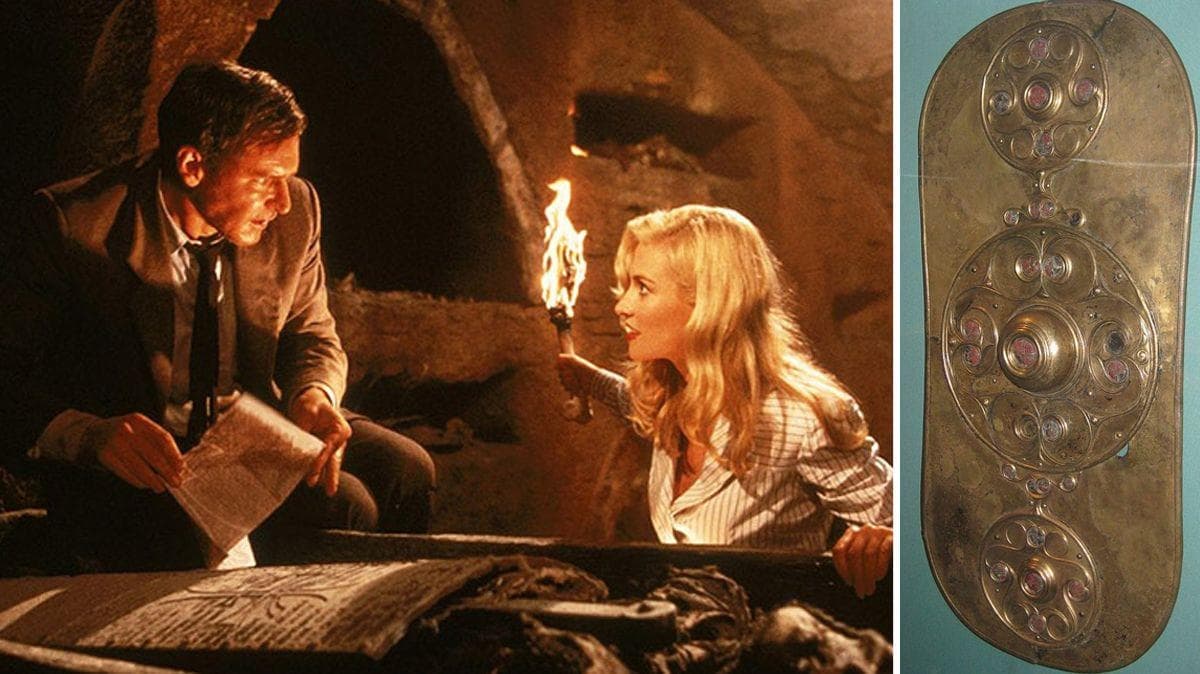
    Description/History: One of two markers left by the Knights of the First Crusade to help find the Holy Grail, the cup of Jesus Christ. Part of the inscription on the shield was a match to the Grail tablet. Status: Left in a half-flooded, partially destroyed tomb under a library in Venice. Real-world equivalent: Ancient Anglo-Saxon shields in the British Museum. Possible worth: $250,000 The shield was from the First Crusade but laid to rest with its owner from the 13th century, undisturbed until uncovered in 1938. It appears to be a kite shield typical of the era; the inscription is the only real distinguishing feature. A sufficiently rare shield can fetch a pretty high sale price, so this one would probably net $250,000 at auction.

    79% upvoted
  7. 7

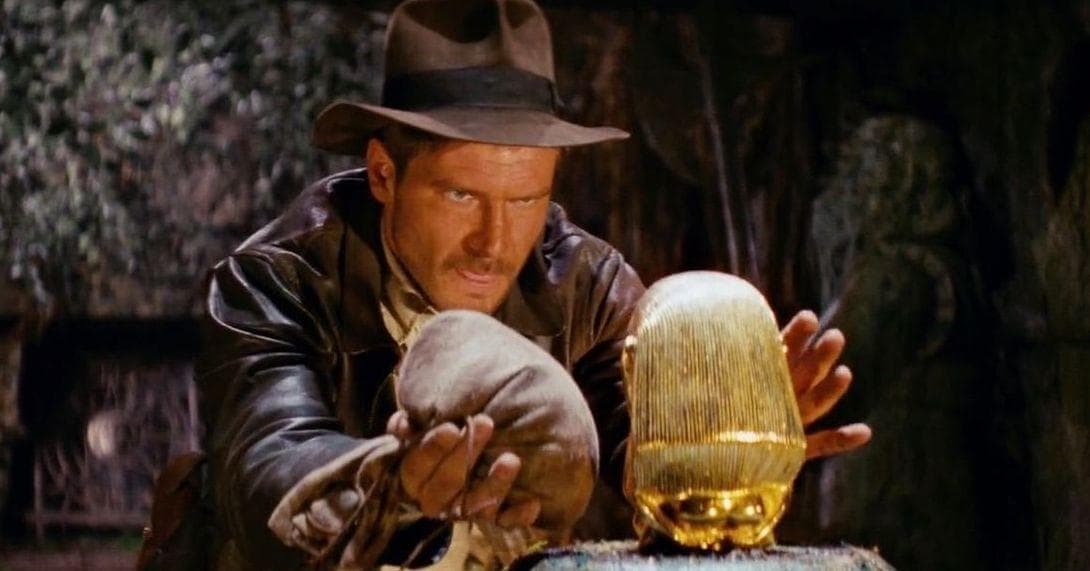
    Chachapoyan Fertility Idol - $2.5 Million

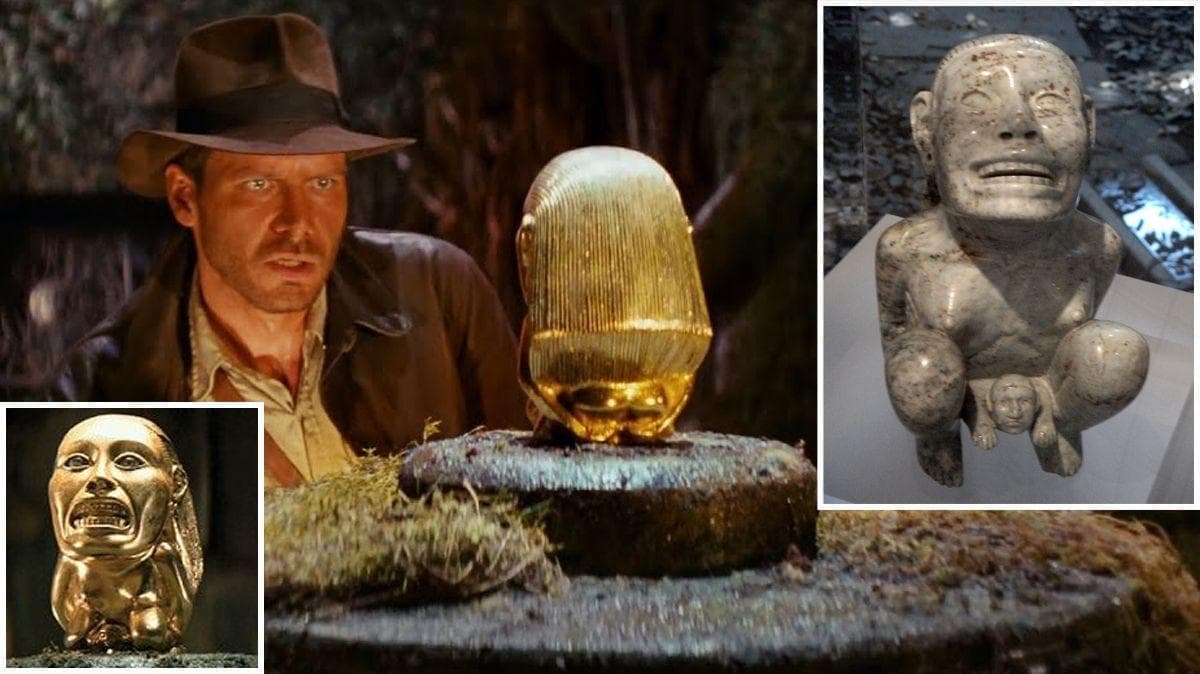
    Description/History: Said to be created in 64 BCE and known as Idol of the Chachapoyan Warriors or the Golden Idol, this 6-inch-tall, solid gold representation of the Chachapoyan goddess of fertility was hidden in a temple in Peru were it was protected by traps and hidden snares. Any attempt to remove the idol would set up a self-destruct sequence. Status: Though it was briefly taken by rogue archaeologist Rene Belloq, Jones was able to reclaim the idol some years later for the National Geographic Museum in Washington, DC. Real-world equivalent: Dumbarton Oaks Birthing Figure. Possible worth: $2.5 million This is a tricky one to value because the real-life inspiration for the idol comes from a different culture, and scholars have expressed doubts about its authenticity. The Dumbarton Oaks Birthing Figure was a supposedly pre-Colombian artifact depicting the Aztec goddess Tlazolteotl in childbirth. Initially valued at at least 5,000 francs ($2 million in today’s terms), the artifact was later found to have been an elaborate forgery crafted in the 19th century. A 2021 auction of Mayan artifacts, although they are not from the same locale or time period, can serve as a rough benchmark. A stone effigy fetched a little over $350,000, which was far more than the estimate. The Chachapoya culture stems from northern Peru around the 10th to 15th centuries; they were later conquered by the Incas. They were skilled in metalworks, and with many artifacts still to be uncovered, it’s possible they made something similar to the Golden Idol. Based on the estimated weight, age, and material used to make the idol, a conservative estimate would put the selling price at $2.5 million, though it would likely far exceed this figure if put up for auction.

    76% upvoted
  8. 8

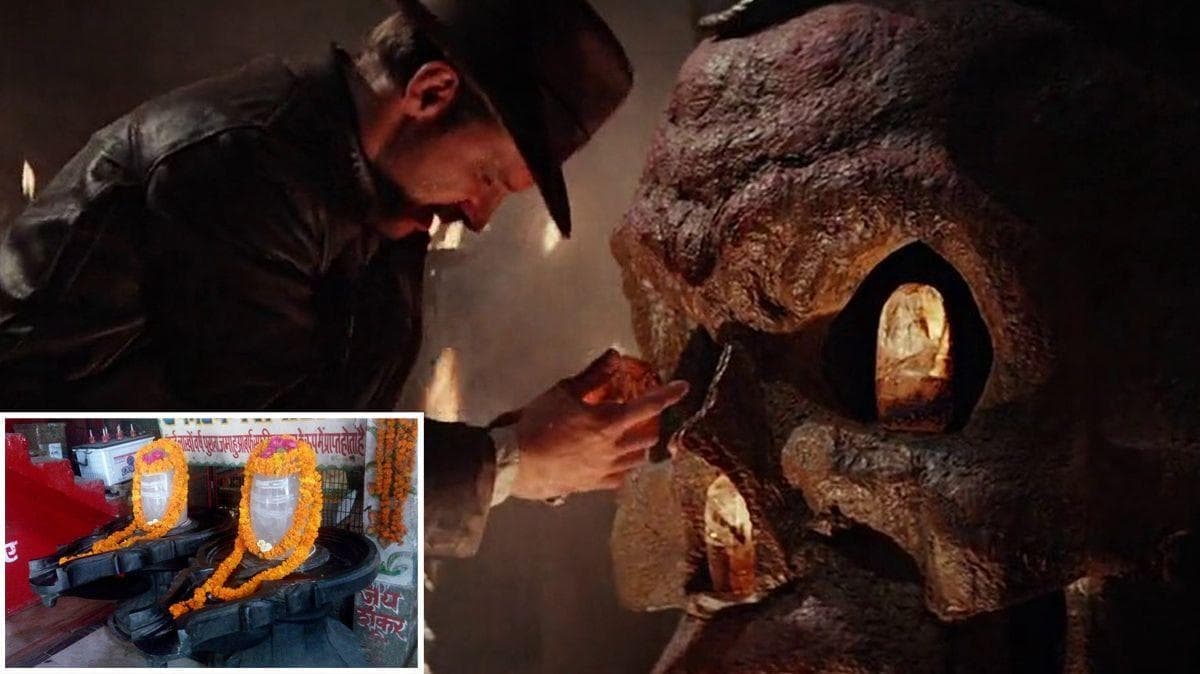
    Sankara Stones - $525,550

    Description/History: Five polished stones shaped like columns used as a symbol of the fertility aspect of Shiva with priceless gems in the center. According to legend, the Sankara Stones were a gift from the god Shiva on Mount Kalisa to fight evil on Earth. The stones offer prosperity, life, and luck. Status: Returned to the village of Mayapore in northern India. Real-world equivalent: Shiva lingam gemstones. Possible worth: $525,550 Almost all of the value for these relics comes from the diamonds inside; the stones themselves are based on Shiva lingam gemstones, which are common in India. At around $7 per carat and roughly 14 carats per stone, the whole set would only be worth about $500. The diamonds inside can probably be sized at around 5 carats, so about $105,010 each.

    75% upvoted
  9. 9

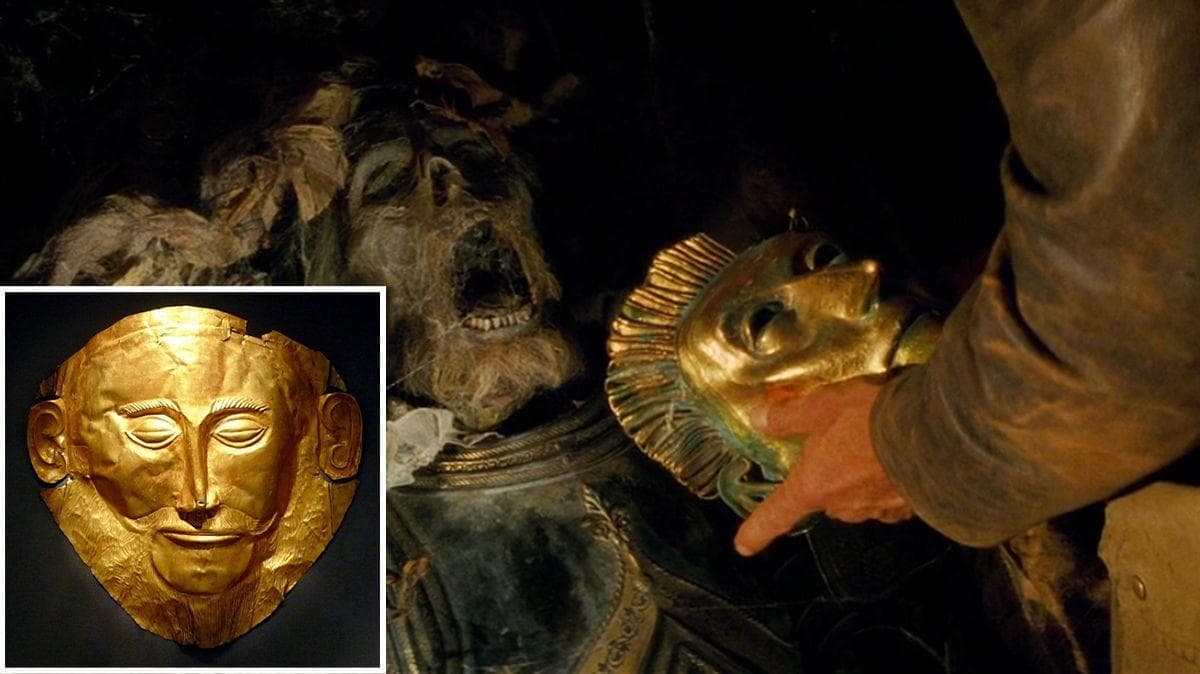
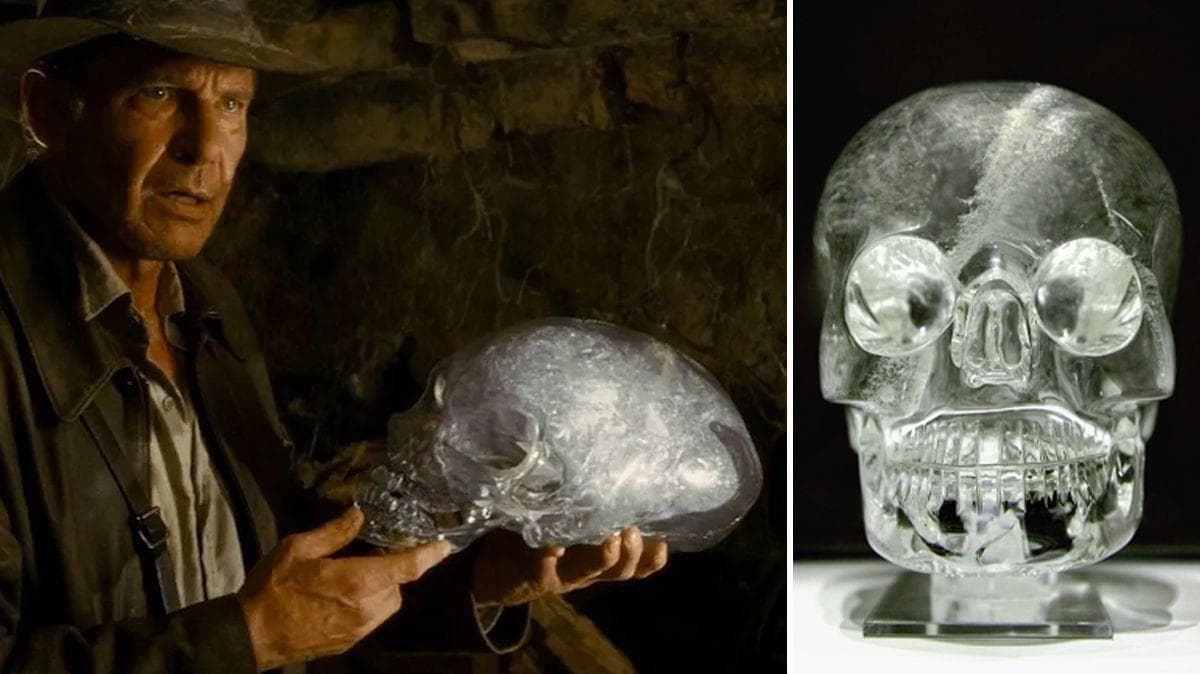
    Francisco de Orellana's Death Mask (AKA The Mask of Orellana) - $50,000

    Description/History: The golden burial mask placed with conquistador Francisco de Orellana in his tomb in the 1500s was an unusual find because Spanish custom didn't include burial masks. The mask later proved to be a clue to the Crystal Skull of Akator, which was placed behind Orellana's body. Status: Still in the remains of the now-disturbed crypt. Real-world equivalent: Mask of Agamemnon comes closest as far as time period, materials, and general look. Possible worth: Roughly starting at $50,000, more if it is gold. The history of death masks stretches back thousands of years but wasn't commonplace in Europe until the 17th century. The value would depend on the materials and historical significance of the individual. Francisco de Orellana was a real historical figure and conquistador known for exploring the Amazon River; he perished during an expedition in the 16th century. A funerary mask from the same area but an earlier era can provide a rough guide for the price. A pre-Colombian death mask made from gold, silver, and copper has a value of up to $40,000. Because, as Indy observes in the movie, Spaniards didn’t wear burial masks, the novelty factor and materials used will probably bump the value up a bit.

    72% upvoted
  10. 10

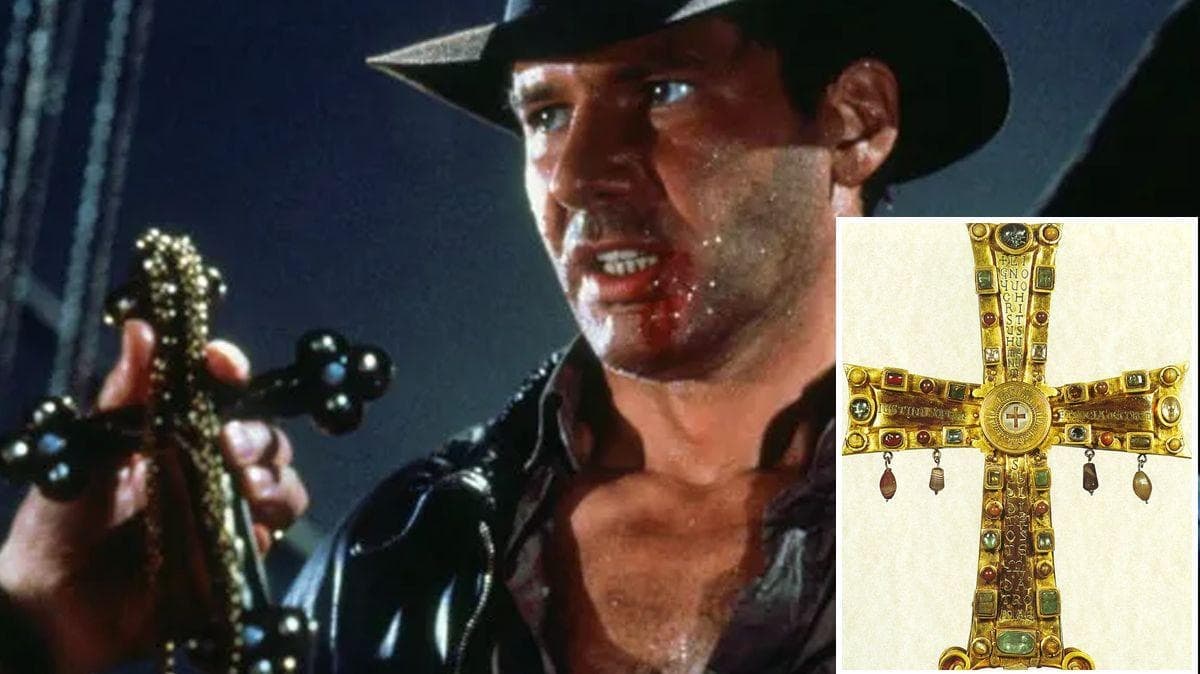
    The Cross of Coronado - $15,000

    Description/History: Named for the famous explorer Francisco Vásquez de Coronado, the gold and jewel-encrusted Cross of Coronado was believed to contain a piece of the True Cross at the center; i.e., a piece of the cross that once held the body of Jesus Christ. After Coronado lost the cross during his hunt for the Seven Cities of Gold, the relic found its way to Utah. Rumors of conquistadores hiding gold in the caves of Utah made their way to treasure hunters, who then hired unsavory sorts to find the artifacts. Status: Safe and secure in the National Museum. Real-world equivalent: The Crux Vaticana (AKA The Cross of Justin II) comes closest, and it is even commented on in The Lost Journal of Indiana Jones. Possible worth: $15,000 Francisco Vázquez de Coronado was a real conquistador who did lead an unsuccessful expedition in search of the fabled cities of gold. The venture left him bankrupt and he perished penniless in 1554. He did not meet Hernan Cortes, nor did he venture to Utah as the film suggests. Artifacts from the real expedition have surfaced, but so far no highly valuable crucifixes have been discovered. The expedition likely carried crosses, but none as elaborate as the one in the movie. The sort of personal items carried by 16th century soldiers of fortune would earn a few hundred dollars at auction at best. Pieces of the “true cross” are common; nearly every medieval lord of note claimed to have a piece, so that wouldn't add much value. Still, if we take a genuine and more ornate 16th-century Spanish crucifix, much bigger than the Cross of Coronado, we get into the five figures. If it existed, it wouldn't be cheap, but hardly worth the effort.

    70% upvoted