Skip to content
maxnews
Rankings

Historical Stories That Left Us Shaking Our Heads

Despite history's reputation for being a dry subject based on memorizing important dates and facts, history lovers know the stories behind past events are far more enriching, complex, and sometimes entertaining than initially recognized. Even seemingly mundane bits of surface information are connected to inspiring, quirky, and sometimes outright bizarre stories that provide a kaleidoscope of historical context. And although Weird History readers are accustomed to these fascinating narratives, every now and then, we come across a historical story that leaves us shaking our heads in disbelief.

Entries
12
Votes
2.3K
Updated
5 days ago

Tap upor downto vote. Your vote is added to Ranker's counts.

Voting identifies your browser with an anonymous fingerprint, stored only as a salted hash, to count one per visitor. Privacy

Source: Ranker, ranked by its voters.

  1. 1

    The BTK Serial Killer Asked Police If They Could Trace Him If He Sent A Floppy Disk, And He Believed Their Answer

    For over 30 years, Dennis Rader terrorized Wichita, Kansas, as the BTK serial killer. His victims ranged in age and gender, as did the timing between his crimes. Ever elusive, the former ADT security system employee, Lutheran church president, and local Boy Scout den leader would bind, torture, and kill (BTK) innocent people after he had stalked them to learn their daily routines and found ways to enter their homes. Once the crime was committed, Rader made sure the public knew about each murder by alerting newspapers with details of the gruesome events and sending taunting gifts related to each offense to the local police station. Rader remained elusive and anonymous until 2004, when he had grown tired of not receiving more publicity for his actions. After sending in puzzles with information regarding his 10 victims, dolls tied in a similar way to those who were slain, and a portion of his autobiography without much news coverage, the impatient Rader sent a letter to police inquiring about the traceability of computer technology. In it, Rader wrote: Can I communicate with Floppy [disk] and not be traced to a computer. Be honest. He then requested the police file an ad in the local newspaper with the phrase, “Rex, it will be OK," if the response was yes. Ater authorities placed an affirmative response in the paper, a local news station received a floppy disk from the murderer - and the police began to analyze the metadata encrypted in the files. From the disk, law enforcement traced the user to a man named “Dennis” at Christ Lutheran Church, where Rader had used a church computer to produce the evidence. A quick search in the church's directory pointed to a man named Dennis Rader. Upon arriving at Rader's home to question him regarding the disk, police found a black Jeep Cherokee that matched earlier footage of the killer dropping off a package of evidence. After DNA testing, the family man was accused of and convicted for all 10 suspected murders. According to interrogating officer Lt. Ken Landwehr, Rader was astounded that the police had lied to him in order to crack the cases, exclaiming: I need to ask you, how come you lied to me? How come you lied to me?
    93% upvoted
  2. 2

    Victor Lustig Sold The Eiffel Tower - Twice

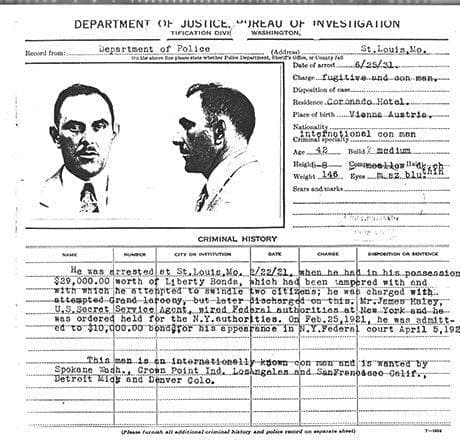
    “Count” Victor Lustig was such a great con artist that even the officers at Alcatraz, where he spent 20 years for his numerous offenses, never learned his true identity. Throughout his lengthy career as a burglar and hustler, the mastermind used at least 47 aliases, held over a dozen passports, created multiple origin stories regarding his upbringing and family ties, and even managed to sell the Eiffel Tower - twice. Lustig first arrived in Paris in May 1925, where he created stationery with the official French government seal and posed as an official to leading scrap-metal business owners in the area. He announced: Because of engineering faults, costly repairs, and political problems I cannot discuss, the tearing down of the Eiffel Tower has become mandatory. From there, he auctioned off the Eiffel Tower to the highest bidder from his chosen location of the Hôtel de Crillon. Andrew Poisson, a trader invited to the event, even offered Lustig $70,000 (over $1 million today) under the table to ensure that he won the fabricated auction. After realizing that he had been bamboozled, Poisson was too humiliated to admit being a victim of such great trickery to alert authorities. The scheme proved so successful that Lustig repeated the scheme again the following year. Though he successfully sold the Eiffel Tower for the second time, police learned of the incident and expelled him from France before he could collect payment.

    91% upvoted
  3. 3

    Patton Took Over A City With Half Of The Military Strength Eisenhower Deemed Necessary

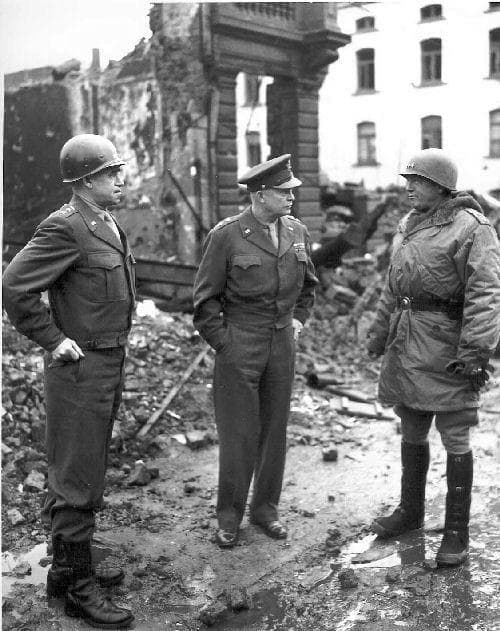
    When German forces surrounded the US 101st Airborne Infantry Unit in a surprise attack in December 1944 in Belgium, Gen. Dwight D. Eisenhower sent Gen. George Patton and his troops in to provide aid and secure the territory for the Allied cause. After receiving inside information regarding the German army's strength and projected movements from intelligence officer Col. Oscar Koch, Patton and his Third Army swiftly and successfully advanced through Belgium, defeating the Germans up to their own country's border. When Eisenhower learned of Patton's overwhelming success, he sent a letter warning not to move further, believing that it would take four divisions to seize the border city of Trier. However, Eisenhower's letter arrived too late, as Patton cleverly responded: Have taken Trier with two divisions. Do you want me to give it back? The ambitious general continued to move through the country with his troops until all land north of the Moselle River had been taken over.

    90% upvoted
  4. 4

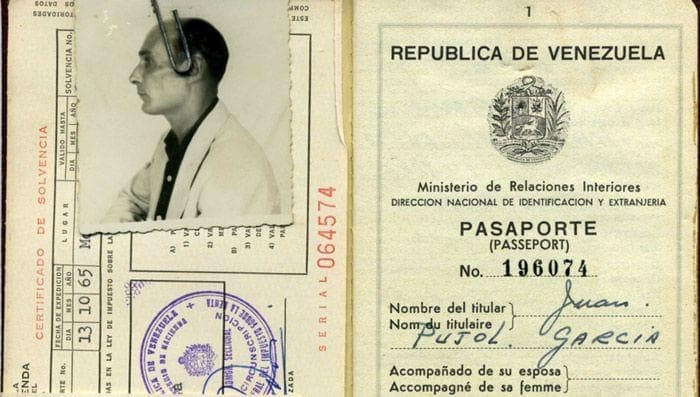
    When Britain Didn’t Make Juan Pujol Garcia A Spy, He Went To Work For Germany - As A Freelance British Spy

    After fighting against Francisco Franco and totalitarian rule in the Spanish Civil War, Juan Pujol Garcia aimed to aid the British military as a spy against Nazi forces. Though Garcia was full of enthusiasm, he lacked the credentials British officials considered necessary for the arduous task and rejected him in 1939. Undeterred, Garcia took matters into his own hands by posing as a Spanish official traveling to London and offering to spy on British forces for the Third Reich. German officials took Garcia for his word, and soon he was providing SS forces with false intel that supposedly came direct from London. In reality, the freelance double agent drew on his knowledge of the area and factual information to compile realistic - yet entirely fictional - accounts of war efforts in the UK. By 1942, British intelligence had detected that a spy was feeding the German military with false information for their country's benefit, but didn't know it was the man who had approached them years before. When Garcia returned to Britain with his updated resume, officials hired him officially to work for the MI5 intelligence service. Later referred to as “Agent Garbo,” Garcia made his greatest contribution to the Allied effort in the moments leading to D-Day, when he advised German forces that the supposed plans for storming Normandy were a hoax. The Germans never suspected Garcia was a double agent, and he received medals of honor from both German and British officials - the German Iron Cross and the Member of the Order of the British Empire.

    90% upvoted
  5. 5

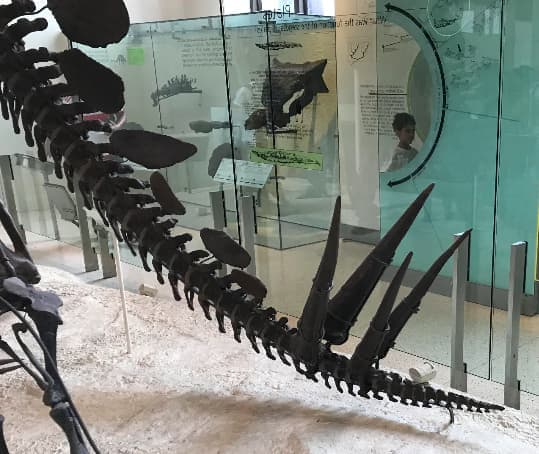
    'The Far Side' Named A Dinosaur Part

    Though paleontologists aren't sure if the stegosaurus's four-spiked tail was used for intimidation or defense, the anatomical part did earn its own name - and from an unlikely place. Gary Larson’s The Far Side newspaper comic strip, which ran for 15 years during the 1980s and 1990s, included humorous and sometimes morbid stories about cave people and their interactions with dinosaurs. While the earliest known humans showed up around 150 million years after the stegosaurus's extinction, the comic implied that one cave man, Thag Simmons, had been bludgeoned to death by the dinosaur's spiked tail. As a result, the body part was the “thagomizer.” Paleontologists found the joke so funny that they adopted “thagomizer” as the formal name for the spiky tail.

    89% upvoted
  6. 6

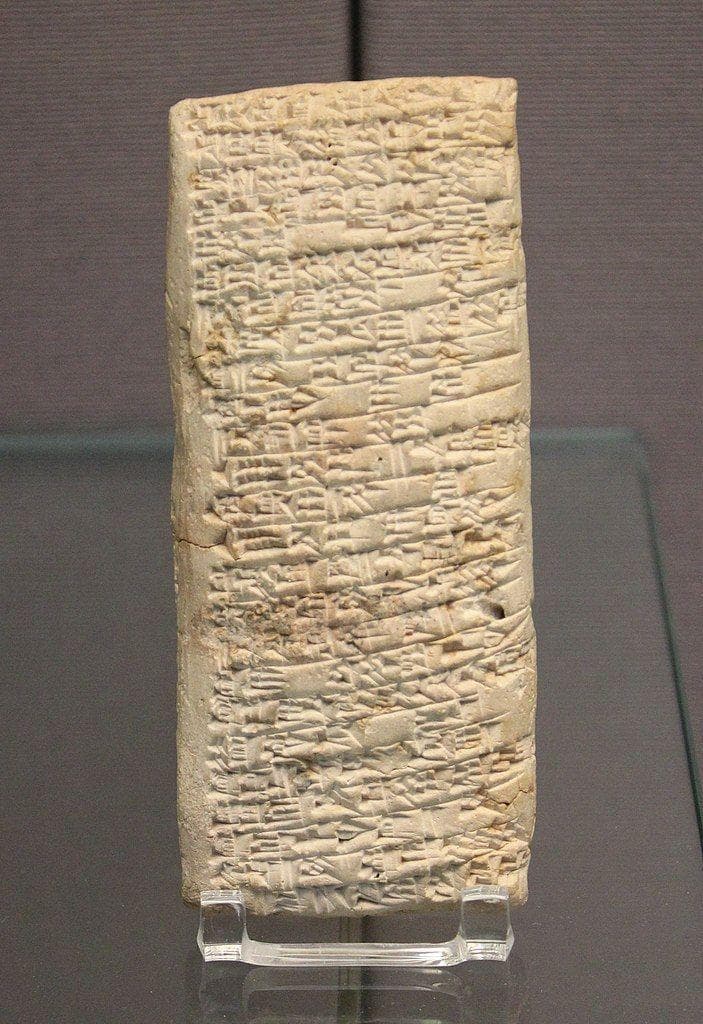
    A Nearly 4,000-Year-Old Tablet Features A Customer Complaint

    A historical find in ancient Babylon, now modern-day Iraq, proved to the world that unhappy customers have been submitting formal complaints for nearly 4,000 years. After Ea-Nasir sold unsatisfactory copper to a person named Nanni in 1750 BCE, the customer wanted to ensure that the transgression became public knowledge. Nanni had to painstakingly carve a stone tablet in cuneiform to ensure his aggravation over the transaction was received. The ancient document read: Tell Ea-Nasir: Nanni sends the following message: When you came, you said to me: “I will give fine quality copper ingots.” You left, but you did not do what you promised me. You put ingots which were not good before my messenger and said: “If you want to take them, take them; if you do not want to take them, go away!” What do you take me for that you treat me with such contempt? … … How have you treated me for that copper? You have withheld my money bag from me in enemy territory; it is now up to you to restore to me in full. Take notice that I will not accept any copper from you that is not of fine quality. I shall select and take the ingots individually in my yard, and I shall exercise against you my right of rejection because you have treated me with contempt.

    89% upvoted
  7. 7

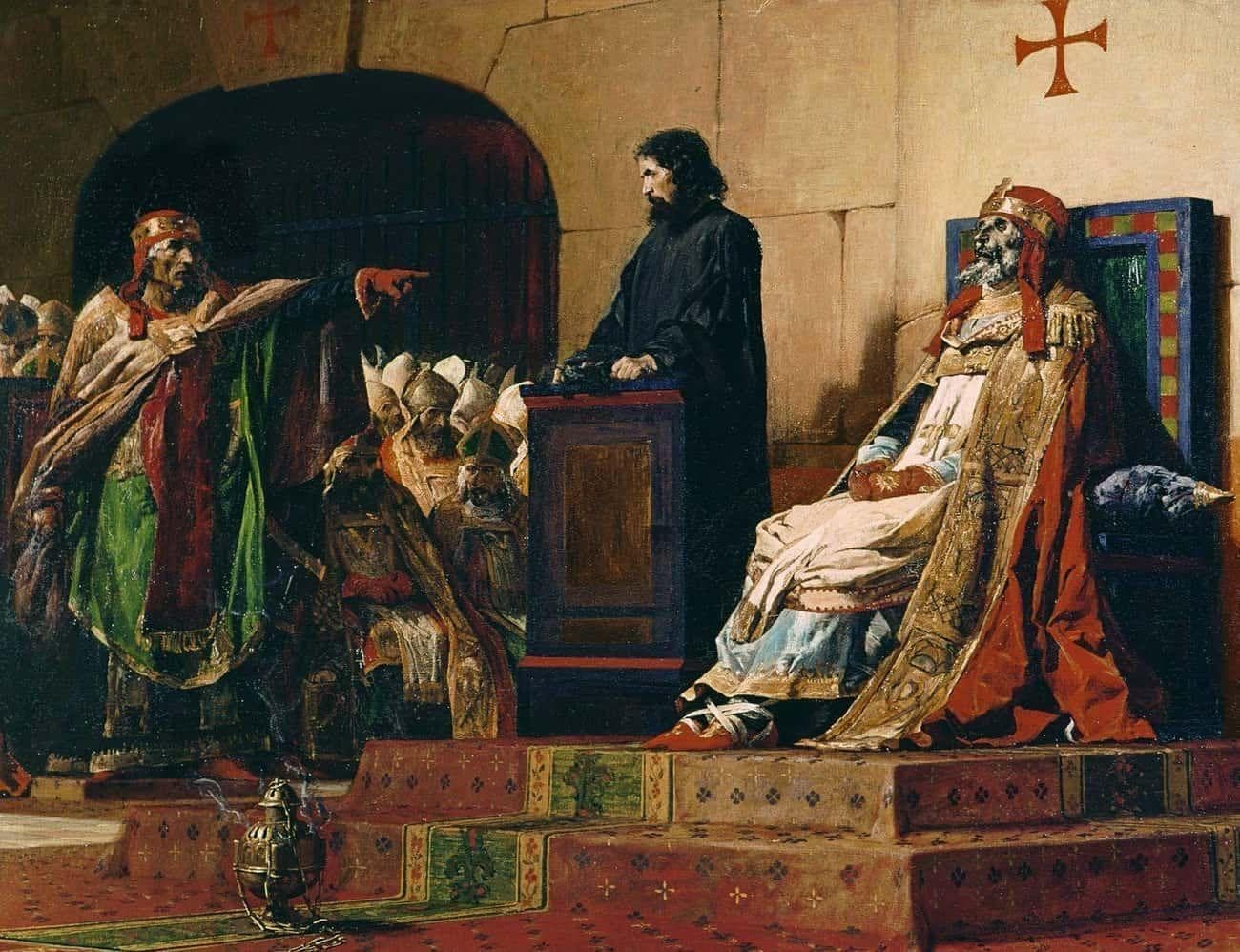
    Pope Stephen VI Had His Dead Predecessor Exhumed And Put On Trial

    A pope's work is never truly done, even after he passes. In most cases, the Catholic Church uses the pope's body to make relics: small pieces of bone and flesh believers can pray to. Unfortunately for Pope Formosus, his corpse was called to trial instead of holy miraculous reverence in 896. Formosus had a history of disagreements regarding coronated rulers, even spending time in exile during his appointment as cardinal-bishop before being elected pope in 891. When he passed in 896, he left an imperial dispute over the crown unresolved. Pope Stephen VI, his successor, sought to permanently disgrace Formosus by establishing power and ensuring that the disagreement over the Holy Roman crown was settled. So he had Formosus's body exhumed and placed him on trial, where he fired off a multitude of accusations against the corpse. The deceased Formosus was found guilty of perjury, disobeying canon law, and usurping the papacy. To guarantee that Formosus's legacy ended with his body, Stephen VI then stripped the offending corpse of his ecclesiastical robes, dressed him in rags, cut off the fingers he once used for anointing, and dumped him into the Tiber River. With Formosus's body floating out to sea and all of his papal work declared null and void, Pope Stephen VI hoped to deny his predecessor any legacy and remove him from the collective memory. Instead, his decision to place Formosus's corpse on trial earned him an intriguing (and lasting) spot in papal history.

    89% upvoted
  8. 8

    Liechtenstein's Army Returned From War With One Extra Soldier

    Liechtenstein, one of the smallest countries in the world (15 miles long and 7 miles wide), returned from its only documented conflict with one more soldier than it started. When Liechtenstein, located between Austria and Switzerland, entered the Austro-Prussian War in 1866, the country sent 80 men to defend the Tyrolean border. Although rumors differ regarding who the additional man was or where he came from, the small army attracted another soldier while making its way to a designated post. The 81 men saw no action but had plenty of beer and wine to drink in a mountain town between Austria and Italy as they sat and waited for the conflict's end. All 81 men returned to their families unharmed.

    85% upvoted
  9. 9

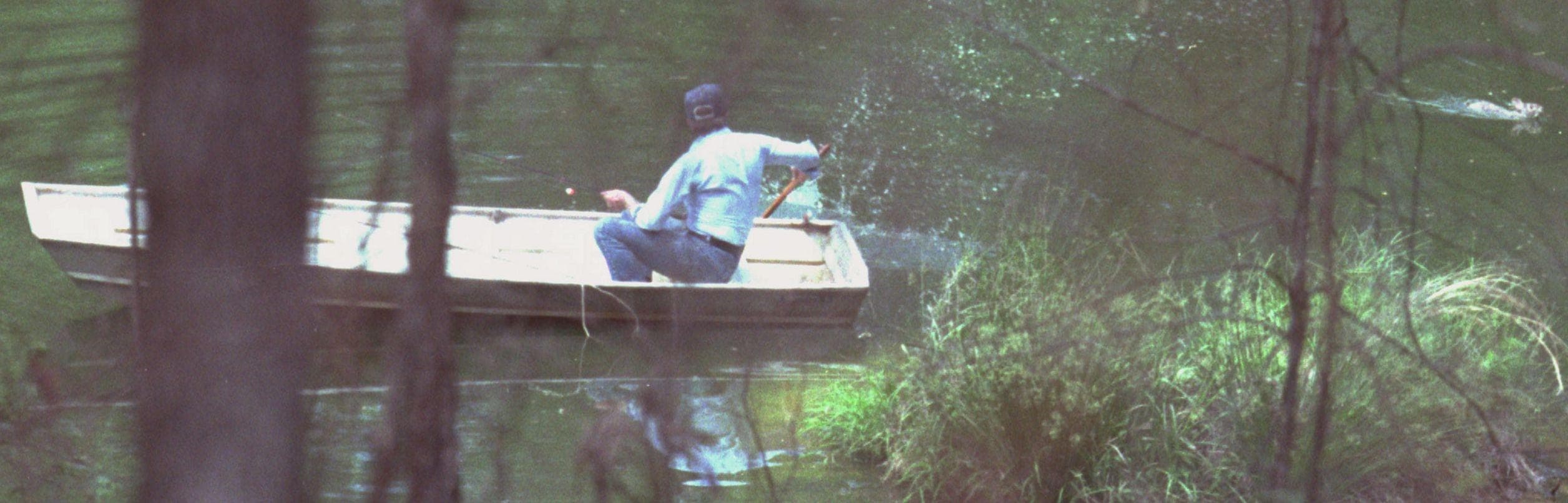
    Jimmy Carter Was Attacked By A Swimming Rabbit

    Just before his 1980 election campaign, news broke that President Jimmy Carter had been attacked by a rabbit while boating on a lake near his home in Plains, GA. The official White House photographer stayed committed to his occupation during the event, catching the dramatic event through photographs. According to Carter's press secretary at the time, Jody Powell, the president said it was obvious the rabbit was being hunted by another animal and dove into the water in a state of panic. Powell then alerted The Associated Press with the details, a choice that historians and analysts later surmised squashed the president's reputation and career. The media ran wild with the tale, depicting the incident through political illustrations as an enormous killer rabbit intent on attacking Carter. Though Carter's administration refused to release photos at the time of the event, the White House eventually shared the photographic evidence with a blogger who requested them in 2003. In his book The Other Side of the Story, Powell recalled: The animal was clearly in distress, or perhaps berserk… The president confessed to having had limited experience with enraged rabbits. He was unable to reach a definite conclusion about its state of mind… What was obvious, however, was that this large, wet animal, making strange hissing noises and gnashing its teeth, was intent upon climbing into the presidential boat. Carter himself spoke of the incident in 2015: Wild rabbits… all of them know how to swim… There was nothing to it… When Jody told it, it became a very humorous and still lasting story. Lots of people that had tame bunny rabbits threw them in swimming pools and said their rabbits could swim, too.

    82% upvoted
  10. 10

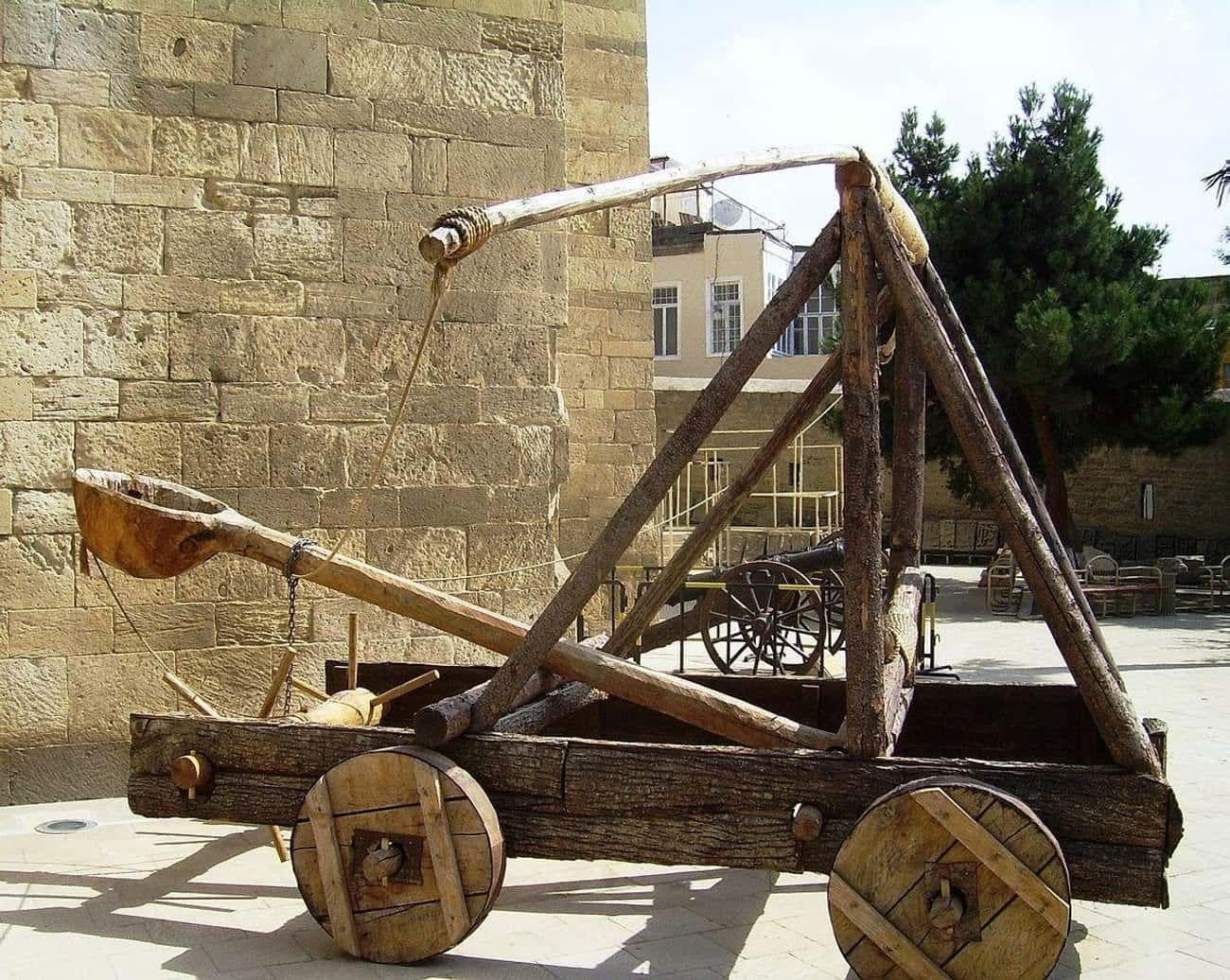
    During The 1521 Battle Of Tenochtitlan, The Conquistadors Built A Catapult That Destroyed Itself

    Hernán Cortés and his army of Spanish conquistadors devastated the Aztec population in 1521, seizing Tenochtitlan. Though most of their technological advancements in weaponry played a significant role in establishing New Spain, one tactic ended in an engineering disaster. During the siege, the conquistadors built a catapult that destroyed itself. Cortés and his army began running out of gunpowder late in the fight against the Aztecs. To ensure that their military conquest ended in complete success, the conquistadors began devising a plan that would wipe out everyone in the city with one blow and allow them to save precious ammunition. The solution was a catapult that took four days to build. Cortés was short on engineers, so he asked carpenters to build the device instead. Their design proved so disastrous that the soldiers on the battlefield even recounted the event in their diaries. The catapult was rolled into place and loaded with a heavy stone. Instead of destroying the city, the catapult lobbed the huge rock directly above and only a few inches higher than the mechanism. The catapult crumbled under the impact of the stone, causing the device to destroy itself instead of its intended target.

    81% upvoted