Skip to content
maxnews
People

Facts About Alexander Hamilton Left Out Of The Musical

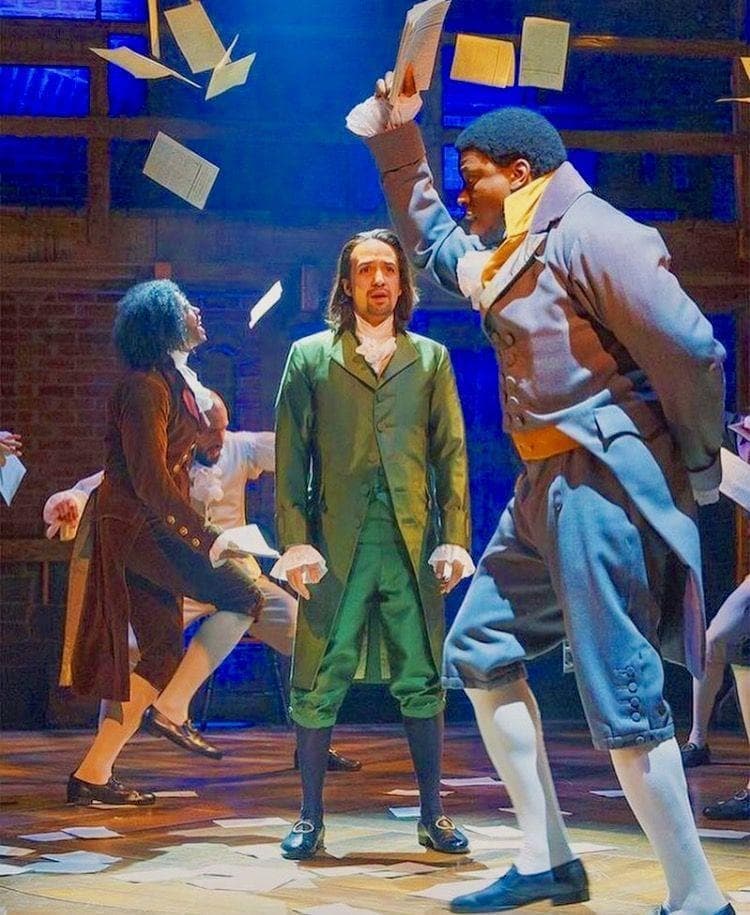
The Hamilton musical may have set the theater world alight and reignited modern interest in the life stories of the Founding Fathers, but questions about Hamilton’s historical accuracy have lingered since it first hit the stage. In short, it’s as historically accurate as any other musical ever produced, and pays a lot more attention to detail than most - but that doesn’t mean Lin-Manuel Miranda didn’t leave a boatload of pertinent Alexander Hamilton facts on the cutting room floor and out of the script. Some critics claim that Hamilton whitewashes history and simplifies what should be a complicated and controversial legacy, and those arguments are not without merit. It’s also true, however, that Miranda left out some of the most interesting events and occurrences from Alexander Hamilton’s life, and that’s a little more inexplicable.

Entries
13
Votes
6.5K
Updated
3 days ago

Tap upor downto vote. Your vote is added to Ranker's counts.

Voting identifies your browser with an anonymous fingerprint, stored only as a salted hash, to count one per visitor. Privacy

Source: Ranker, ranked by its voters.

  1. 1

    Hamilton Was With Peggy Schuyler When She Perished, And That Set Up More Conflict With Burr
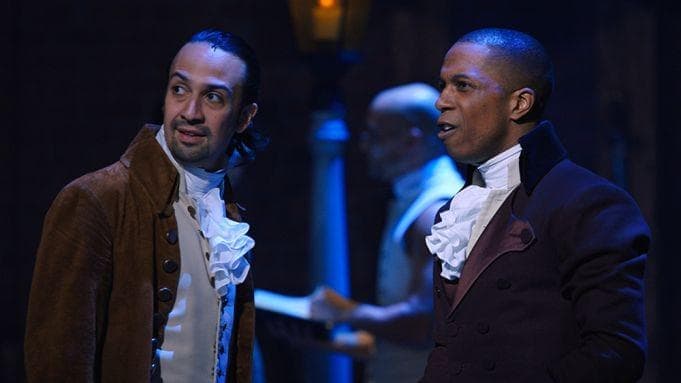
    While it is true that both Eliza and Angelica Schuyler were by Alexander Hamilton’s side when he perished, something that doesn’t get a mention in the musical is that, several years earlier, Hamilton was there when their sister Peggy passed on. Peggy and Alexander had struck up a true friendship through correspondence during his marriage to Eliza. When she fell ill in 1799, he was there to keep her company and update her sisters on her condition, and he continued to regularly visit her over the next two years. In 1801, he sadly wrote: On Saturday, My Dear Eliza, your sister took leave of her sufferings and friends, I trust, to find repose and happiness in a better country. Viewing all that she had endured for so long a time, I could not but feel a relief in the termination of the scene. She was sensible to the last and resigned to the important change. After Peggy’s passing, Hamilton threw his energy into her widowed husband’s campaign for governor of New York - something that brought him into further conflict with Aaron Burr, and provided further fuel for their eventual duel.
    85% upvoted
  2. 2

    The Hamiltons Had Eight Children In Total, And Alexander Jr. Went On To Aid Aaron Burr’s Second Wife In Their Divorce Proceedings

    The Hamiltons’ first son, Philip, is a major character in the musical, and their first daughter, Angelica, gets a mention, but the couple also had six other children - each of whom expanded on the family legacy in their own way. But it was Alexander Jr. whose actions would provide the perfect bookend to his father’s story. While popular retellings claim that Alexander Jr. represented Eliza Jumel, Aaron Burr’s second wife, in her divorce proceedings, that’s not exactly what happened. Instead, Jumel and Alexander Jr. conspired to cheat Burr out of some land in the divorce settlement with a paper transaction that put the property in Hamilton’s name until the agreement was final, and then handed it right back to Jumel. Burr passed away the day the divorce was finalized, meaning that the last thing he experienced in life was being ripped off by Alexander Hamilton Jr. - an event so poetic that it’s hard to believe it wasn’t included in Hamilton.

    84% upvoted
  3. 3

    One Of Hamilton’s Sons Became Secretary Of State, And His Youngest Son Became A Supporter Of The Underground Railroad

    All of Alexander and Eliza Hamilton’s children found success in their own way, but a couple of them stand out from the crowd of eight as particularly high achievers. James Alexander, their fourth child, studied law and proved quite adept at it, eventually becoming a district attorney and then briefly serving as secretary of state - a role his father once coveted - under President Andrew Jackson. Philip Hamilton II, named in honor of his late brother, also became a lawyer, but he’s better remembered as an abolitionist. Philip’s son, Allan McLane Hamilton, recalled in his memoirs that his father had secreted away escaping slaves at their estate as part of the Underground Railroad movement.

    84% upvoted
  4. 4

    Hamilton Was The Senior Officer Of The US Army After Washington's Demise

    Lin-Manuel Miranda’s musical makes a big point of Alexander Hamilton’s desire for militaristic glory, and then it makes the claim that his career was dramatically ended by the Reynolds Scandal. What it fails to mention is, post-scandal, Hamilton became the effective commander-in-chief of the US Army. During the Adams administration, war with France looked like a distinct possibility, so John Adams asked George Washington to come out of retirement to help raise and train a new set of armed forces. Washington reluctantly agreed and named Hamilton his second-in-command under the title of Inspector General - something that Adams signed off on with the following words: Know Ye, That reposing special Trust and Confidence in the Patriotism, Valour, Fidelity and Abilities of Alexander Hamilton I have nominated and by and with the Advice and Consent of the Senate do appoint him Inspector General of the Army with the rank of Major General in the Service of the United States. After Washington passed in late 1799, Hamilton served as the Army’s senior officer until he gave the position up six months later.

    84% upvoted
  5. 5

    Hamilton Bought And Sold Slaves Even Though He Was A Public Abolitionist

    Alexander Hamilton was an outspoken abolitionist who appears to have held a lifelong disdain for slavery, likely brought on by his involvement in the trade at a young age in the Caribbean. When forming the Constitution, however, Hamilton would be forced to compromise on abolition again and again in an attempt to preserve the Union - and that’s not the only time he compromised on slavery. While there is no hard evidence that Alexander and Eliza ever had slaves in their household, Eliza’s family certainly did. Furthermore, Alexander helped buy and sell slaves for the Schuylers on multiple occasions, which does seem rather hypocritical. This has led some, like historian Annette Gordon-Reed, to criticize Hamilton the musical for overlooking its protagonists’ complicated views on slavery. As she writes, “In the musical, only Jefferson is shown as a slave holder. But Madison owned slaves too, and so did George Washington.”

    76% upvoted
  6. 6

    The 'Adams Pamphlet' Was The Real Nail In The Coffin Of Hamilton's Career

    The Hamilton musical seems to imply that the "Reynolds Pamphlet," and the subsequent outing of Alexander Hamilton's torrid affair that came with it, ended his political career - leaving him with no other recourse but to go be quiet uptown. In reality, however, Hamilton remained an active and influential force in the Federalist Party for years, until the publication of a different pamphlet, which heavily criticized a candidate in the election of 1800, brought Hamilton's time in politics to a close - and, no, it wasn't about Aaron Burr. The so-called "Adams Pamphlet" was directed at then-incumbent president John Adams, who also happened to be the leader of Hamilton's own party. In it, Hamilton pulled no punches, opening with: Not denying to Mr. Adams patriotism and integrity, and even talents of a certain kind, I should be deficient in candor, were I to conceal the conviction, that he does not possess the talents adapted to the Administration of Government, and that there are great and intrinsic defects in his character, which unfit him for the office of Chief Magistrate. From there, Hamilton went on a multi-page rant laying out each of his issues with Adams. The effect was two-fold, and catastrophic for Hamilton's future political aspirations. Not only did it result in him being shut out of the Federalist Party completely, but it also helped ensure that Thomas Jefferson and the Democratic Republicans would win the election, putting Hamilton's enemies into power. The Federalist Party dissolved.

    79% upvoted
  7. 7

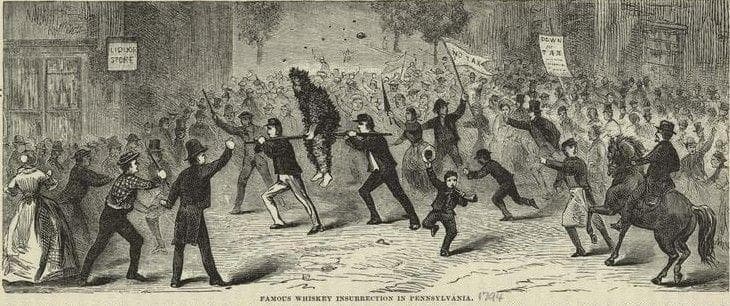
    Hamilton’s Taxes Sparked The ‘Whiskey Rebellion’

    In Hamilton, Thomas Jefferson taunts Alexander Hamilton with the lyrics, “Look, when Britain taxed our tea, we got frisky / Imagine what gon' happen when you try to tax our whiskey.” That throwaway line is a reference to one of the greatest crises ever brought on by Hamilton’s time in government: the Whiskey Rebellion. Not only did Hamilton push hard for a tax on whiskey to help cover the debt of individual states taken on by the federal government, but he also favored a harsh and violent response to the rebellion that followed. As he wrote in a 1792 letter to George Washington: My present clear conviction is, that it is indispensable, if competent evidence can be obtained, to exert the full force of the Law against the Offenders, with every circumstance that can manifest the determination of the Government to enforce its execution; & if the processes of the Courts are resisted, as is rather to be expected, to employ those means, which in the last resort are put in the power of the Executive. If this is not done, the spirit of disobedience will naturally extend and the authority of the Government will be prostrate. Moderation enough has been shewn: 'tis time to assume a different tone. In other words, Hamilton thought that a strong reaction to the rebellion was necessary to keep confidence in the new federal government steady - and history shows that he was probably right about that.

    73% upvoted
  8. 8

    Some Historians Think Hamilton Was In Love With John Laurens

    It’s clear to anyone who has studied the writings of Alexander Hamilton, or even those who have watched the musical, that his closest friend in life was John Laurens - but some historians believe the two shared more than just a platonic bond. Several pieces of correspondence between Hamilton and Laurens show evidence of physical attraction and romantic affection, something that appears to have amounted to the modern-day equivalent of a mutual unconsummated crush. There are a few letters on record that fan the flames of this theory, and multiple hints to it in Hamilton, but none more so than a note sent from Alexander to John in 1779, just a few years before Laurens’s untimely demise. It reads, in part: Cold in my professions, warm in my friendships, I wish, my Dear Laurens, it might be in my power, by action rather than words, to convince you that I love you. I shall only tell you that ’till you bade us Adieu, I hardly knew the value you had taught my heart to set upon you. Indeed, my friend, it was not well done. You know the opinion I entertain of mankind, and how much it is my desire to preserve myself free from particular attachments, and to keep my happiness independent on the caprice of others. You should not have taken advantage of my sensibility to steal into my affections without my consent.

    69% upvoted
  9. 9

    Hamilton’s Career Didn’t Slow Down Much After The Reynolds Pamphlet

    The Hamilton musical follows a fairly straightforward plot: Alexander Hamilton enjoys a meteoric rise to fame and fortune, then has it all taken away from him in the Reynolds Pamphlet scandal. He then retires to a quiet life uptown before returning to action in the election of 1800 for a dramatic denouement. As always, however, the truth is significantly more complex than the fiction. In reality, Hamilton’s political career did not slow down much, if at all, after the publication of the pamphlet and the outing of his affair. As historian Ron Chernow puts it, “The Reynolds scandal diminished but scarcely destroyed his political stature.” True, the incident effectively scuttled his chances of ever becoming president, but he remained incredibly influential in the Federalist Party for years and was said to essentially run John Adams’s cabinet from afar. It wasn’t until he published the Adams Pamphlet, in which he tore apart the incumbent president ahead of the 1800 election, that Hamilton’s political career truly went off the rails.

    70% upvoted
  10. 10

    Hamilton’s Father Reentered His Life, And Alexander Paid His Many Debts

    The opening bars of Hamilton refer to its titular protagonist as “a bastard, orphan, son of a whore” and “the 10-dollar Founding Father without a father,” but that’s not quite true. While James Hamilton did abandon Rachel Faucett and their two children, James Jr. and Alexander, on the island of Nevis at some point in the 1760s, that wasn’t the last time Alexander would hear from his dear old dad. Historian Micheal E. Newton has painstakingly tracked James’s search for riches in the Caribbean, but he wasn’t the only one interested - Alexander himself eventually tracked down his father and began a correspondence with him. Not only did Alexander send James an invitation to his wedding with Elizabeth Schuyler, but he also took on a few of his father’s debts, noting in an 1800 letter: In capacity of merchant he went to St Kitts, where from too generous and too easy a temper he failed in business, and at length fell into indigent circumstances. For some time he was supported by his friends in Scotland, and for several years before his death by me. It was his fault to have had too much pride and two [sic] large a portion of indolence - but his character was otherwise without reproach and his manners those of a Gentleman.

    66% upvoted