Skip to content
maxnews
Film

15 Surprisingly Good Movie Adaptations About Public Domain Characters

Public domain characters are fair game for filmmakers, and the legions of movies they have spawned have yielded some surprisingly good results. Copyright laws are meant to protect artists from having their creations repurposed by other people, but characters can’t be off-limits forever, and some types of stories - such as myths, history, and fairytales - are never subject to copyright. With a few exceptions, characters and stories published 95 years ago or more automatically lapse into the public domain, allowing anyone to adapt them however they wish. Public domain characters are ideal subject matter for filmmakers because they are often already adored by the general public. Peter Pan, Robin Hood, and King Arthur are all figures in the public domain who have had many on-screen iterations. Some filmmakers try to stay as true to the original story as possible, while others take considerable liberties. Whether you like the idea of Robin Hood trying to (consensually) break open a chastity belt or setting Beauty and the Beast in a virtual reality interface, vote up the great films about stories you know like the back of your hand.

Entries
15
Votes
3.6K
Updated
7 hours ago

Tap upor downto vote. Your vote is added to Ranker's counts.

Voting identifies your browser with an anonymous fingerprint, stored only as a salted hash, to count one per visitor. Privacy

Source: Ranker, ranked by its voters.

  1. 1

    Robin Hood: Men in Tights
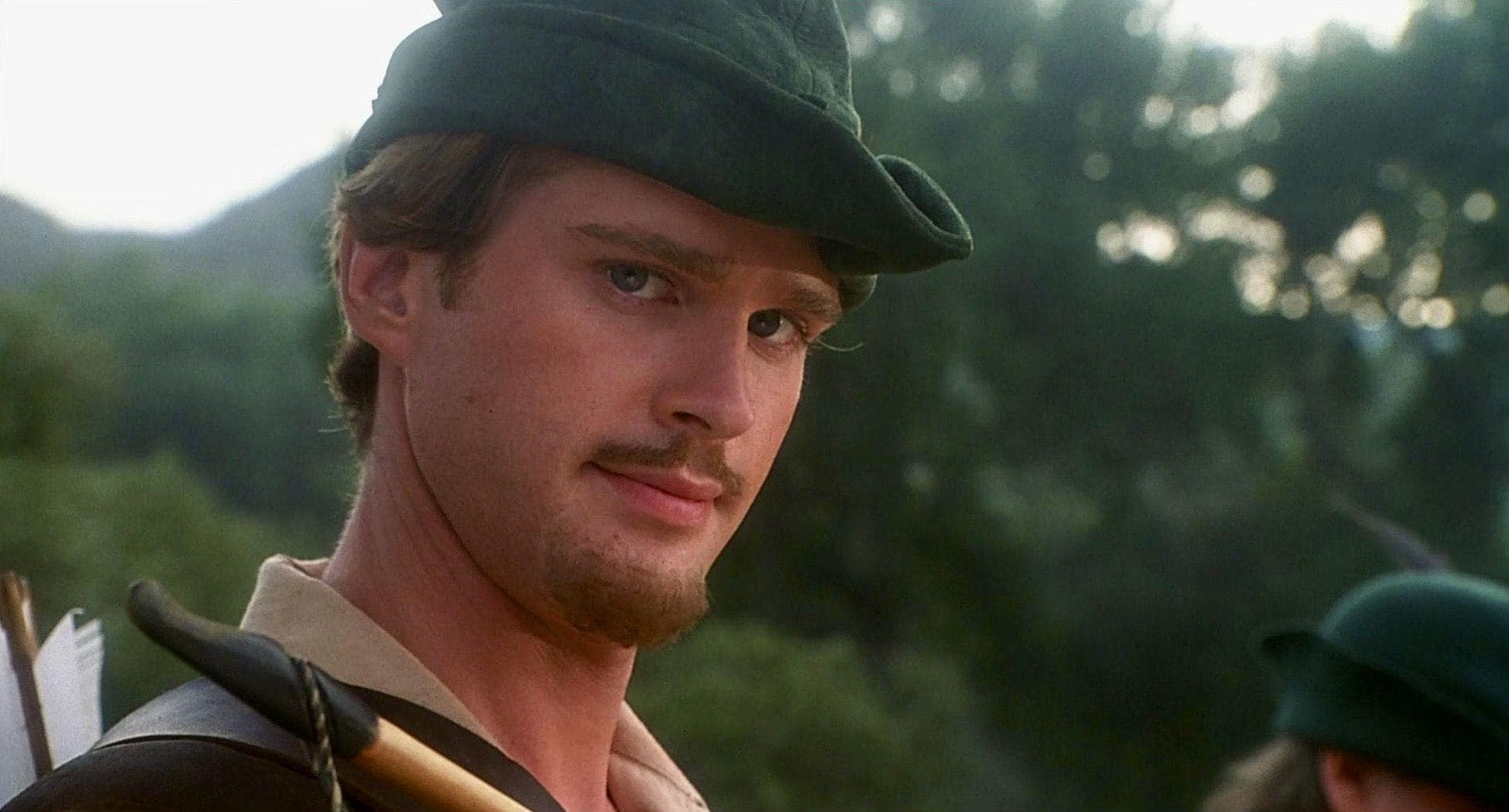
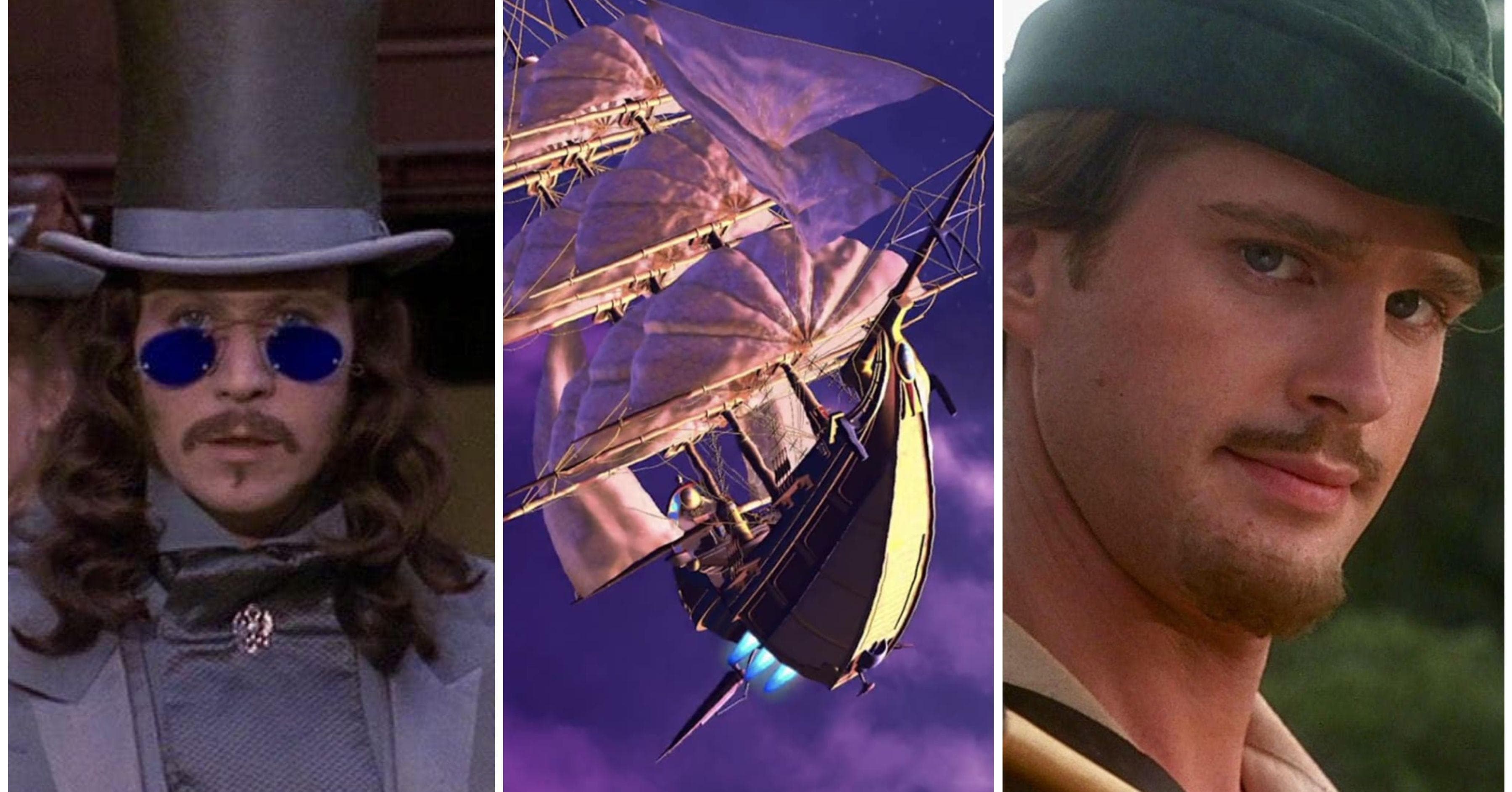
    There have been dozens of on-screen versions of Robin Hood dating back to the silent era, but none stand out from the crowd quite like the Mel Brooks spoof, Robin Hood: Men in Tights. Part of its appeal can be attributed to the starring performance of Cary Elwes, whose role as the dashing pirate Westley in The Princess Bride had been sufficiently muddied by his transition to character acting to make him believable as a tongue-in-cheek, fourth-wall-breaking Robin Hood. As the titular leader of the Merry Men, Elwes is a smart aleck who spends more time trying to unlock Maid Marion’s chastity belt than giving to the poor. It also benefited from timing. Kevin Costner’s Robin Hood: Prince of Thieves was released two years before, and although it had done well at the box office, its humorlessness and wooden performances were perfect fodder for parody. Men in Tights succeeds by skewering the saintly version of Robin Hood found in most adaptations and filling the script with anachronisms and sight gags. In one scene, Robin’s blind family servant, Blinkin, sits on a latrine reading a vision-impaired version of Playboy in which the photos can be read by touch, like braille. Another scene parodies The Godfather with a character who mumbles and wheezes through a monologue, only to remove cotton balls from his cheeks - which Marlon Brando famously employed in his role of Vito Corleone - and explain that he’s just been to the dentist. Dave Chappelle plays one of Robin’s associates and sports Nike-like sneakers, while Brooks himself plays a Jewish version of Friar Tuck named Rabbi Tuckman. Men in Tights plays fast and loose with its source material, allowing the comedy to be front and center. This shamelessness makes it one of the more memorable and satisfying on-screen representations of Robin Hood.
    88% upvoted
  2. 2

    The Muppet Christmas Carol

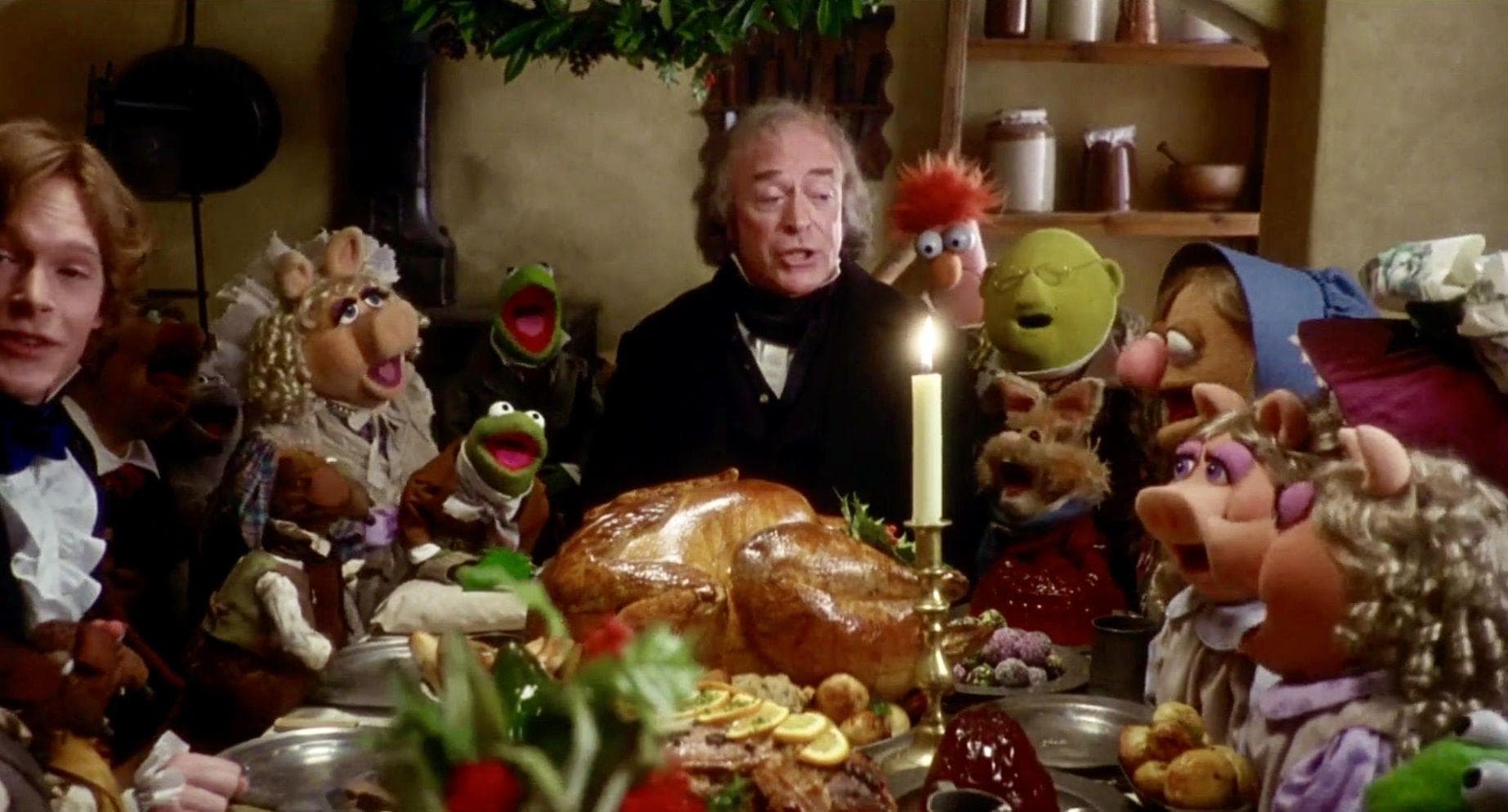
    Charles Dickens is one of the most highly-regarded authors in the English language whose stories are full of dense writing and memorable characters. There is plenty of humor throughout his novels, but not the kind that you might expect to perfectly dovetail with the 20th century’s most beloved puppet ensemble. And yet, The Muppet Christmas Carol was a success both by box office standards (despite formidable competition from Home Alone 2 and Aladdin) and by the test of longevity. In a genre packed with favorites, The Muppet Christmas Carol is a mainstay on family holiday watchlists. Michael Caine’s curmudgeonly Scrooge is a pitch-perfect foil for the puppets to work against, and the screenwriters took great pains to stick to Dickens’s story despite the trademark Muppet humor. Gonzo and Rizzo are on top form as Dickens and his sidekick, while Kermit’s mini-me Robin is adorable as a pint-sized Tiny Tim. The songs are catchy, the humor undermines the solemnity, and the ghosts are genuinely scary. They’re so scary, in fact, that Rizzo asks Gonzo if they should be worried about the kids in the audience. “Nah, it’s alright. This is culture,” he responds. The Muppet Christmas Carol manages to deliver both an excellent Muppet movie and an excellent Dickens adaptation all in one, making it the perfect option for holiday viewing that the whole family will love.

    88% upvoted
  3. 3

    Bram Stoker's Dracula

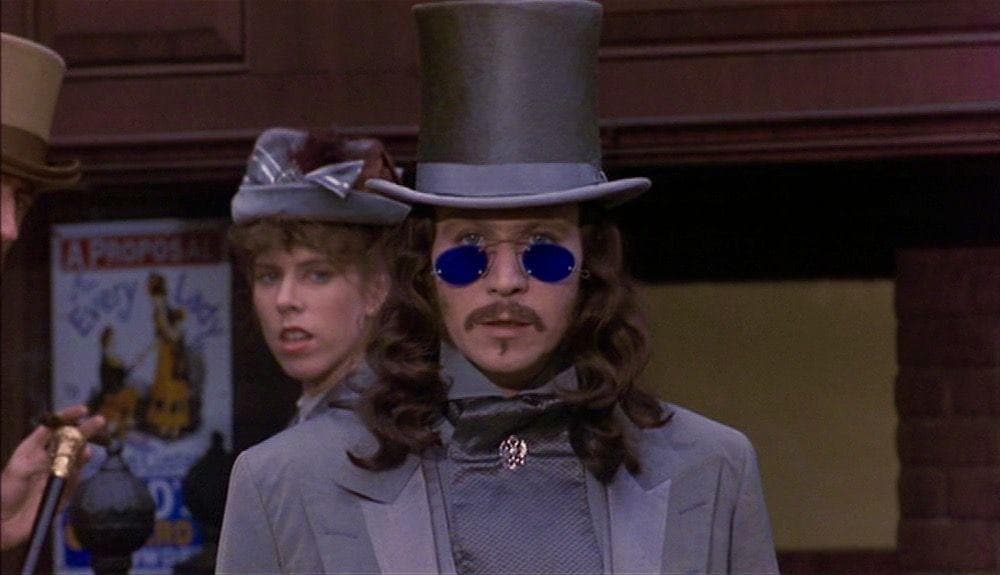
    The 1922 silent classic Nosferatu is one of the greatest horror movies ever made and set the bar high for future adaptations of Bram Stoker’s gothic novel Dracula. Over the following decades, multiple on-screen adaptations of the story were released, but even Bela Lugosi’s portrayal of the mythical vampire failed to be as unsettling or cinematically innovative as F. W. Murnau’s work. In 1992, however, Francis Ford Coppola brought his signature style of exhaustive filmmaking to the table and proved that there was more life (and blood) in the story than had yet made it to the screen. Bram Stoker’s Dracula is in a league of its own. From Gary Oldman’s over-the-top performance as Count Dracula to the costumes and the wild in-camera special effects, it oozes with excess that at times spills over into camp. Coppola created a version of the story that capitalizes on every facet of the cinematic medium. The soundscape creaks, whooshes, and shudders, the costumes are made of twice as much fabric as necessary, and the performances (aside from a miscast Keanu Reeves) operate at a fever pitch. The director opted to use only in-camera special effects, using makeup and time-honored tricks to create a horrifying and timeless spectacle. He also chose to set the film at the turn-of-the 20th-century, with Dracula posing as a devilishly handsome foreigner whose luscious locks and blue-tinted sunglasses wouldn’t be out of place at the Grammys circa 2018. The sexual undertones of Stoker’s novel are also dialed up to the maximum setting, and the various combinations of seduction, demise, and rivers of blood are almost certainly more grotesque than anything that could have appeared in the author's nightmares. Throwing everything at the wall doesn’t always work in movies, but Bram Stoker’s Dracula proves that when it does, the results can be overwhelming in the best ways.

    82% upvoted
  4. 4

    Treasure Planet

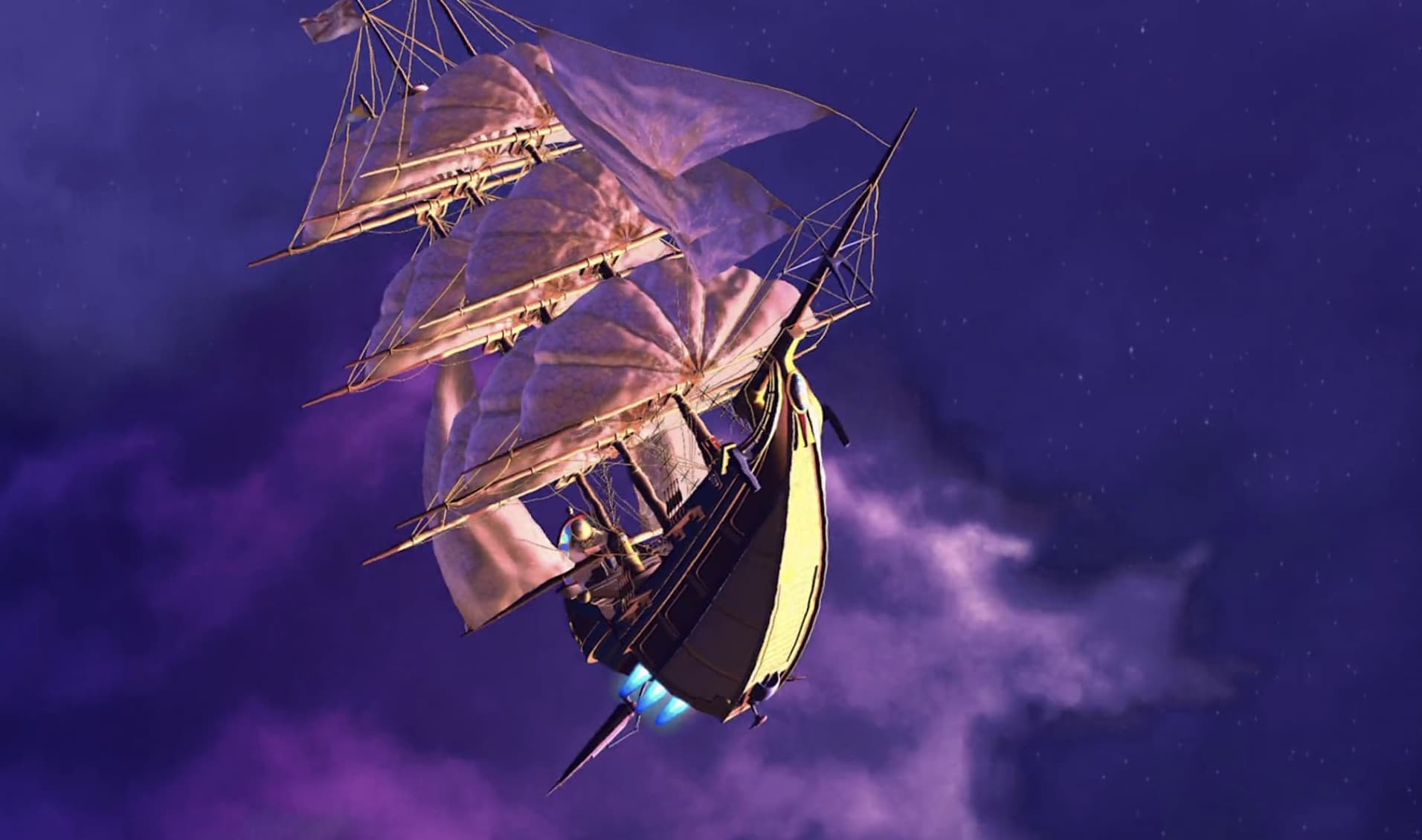
    Disney is best known as a total hit-making factory, but it occasionally misses the mark. Such was the surprising case for the 2002 animated movie Treasure Planet, which bombed at the box office despite its star-studded cast and has only recently enjoyed the credit it deserves. Based loosely on Robert Louis Stevenson’s 1883 novel Treasure Island, it follows Jim Hawkins (voiced by Joseph-Gordon Levitt), an unruly teen who is whisked off on an intergalactic adventure when he finds a map that leads to the titular Treasure Planet. Unlike Stevenson’s novel, which is set on the high seas, Treasure Planet is a retro-futuristic sci-fi fantasy that combines 2D and 3D animation to create a unique visual style inspired both by the 1800s and a space-travel version of the future. It also puts a spin on Disney’s love of talking animals, featuring a feline ship captain (Emma Thompson) and a dog astronomer (David Hyde Pierce) alongside a pirate cyborg and a few aliens. Directed by Disney stalwarts Ron Clements and John Musker, who had previously made The Little Mermaid and Aladdin, Treasure Planet is a surprisingly inventive retelling of Stevenson’s classic novel, with visually-arresting animation and colorful characters. It may not be the most faithful retelling of the book, but it justifies its liberties with pure spectacle.

    82% upvoted
  5. 5

    The Three Musketeers

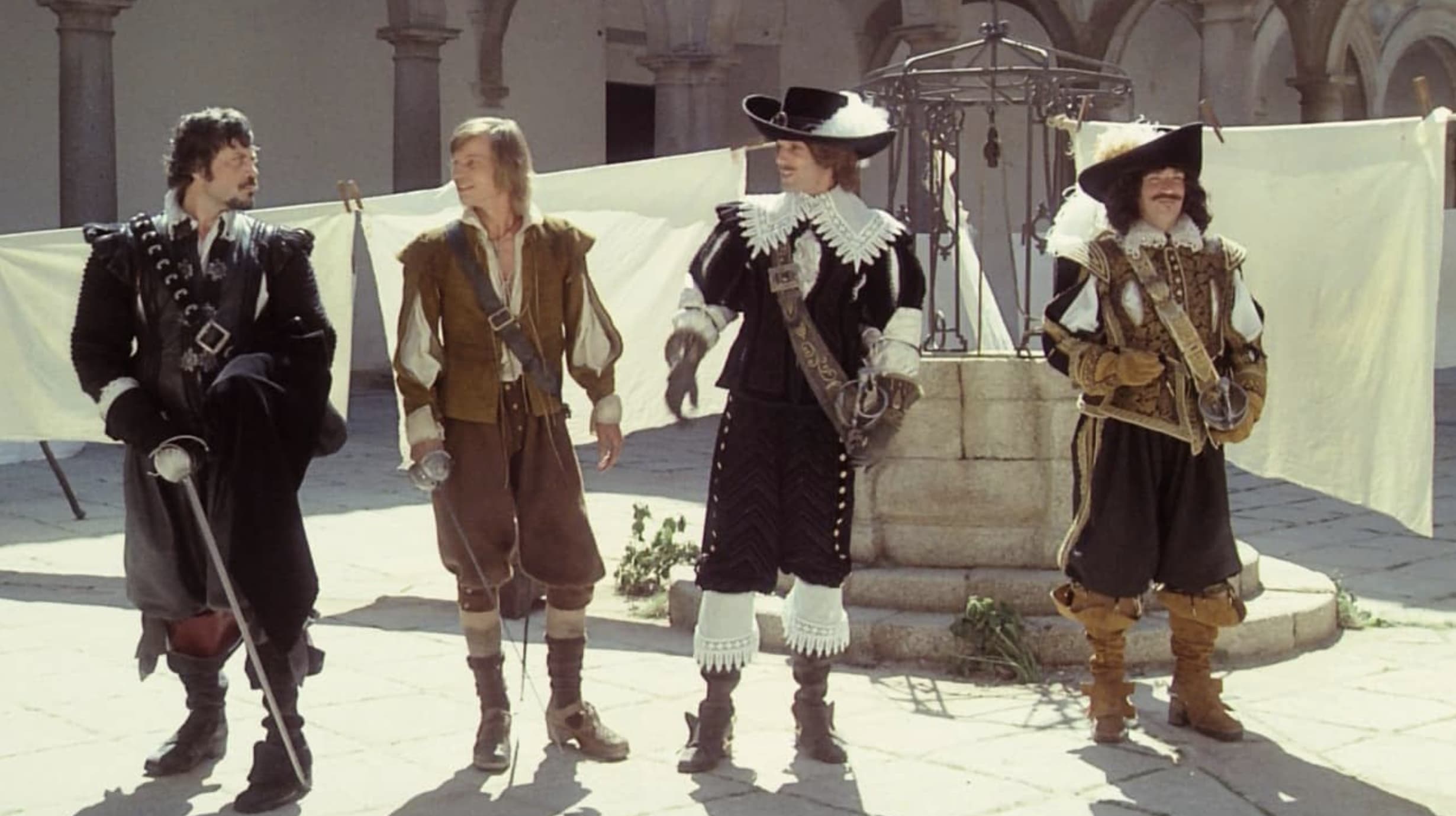
    Alexandre Dumas published The Three Musketeers in 1844, long before movies were a part of everyday life, but he may as well have written it directly for the screen. Set in the 1600s, the swashbuckling story of three swordsmen (and one wannabe) is full of adventure, gallantry, and humor and has proven to be endlessly inspiring to filmmakers. In fact, movies about the Three Musketeers encompass the history of cinema itself, from the 1911 production made by Thomas Edison’s studio to versions starring everyone from John Wayne and Christopher Walken to Charlie Sheen and Orlando Bloom. There have been so many adaptations that it’s hard not to roll your eyes when another one gallops into theaters. Of all of these movies, however, the 1973 version has stood the test of time, not only because of its stellar cast but because it revels in its source material. Starring Oliver Reed, Richard Chamberlain, and Frank Finlay as the Three Musketeers alongside Michael York, Raquel Welch, Charlton Heston, and Faye Dunaway, the movie bursts with energy, humor, and romance. While the plot resides firmly in the 17th century, the presence of '70s movie stars like Welch and Dunaway, as well as an appearance from comedian Spike Milligan, make the film feel fresh and a little brazen, even as it reverently follows Dumas’s story. There have been many more productions of the classic tale before and since, but the 1973 version of The Three Musketeers still holds up as a classic.

    80% upvoted
  6. 6

    Excalibur

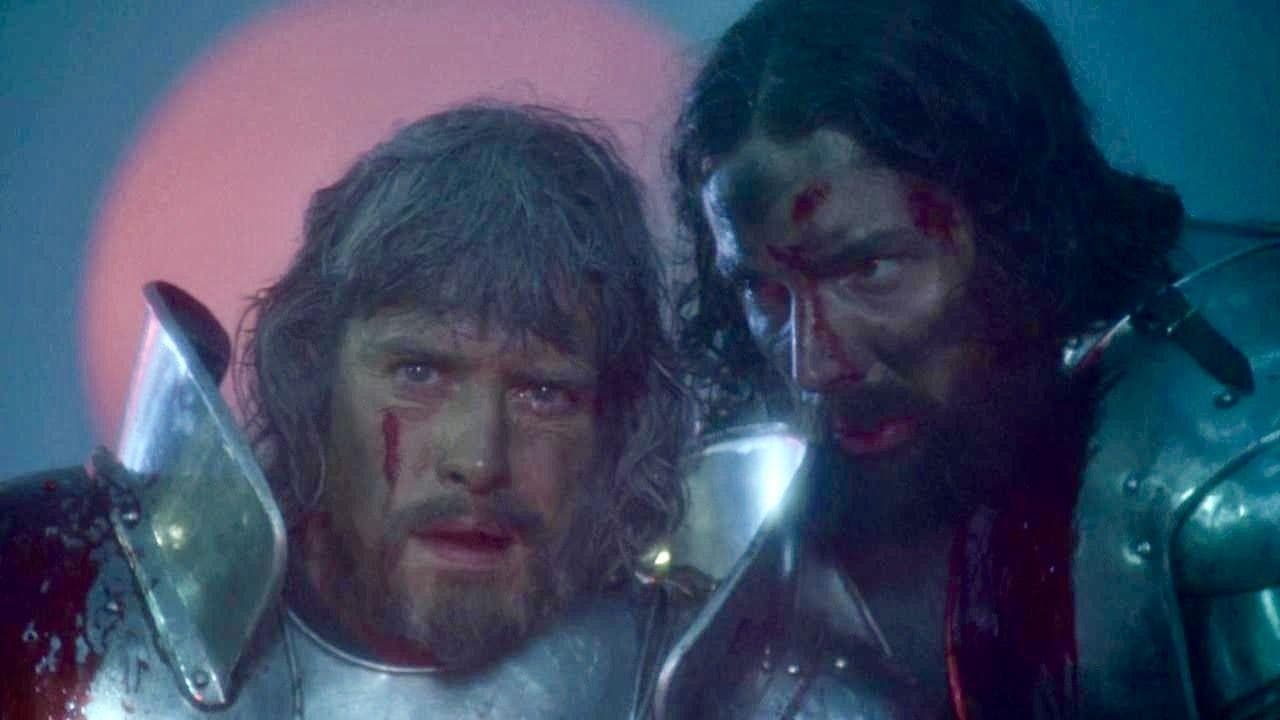
    Over the years, more than a dozen movies about King Arthur have been given mainstream releases. Some have tried to tell the legend as faithfully as possible, while others (Monty Python and the Holy Grail comes to mind) have taken a more loose approach. Out of all of these efforts, John Boorman’s 1981 epic Excalibur has stood the test of time. Based on Thomas Malory’s Le Morte d'Arthur, it stars Nigel Terry as King Arthur and a host of British actors in supporting roles, including Helen Mirren as the evil sorceress Morgana and a young Liam Neeson as Gawain. It takes a sweeping approach to the tale, starting with Arthur’s origin story and following through to the bitter end. It’s an operatic family drama as much as a tale about knights in shining armor. Full of deception, and unfaithfulness, it doesn’t pull its punches. It also features some of the most visually stunning imagery of any Arthur film despite the rudimentary special effects. Boorman never shied away from discomfort, and Excalibur is just as harsh and unsentimental a movie as you’d expect from the man who brought Deliverance into your nightmares. There’s gore, impalement, eyes getting plucked out of cadavers, and a lot of mud. But the darkness is tempered by some first-class scenery chewing, particularly from Nicol Williamson as Merlin, who takes hold of every scene with a vice-like grip and wrings out every last syllable. Add to this a unique visual style in which everything is shrouded in a dreamlike haze punctuated by gleaming metal, and it’s hard not to appreciate Excalibur for its relentless intensity. Where other retellings of the legend struggle to be more than formulaic costume dramas or choose to change the tone of the familiar story entirely to appeal to contemporary audiences, Boorman’s Excalibur has all the grime and bone-crunching of the Middle Ages, and none of the Hollywood glossiness that undermines so many other cinematic portrayals of Camelot.

    80% upvoted
  7. 7

    Peter Pan

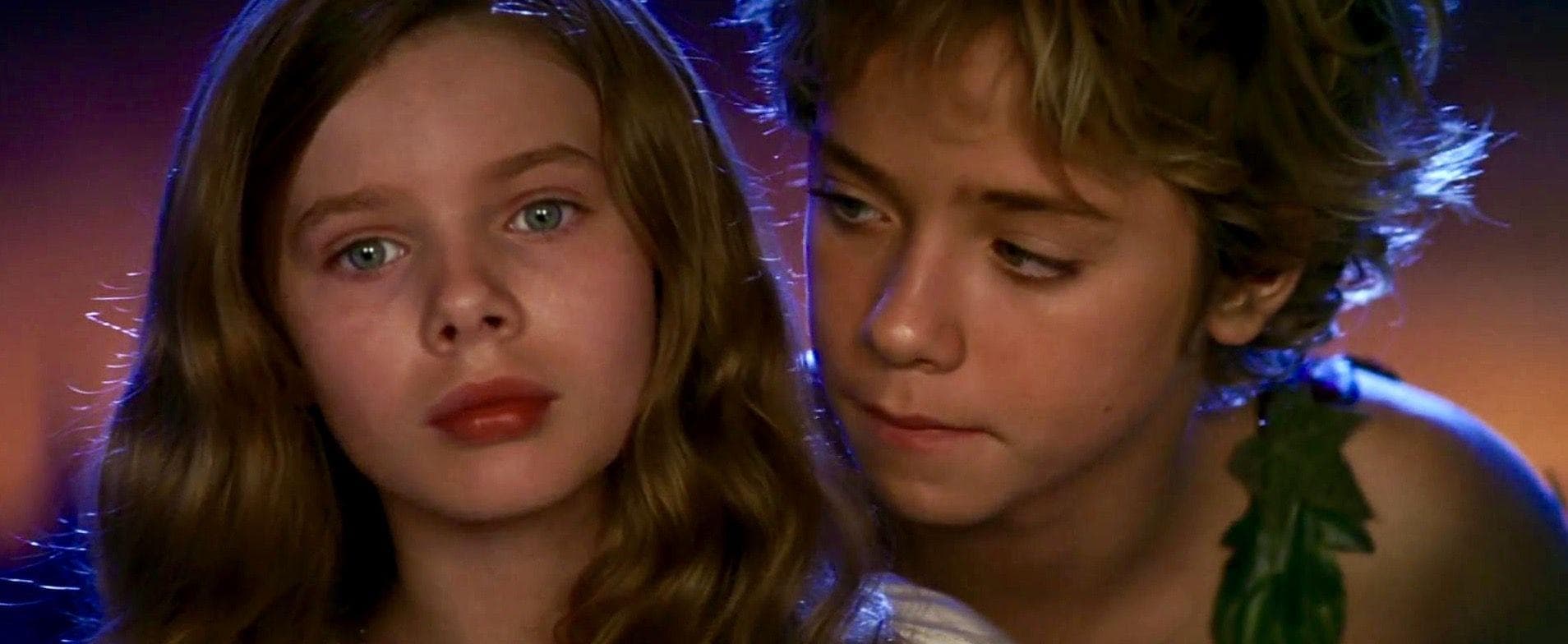
    J. M. Barrie’s story of a flying boy who never has to grow up has delighted children since it premiered as a play in 1904. While the 1953 animated Disney movie is the definitive on-screen adaptation for generations of viewers, it is arguably bested by the criminally underappreciated live-action adaptation from 2003. P. J. Hogan’s Peter Pan features a level of emotional nuance and generosity toward its characters that no other version has captured before or since. Starring Jeremy Sumpter as Peter, Rachel Hurd-Wood as Wendy Darling, and Jason Isaacs as Captain Hook and Mr. Darling, it adheres to Barrie’s play and the Disney movie while acknowledging the peril in the story and the consequences of Peter’s refusal to age. In most adaptations, Peter is portrayed as the ultimate adventure facilitator. He’s a child, but he knows his way around danger and loves taunting his enemies. He delights in the friendship he develops with the Darlings, but he’s also content to stay in Neverland when all is said and done. In short, he’s happy with being a fun-seeking loner who never grows up. In the 2003 movie, however, Peter undergoes an internal struggle when he falls in love with Wendy, and his decision to stay in Neverland while the Darlings and the Lost Boys return to the real world is more tragic than triumphant. Mr. Darling and Captain Hook are also portrayed as more wistful than evil. Somewhere along the line, life got away from them, and they found themselves stuck with their regrets. Though this version of Peter Pan is just as full of adventure, danger, and friendship as the animated movie, it has more heart and sadness than any of the other adaptations, even ones like Hook and Pan that take more liberties with the source material.

    70% upvoted
  8. 8

    The Jungle Book

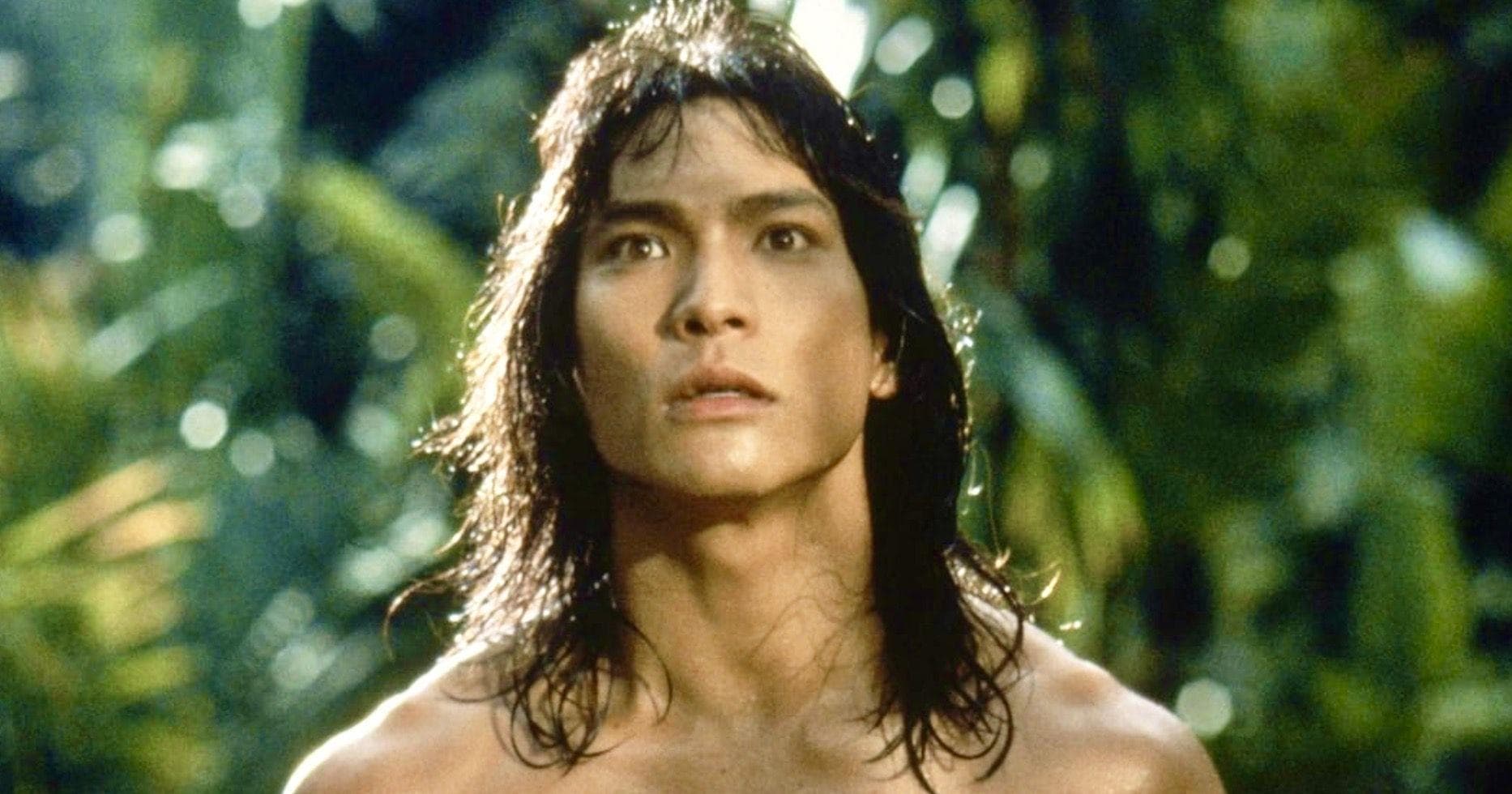
    Revisiting childhood classics often backfires, but Disney has repeatedly proven that there is more to be drawn from their beloved back catalog. Most of the studio’s remakes focus on increasingly sophisticated technology to turn animated classics into hit live-action spectacles. For example, the 2016 update of The Jungle Book used cutting-edge CGI to make talking animals look uncannily life-like. But the 1994 remake of Disney’s 1967 animated movie deserves even more credit despite being largely overshadowed by flashier entries on Disney’s remake roster. Inspired by the 1967 classic and Rudyard Kipling’s novel, The Jungle Book was the studio’s first live-action remake of one of its own properties and helped pave the way for a tidal wave of others. It stars 28-year-old Jason Scott Lee as Mowgli, and, as you might guess from the actor’s age, is more grown-up and full of peril than the original. In this version, Mowgli is a teenager who reunites with his childhood sweetheart, Kitty (Lena Headey), when he is forced back into the real world. One of the strengths of this adaptation is that director Stephen Sommers undertook the gargantuan task of filming with real animals. In total, there were 52, including tigers, leopards, bears, wolves, elephants, bulls, monkeys, and horses. This gives the movie a feeling of reality that the 2016 version never manages to accomplish because it’s impossible not to gape at the technology. The 1994 movie is similar to Indiana Jones with its heart-pounding adventure, wild locations, and romantic leading man. For these reasons, it’s a welcome outlier in the Jungle Book canon that neither competes with its predecessors nor strays too far from the familiar story.

    68% upvoted
  9. 9

    The Adventures Of Huck Finn

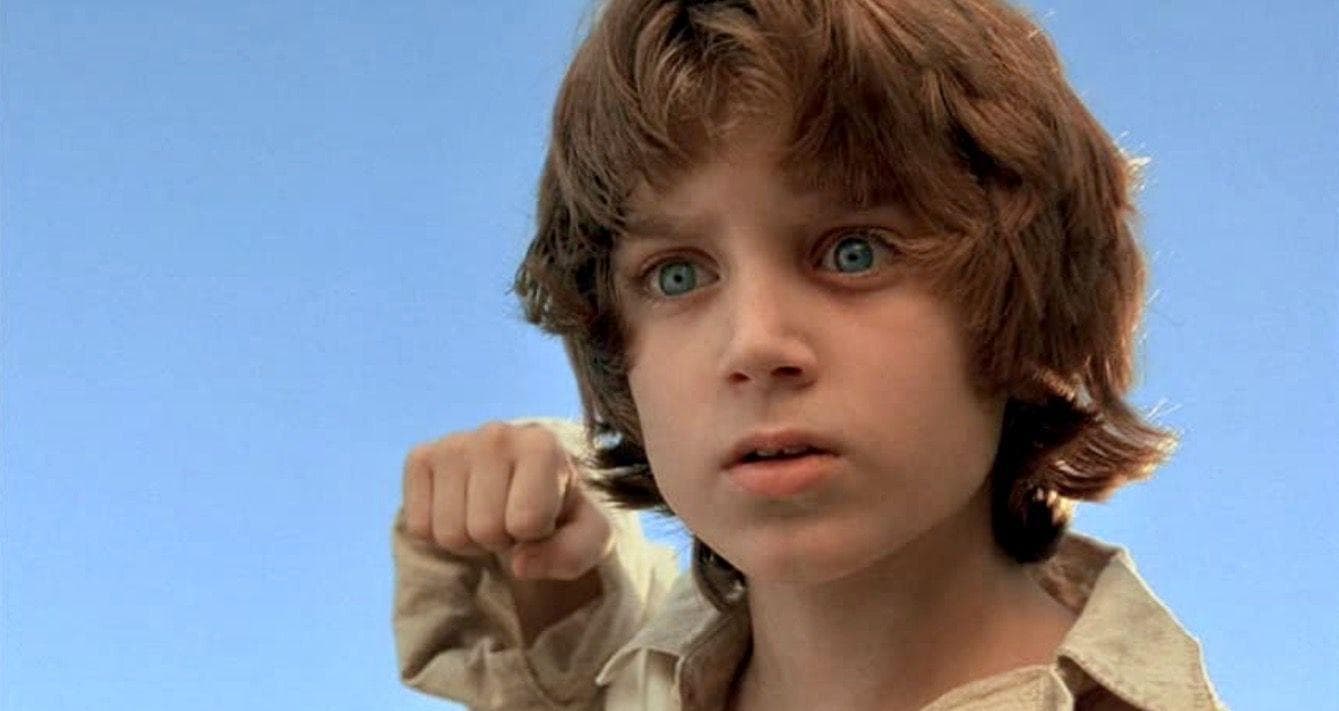
    Mark Twain’s favorite adolescent ne’er-do-well, Huckleberry Finn, has appeared in dozens of movies and TV shows. Left to his own devices by an alcoholic father, he knocks around the fictional Missouri town of St. Petersburg, petrifying parents and delighting children with his lawless antics. The Adventures of Huckleberry Finn is also a deeply fraught novel that was banned in the 1880s for its alleged crassness and heavily criticized in later years for its stereotyping of a runaway enslaved man named Jim who befriends Huck. Disney has a checkered history with race in its movies, making a Huckleberry Finn adaptation all the more risky for the studio to undertake. Still, against the odds, the 1993 film starring Elijah Wood as the titular troublemaker turned out pretty well. Written and directed by Stephen Sommers, The Adventures of Huck Finn focuses more on the growing friendship between the protagonist and Jim (Courtney B. Vance) rather than on the moral reckoning with slavery that Huck has in the book. Elijah Wood was 11 when the movie came out, making him a few years younger than Twain’s character. With the mischievous twinkle in his eye and infectious smirk, he’s an endearing, childlike Huck who has little of the book’s world-weary coarseness. These factors smooth the edges of Twain’s novel, rendering it an ideal adaptation for kids. It’s one of those Disney movies that is so full of heart and adventure that you can’t help but get swept along.

    68% upvoted
  10. 10

    Hamlet

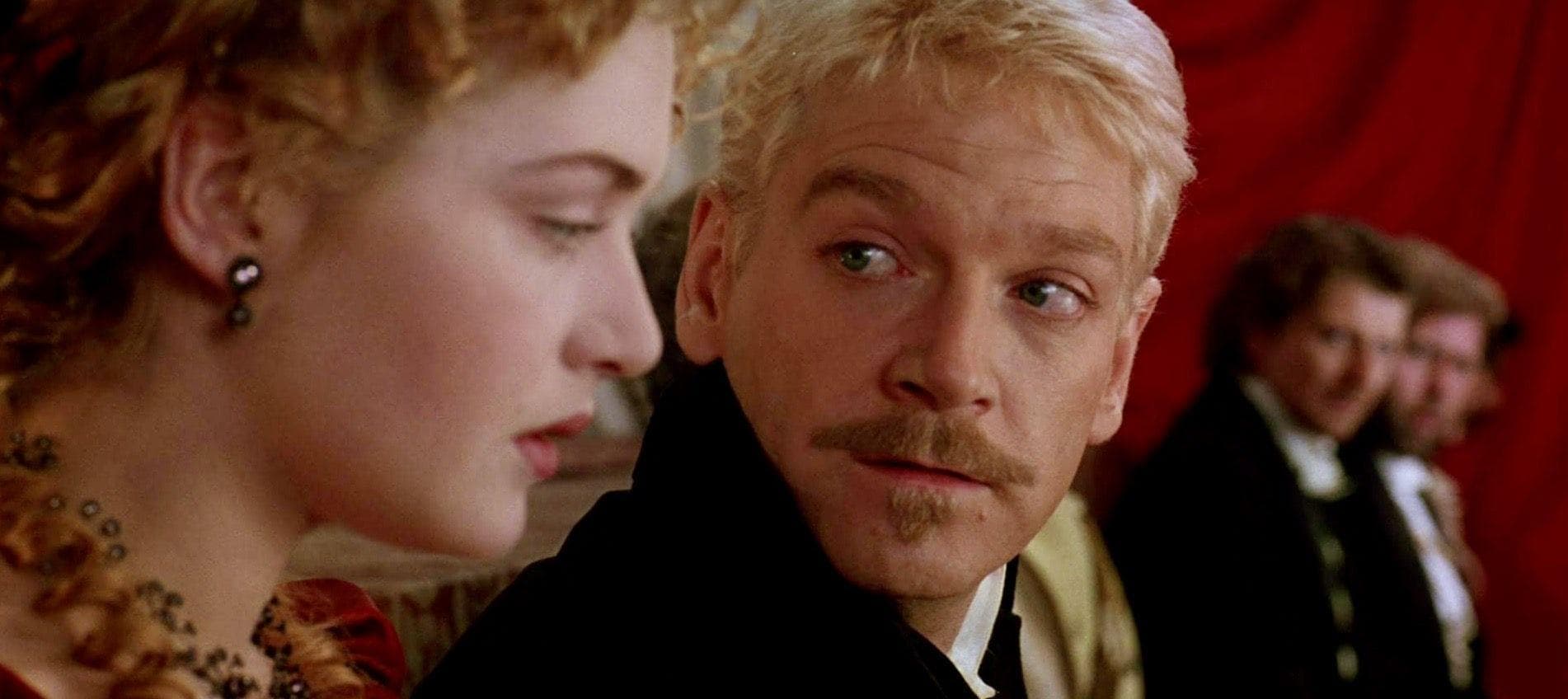
    Playing Hamlet is a rite of passage for many actors. Throughout the years, Shakespeare’s most tormented Dane has been portrayed on-screen by everyone from Sir Laurence Olivier to Mel Gibson, but few adaptations have captured the depth, cinematic flair, and faithfulness to the source material as Kenneth Branagh’s 1996 version. Directed by and starring Branagh, the movie boasts a four-hour runtime that dwarfs previous versions and allows Shakespeare’s language and cadence to shine through. Branagh is a classically trained Shakespearian actor who portrayed Hamlet on the London stage, but he brought a distinctly cinematic style to the movie, ensuring that the story, which features the entirety of Shakespeare’s text, never feels like a filmed stage production. The result is a surprisingly riveting four-hour drama that even Shakespeare novices will be won over by. The movie updates the play by setting it in the 1800s rather than the 1400s. This makes the fashion and surroundings more familiar and offers plenty of opportunities for splashes of color and excess despite the tragedy of the plot. The characters are more vibrant than morose. Even Hamlet’s mother, the supposedly icy Queen Gertrude (Julie Christie), and his uncle-turned-stepfather King Claudius (Derek Jacobi), are shown carousing in one scene, while Kate Winslet’s portrayal of Ophelia is more lively and layered than the character is often portrayed. Branagh also used flashbacks to illustrate some of the monologues, including one that takes place in Hamlet’s childhood and one that shows the sexual relationship between the prince and Ophelia, which is only hinted at in a letter in the play. All of these choices make the 1996 Hamlet less austere and more cinematic than other on-screen attempts and constitute one of the best film adaptations of Shakespeare’s work.

    69% upvoted