Skip to content
maxnews
Games

15 Games You Need To Play If You Love 'A Dark Room'

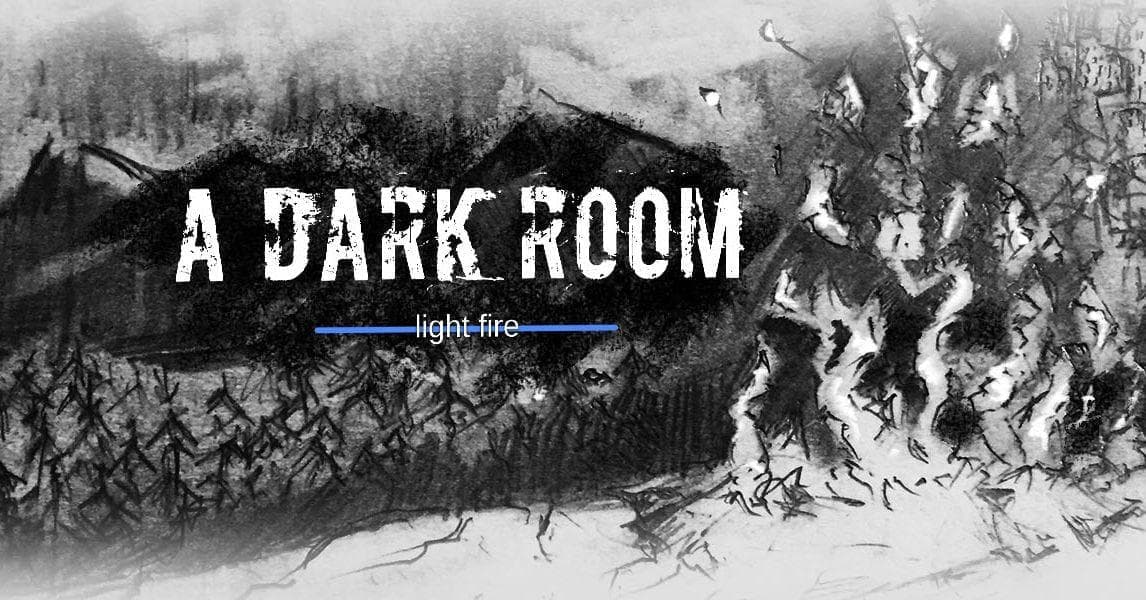
Released in 2013, A Dark Room is one of the most original (and talked-about) games in modern memory. Originally released on web browsers with versions now available on iOS, Android, and the Nintendo Switch, it's a text-based adventure constructed entirely out of words. (Yes, that's right: a game made up entirely of words.) As an open-source text-based RPG, players are privy to an almost limitless possibility of gameplay scenarios. Much like how popular tabletop games, e.g. Dungeons and Dragons, evoke worlds of possibilities, A Dark Room is one of those rare games where using your imagination isn’t just encouraged, it’s downright mandatory. A litany of lines help to tell the story, while your actions are represented by UI elements. You're periodically prodded with innocuous prompts throughout your adventure, and every decision you make helps influence what happens in the game. There are plenty of more games like A Dark Room that feature the same text-based gameplay elements and feature all different kinds of thematic elements and engrossing storylines. Sure, Candy Box! may be the closest game in terms of sheer design (after all, the developers of A Dark Room have admitted how that game was a major influence), but there are plenty of other idle and candy box-type games worth seeking out.

Entries
15
Votes
300
Updated
2 days ago

Tap upor downto vote. Your vote is added to Ranker's counts.

Voting identifies your browser with an anonymous fingerprint, stored only as a salted hash, to count one per visitor. Privacy

Source: Ranker, ranked by its voters.

  1. 1

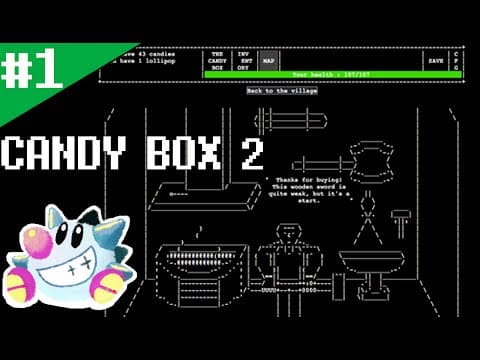
    Candy Box 2

    How it's similar: Starting simply with only a blank page and a counter collecting candy, this game definitely takes you by surprise and features a myriad of unexpected turns. The first major turn being the rollout of questing and gear, as you try to thrive in a candy-based economy. It’s not surprising to find that the team behind A Dark Room have even mentioned how the original Candy Box! inspired some of how they approached their development. How it differs: The game exudes a sweet sense of humor and delicious (get it?) spontaneity. As the title suggests, the entire theme is based around candy, with players working to increase how much candy they have through various means, whether it be various quests or other types of adventures. It’s always interesting to see how committed they are to a proverbial bit. It's a simple but extremely enjoyable guilty pleasure, kind of like eating actual candy. Release: 2013 Genres (Video game): Online text-based role-playing game Platform(s): Web browser

    86% upvoted
  2. 2

    The Ensign

    How it's similar: It would have been tempting to call it A Darker Room, but The Ensign is the second game released by the team behind A Dark Room. The story actually picks up before the events of the first game, so timeframe-wise it's more of a prequel, expanding on the mysterious surroundings and world that was alluded to in the first game. It fills in some of the gaps that were left open, and it's a great accompaniment for those wanting more from that universe. How it differs: Though its look and style is similar to that of A Dark Room, it truly is a much different beast, as it now takes on the form of a rogue-like game. There are still resources to acquire and things to upgrade, though now getting too bold often leads to a swift boot to the title screen and a reset of all progress, in classic rogue-like fashion. This new interpretation offers an unexpected challenge and a fresh way to experience the next chapter. Release: 2014 Genres (Video game): Text-based game Platform: iOS

    76% upvoted
  3. 3

    Kingdom of Loathing

    How it's similar: A Dark Room definitely shows that good things come in unexpected packages. In this same way, Kingdom of Loathing is a gift waiting to be unwrapped. It’s wrapping paper is similarly monochrome, as stick figure characters populate the text-adorned screen. Kingdom of Loathing really does a great job of inviting you to explore and discover its line-art-filled world. And like A Dark Room, it fills out its world almost exclusively through its enticing writing. How it differs: Its quirky humor is just as strong as its inventive structure. Much delight is found in discovering its zany storylines and taking part in extremely quotable escapades. Classes chosen are unlike just about any other game, with Pastamancers and Disco Bandits taking prominence over bog-standard warriors and mages.

    71% upvoted
  4. 4

    Spaceplan

    How it's similar: Spaceplan and A Dark Room definitely some incremental DNA. For starters, they both make progress through a mix of interaction and automation, with buyable items and upgrades that help you speed up your output tenfold. Rather than infinite clickers, each game has an unraveling story arc that can be seen to its end. This narrative twist is engaging as not only is it addictive to level up, but much like flipping the pages of a book, you can’t wait to see where it goes next. How it differs: Where A Dark Room is more noir in tone, the sci-fi vibe of Spaceplan is cheerfully lighthearted. Orbiting an unnamed planet on a satellite, the game's goal focuses on growing potatoes and building more powerful potato structures to produce energy in an effort to save Earth. The computer terminal in charge of the satellite, named the Word Outputter, adds a lot of color to the experience with its dry-wit. Release: 2017 Genres (Video game): Incremental game Platforms: Android, Microsoft Windows, iOS, macOS

    73% upvoted
  5. 5

    Papers, Please

    How it's similar: One of the most standout aspects of A Dark Room is how it uses a simplistic approach to convey a greater narrative, which is definitely a sentiment shared by Papers, Please. In this game, you play an administrator at the border of a fictional country, checking IDs to let people in. It has a minimalist style of gameplay, consisting of checking passports, looking at rule books, and stamping approved or not approved. Within these parameters unfurls a plot that hints at bigger themes of the morality of government systems and the people who come into contact with them. How it differs: It’s a little more observation-based, with its focus on reading documents, looking for discrepancies between forms, and balancing trying to do your job adequately while at the same time trying to look out for your fellow man. Trust us, it's harder than it sounds. Release: 2013 Genres (Video game): Puzzle video game, Adventure game, Simulation Video Game Platforms: iOS, PlayStation 4, Microsoft Windows, PlayStation Vita, macOS, Macintosh operating systems, Linux

    77% upvoted
  6. 6

    Stone Story RPG

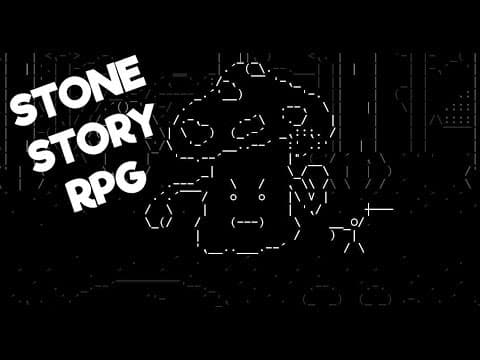
    How it's similar: Reminiscent of A Dark Room, Stone Story RPG opens with a black screen and text explaining how you can’t see your surroundings. Quickly, you’re thrust into a barrage of ASCII art that outlines a vast quest full of crafting, upgradable foundries, and a dark mysterious world that must be forged. Despite the fact that is a very sparse style, it’s lushly animated and is incredibly striking for how minimal it is! How it differs: It’s role-playing in a most unusual portrayal. The player doesn’t directly control the hero, instead giving them a heading and occasionally activating an ability to gain an edge, while the character acts autonomously. The game also offers an in-game language to write lines of script for the character to further influence the way the character behaves. The mechanics are incredibly fluid and thorough and definitely help elevate this RPG to cult-like status. Release: 2019 Genres (Video game): Role-playing game Platforms: Microsoft Windows, Linux, Mac

    82% upvoted
  7. 7

    AI Dungeon 2

    How it's similar: Crime-drama? Murder-mystery? Alternate Garfield timeline? Technically it could be all three! Much like A Dark Room, AI Dungeon 2 houses a positively madcap world of possibilities beyond its stark aesthetic. The game presents the opportunity to embark on a quest of your own design, with each round starting with a generated plot, usually after choosing some basic details about the world. From there, really anything can happen. It's great at getting players in the mindset of improv as you 'yes and no' back and forth with the AI to create a story. It can learn from what you type, and campaigns often don’t end the same way they start. How it differs: As it's a non-authored experience, it sometimes misconstrues a word here and there, or misinterprets the actions or dialogue you write (though that's often a big part of the fun!). Not knowing where it’ll go, and hopping along for the ride. Unlikely to pass a Turing test, it’s often surprising how much more often it works then it doesn’t, yet even when it falters, it’s often equally hilarious and entertaining. With the ability to create your own prompts and play other made by human players, limitless amusements are but a few keystrokes away. Release: 2019 Genres (Video game): Interactive fiction Platforms: IBM PC compatible, iOS

    65% upvoted
  8. 8

    Lifeline

    How it's similar: The mysterious and extending story that contours A Dark Room is a large part of the appeal. For those who are keen on this interactive storytelling element, Lifeline gives a double serving through its intriguing, conversation-based plot. The 'text' in text-adventure shows up more literally here, as you receive text message updates from a stranded astronaut named Taylor, whose communication device can only reach you. Through the dialogue choices you select, you help Taylor navigate and survive the unknown planet. How it differs: The gameplay of Lifeline focuses less on gathering resources and more on conversation. Choosing what messages to relay to Taylor adds a lot to the immersive feel. Almost like a macro version of A Dark Room's idle element, Taylor will respond in real time, sometimes taking longer to reply when he's busy or when he's about to go to sleep. The game is written by Dave Justus, author of the comic counterpart to Wolf Among Us. It has even been expanded into a series, with several other titles each revolving around different stories and characters. Release: 2015 Genres (Video game): Text-based action Platforms: Android, iOS, Microsoft Windows, macOS

    86% upvoted
  9. 9

    Baba Is You

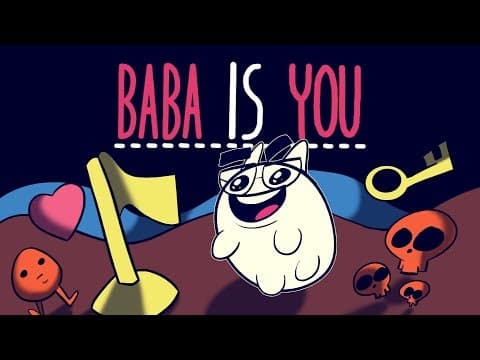
    How it's similar: Much like the evolving plot and UI of A Dark Room, Baba Is You starts out quaint and expands as you go. Traversing levels as an adorable sheep, words and symbols are at your disposal as you put together analogies in order to change the rules of the game. Its outward appearance hides much of what’s underneath, as some of its later incarnations unfold to new depths. How it differs: Baba Is You takes on a more puzzle-based approach, where you can play with the creative limits of what you’re given. A lot of the fun comes from seeing how much the game’s rules can be bent and at all the unexpected combinations that can be made. Physically moving the text and altering each level is a novel idea that invites creative solutions.

    80% upvoted
  10. 10

    Kingsway

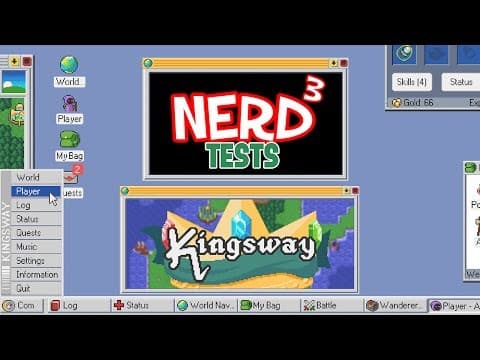
    How it's similar: Kingsway is a medieval game arranged in the constructs of a Windows 95 operating system. Quests come in via email, while battles play out in pop-up windows and diagnostic pages that resemble a bygone era of the internet. Both Kingsway and A Dark Room display a sort of reverence for classic software to get across their game—one an archetypal text adventure and the other a vintage computer—while creatively using these constraints to their benefit. How it differs: Being an RPG, Kingsway comes up with eerily clever and intentionally obtuse ways to present the familiar characteristics of the genre’s trappings and adapting them to the quirks of a nostalgic PC. Much of the thrill comes in getting to see the work-around ways that faithfully translate these elements into the game's stylistic interface. Release: 2017 Genres (Video game): Role-playing game Platforms: Microsoft Windows

    83% upvoted