Skip to content
maxnews
Rankings

14 Strikes That Shaped How People Work In The United States

The Industrial Revolution and labor uprisings can, in many ways, be seen as going hand-in-hand. As workers shifted their lives to factory settings, exploitation by employers and companies prompted action by men, women, and children to push back for decent wages, safe conditions, and long-term benefits. In the United States, as in many industrialized parts of the world, strikes were one way of standing up against oppression in the workplace. Throughout the history of the US, there have been small strikes, large strikes, and even strikes that impacted global economies. Many strikes have been undertaken by the labor unions that formed during the second half of the 19th century, but not all strikes have been successful for workers or their unions. Employers haven't always been victorious, either, and often, a compromise is required to bring a strike to an end. Here are some of the most groundbreaking, significant, and workforce-altering strikes in US history. Vote up the ones you wish you would have known more about sooner.

Entries
14
Votes
815
Updated
5 days ago

Tap upor downto vote. Your vote is added to Ranker's counts.

Voting identifies your browser with an anonymous fingerprint, stored only as a salted hash, to count one per visitor. Privacy

Source: Ranker, ranked by its voters.

  1. 1

    The 1930s Flint Sit-Down Strike Was A First For The US Auto Industry
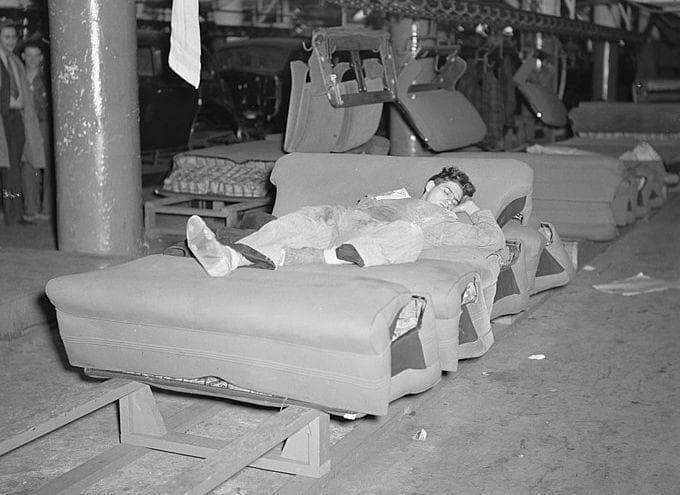
    Not only did the Flint Sit-Down strike represent one of the first labor actions in the automotive industry in the US, but it also brought the United Auto Workers into a position of power. The strike began in late 1936 when UAW organizers realized their quiet efforts to recruit members had been discovered. A sit-down strike set for January 1, 1937, would need to start early. Conditions at factories in Flint, MI, specifically those run by General Motors, were dangerous and exploitative, so the UAW (formed in 1935) sought to take on how workers were being treated. In the lead-up to the strike, workers like Joseph Martinus “couldn't get a drink of water… you couldn't leave your line… you couldn't even go to the bathroom.” Jim Londrigan recalled that “after you worked about seven hours… you were about half dead… After seven hours the supervisor had the privilege, if they didn't have enough production, to speed up those lines. So that last two hours, those lines were moving.” The sit-down strike began on December 30, 1936, when members of the UAW proudly displayed their union buttons. They refused to take them off, were fired, and simply sat down. The sit-down spread throughout the factory. The next day, people brought food to the workers, an act that GM would circumvent starting on January 11, 1937. That same day, GM cut the heat, and police attempted to force their way into one of the buildings to break the strike. Tear gas and bullets hurled by the police in what was called the Battle of Bulls' Run proved unsuccessful and the strikers held their ground. Workers controlled three separate plants in Flint (Fisher 1, Fisher 2, and Chevy 4) by February 1, 1937. The strike continued until February 11, 1937, when GM agreed to acknowledge the UAW and the power of its workers to unionize.
    96% upvoted
  2. 2

    Striking Air Traffic Controllers Were Fired By The US President In 1981

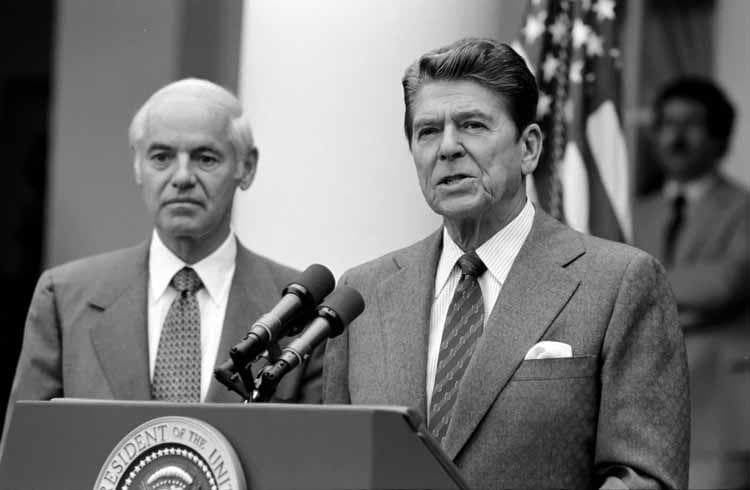
    Ronald Reagan, former president of the Screen Actors Guild, was president of the United States when air traffic controllers went on strike in August 1981. Roughly 12,000 controllers walked off the job in an effort to receive higher wages, improved benefits, and reduced hours from the Federal Aviation Administration. The Professional Air Traffic Controllers Organization was formed in 1968, 10 years after the Federal Aviation Act went into effect. The act placed oversight and regulation of the airline industry in the hands of the federal government and led to wide-scale hiring of air traffic controllers. According to the University of Massachusetts Amherst Libraries, by the time PATCO came to be, work conditions for controllers were grueling: Overtime was in abundance due to short staffing, no breaks were available for lunch or otherwise, buildings and working conditions were shabby, relief from sectors was at the end of the shift, grievance procedures were unknown, contracts were not mentioned, and medical retirements were lost in rules and regulations conveniently hidden from controllers. The normal work week was six days, 10 hours a day. Tensions between the FAA and PATCO increased through the 1970s. Dissatisfied with the federal government's efforts to limit the rights of unions and union workers, PATCO refused to support President Jimmy Carter for his reelection bid in 1980. Instead, PATCO backed the Republican candidate, Ronald Reagan. During the lead-up to the election, Reagan told PATCO's president, Robert Poli: I pledge to you that my administration will work very closely with you to bring about a spirit of cooperation between the president and the air traffic controllers. Despite these assurances, PATCO and the FAA were unable to reach a contract agreement in early 1981. When thousands of air traffic controllers went on strike on August 3, Reagan ordered them to go back to work. As government workers, the Reagan administration asserted, controllers were not allowed to strike, making their actions illegal. He gave the air traffic controllers 48 hours and, on August 5, Reagan fired 11,000 air traffic controllers who did not return to work when instructed to do so. The dismissal of thousands of controllers was followed by a lifetime ban of those same workers ever being rehired. The FAA began hiring new controllers, PATCO was decertified by the Federal Labor Relations Authority, and unionized labor in the US suffered a major hit. Donald Devine, Reagan's head of federal employees, later told NPR: Businessmen would come up to me and say, you know, when your guy Reagan stood firm with those guys, I started getting tougher with my unions, too. I realized I was giving away the store. Or, as NPR's Kenny Malone put it, “Around America, strikebreaking became the thing to do.” As an aside, Reagan justified his firing of the air traffic controllers when compared with his former actions on behalf of actors because he'd taken part in a legal strike.

    94% upvoted
  3. 3

    The Battle Of Blair Mountain In 1921 Was The Biggest Labor Uprising In US History

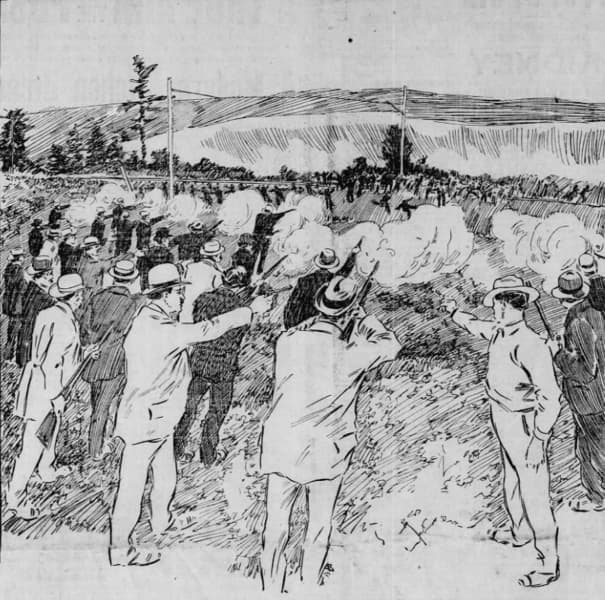
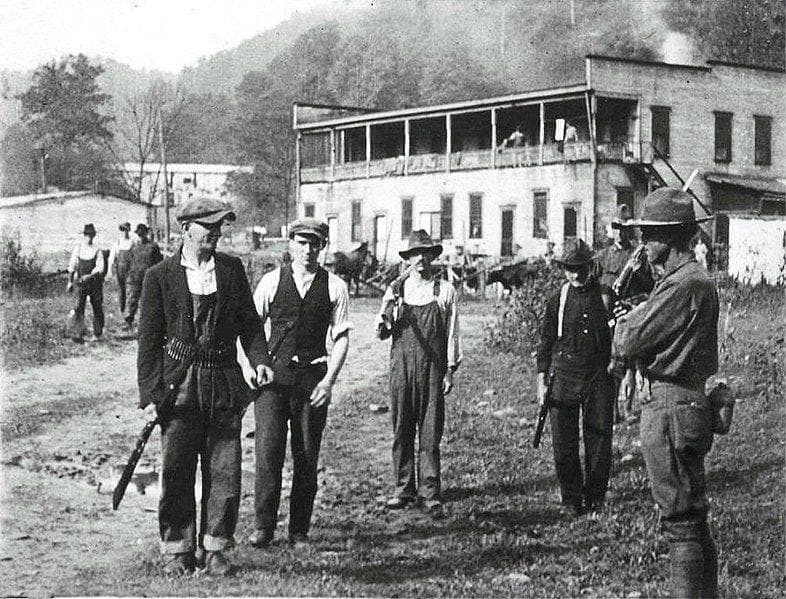
    In Southern West Virginia, miners in Logan, Mingo, and McDowell counties lived in company towns where they endured horrid conditions and low wages paid in company currency, or scrip. Confrontations between miners and authorities in 1920 reached a boiling point when detectives arrived to force union miners out of company housing in 1920, leaving 10 people dead. The following year, union sympathizer and Matewan Sheriff Sid Hatfield was shot and killed on August 1, again by detectives hired by mine owners, triggering the largest labor uprising in US history. In late August, as many as 10,000 miners stood firm on Blair Mountain, and a five-day battle followed. Gatling guns, guerrilla tactics, and tough terrain made for a bitter struggle. On September 2, President Warren G. Harding agreed to send federal troops, and fighting ended two days later. According to Frank Keeney, then-head of the UMW, Blair Mountain stood as a testament to the plight of miners: It’s hard to walk up the hill, much less if you had machine guns bearing down on you… The place itself is so important, because you really can’t understand the magnitude of what was happening until you’re up here and you stare down the slope. And you think, “What would motivate individuals to charge up this hill against machine guns?” You have to ask yourself, “What would it take to get you to do something like that?” And you begin to see the magnitude of the conflict and the intensity of it. The intensity is clear, but the final toll is not. Anywhere from 20 to 100 people were said to have died at Blair Mountain. Many of the miners who surrendered were tried for treason or murder, but few were convicted. The Battle of Blair Mountain was seen as a defeat at the time. Labor union membership dropped among coal miners but the conflict continues to represent the struggle for workers' in the US.

    95% upvoted
  4. 4

    Dozens Of People Died During The Railroad Strike Of 1877

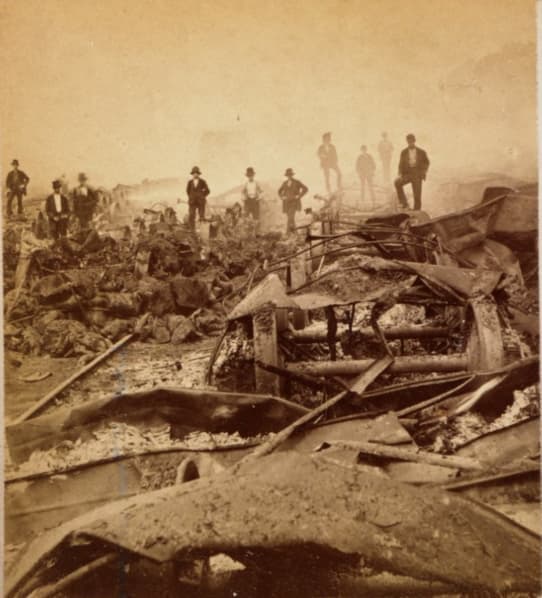
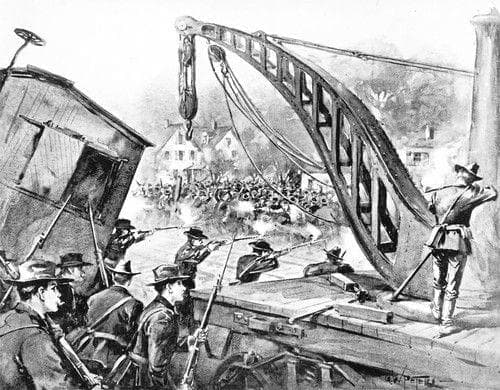
    What began as a rail strike in Martinsburg, WV, over a wage decrease expanded to include 100,000 railroad workers across the United States within weeks. Workers at the B&O station in Martinsburg walked off the job in mid-July in response to a 10% reduction in their wages. They were joined by workers in Pennsylvania and Maryland, then cities as far west as Chicago and St. Louis. Trains were blocked or simply didn't run, crippling the movement of goods and people across the country. In Pittsburgh, the strike turned especially destructive and dangerous. When striking workers and crowds of supporters were confronted by members of the state militia (already called guardsmen) and local policemen, violence ensued. The militia opened fire into the crowd, killing an estimated 20 people. Angry residents of the city flooded into the railroad yards where they burned buildings and trains alike. Another 25 people lost their lives. Violence also broke out in Chicago and Baltimore, MD, among other locations. President Rutherford B. Hayes was not entirely unsympathetic to the workers, writing in his diary that “[e]very man has a right to refuse to work if the wages don't suit him,” but he continued that the same man had "no right to prevent others from working if they are suited with the wages.” Allan Pinkerton of Pinkerton's National Detective Agency also offered his thoughts on the strike, reporting on what he saw take place in Scranton, PA: For years we have been recovering from the extravagances of the war period. Labor has gradually, but surely, been becoming cheaper, and its demand less. Workingmen have not economized in the proportion that economy became necessary. Want and penury followed. Workingmen consequently have become discontented and embittered. They have been taught steadily, as their needs increased, that they were being enslaved and robbed, and that all that was necessary for bettering their condition was a general uprising against capital. Hayes sent federal troops to break the strike, which concluded at the end of August. The presence of state militias increased, and businessmen and politicians realized the power of large numbers of striking workers. Over the course of the entire strike, as many as 100 people perished.

    95% upvoted
  5. 5

    The Pullman Strike Of 1894 Was A Turning Point In Labor History

    The Panic of 1893 weakened the US economy to such a great extent that industrial powerhouses like George Pullman, the maker of luxurious railroad cars, had to cut wages significantly. Pullman's cuts affected workers living in the community built around his factory. In that factory town, workers' rent and other expenses were deducted from wages, but after incomes were slashed, there were no commensurate reductions. As a result, workers initiated a strike in May 1894. The strike began relatively peacefully and had the support of Eugene V. Debs's American Railway Union. The strike spread to more than 25 states and, as it expanded, grew violent. As a result, Attorney General Richard Olney received an injunction from a federal court against striking workers. This was the first time such a request had been made, much less been successful. None of this dissuaded violence, however. President Grover Cleveland sent federal troops to confront defiant strikers, and dozens of people were killed or wounded in exchanges in early July. Debs was detained and later spent six months in jail for contempt, but the strike slowly came to an end by mid-July. Although Cleveland had ordered federal troops to break the Pullman Strike, he was simultaneously aware that days recognizing workers had been adopted in states across the country. As calls for a federal holiday for workers became louder, the US Congress passed an act establishing the first Monday in September as Labor Day on June 28, 1894. Cleveland signed the bill the same day. Workers got Labor Day, but the overall impact of the Pullman Strike reached much further. The power of the federal government over labor had been confirmed, and Debs became convinced that politics was the only path to success for the labor movement. He shifted his focus to socialism as the American people began to push back against Gilded Age excesses in favor of Progressive ideals.

    91% upvoted
  6. 6

    The Delano Grape Strike Lasted From 1965 To 1970

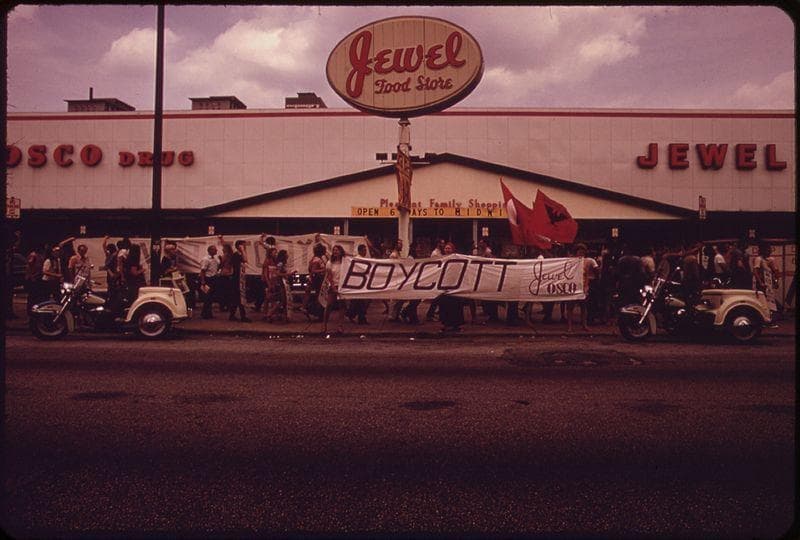
    Thousands of agricultural workers went on strike in 1965 in an effort to increase their hourly wages and in hopes of securing medical and retirement benefits. It began with Filipino American workers who picked grapes annually in the orchards along the coast of California and, soon after, included Mexican and Mexican American farmworkers as well. Among the leaders of the strike were Larry Itliong of the Agricultural Workers Organizing Committee and Cesar Chavez of the National Farm Workers Association. The latter was hesitant to join at first, but within a year, the AWOC and NFWA joined forces and became the United Farm Workers. The Delano Grape Strike (named for Delano, a town in the region) included picket lines during its early stages, and despite harsh treatment from authorities, workers were urged by Chavez to remain nonviolent and stay the course. In 1966, Chavez appeared before the US Senate and told members of the Subcommittee on Migratory Labor: The whole system of occupational discrimination must be killed just like the discrimination against people of color is being challenged in Washington. This, and nothing more, is what farmworkers want. Calls for a consumer boycott by the UFW were successful across the US, and in 1968 (the same year Chavez waged a hunger strike), the UWF signed a contract with 10 grape growers in California. It wasn't until 1970, when the UWF entered into contracts with dozens of grape growers, that the strike and boycotts came to an end. The workers received $1.80 per hour, an increase to the amount they were paid for each box of grapes picked, a health plan, and protections against the use of pesticides. Around the same time the Delano Grape Strike ended, another began. The UFW and Chavez spearheaded the so-called Salad Bowl Strike that lasted from August 1970 to March 1971, although negotiations for farmworkers' rights continued throughout the 1970s.

    91% upvoted
  7. 7

    The Lowell Mill Girls Set A Precedent For Future Labor Movements

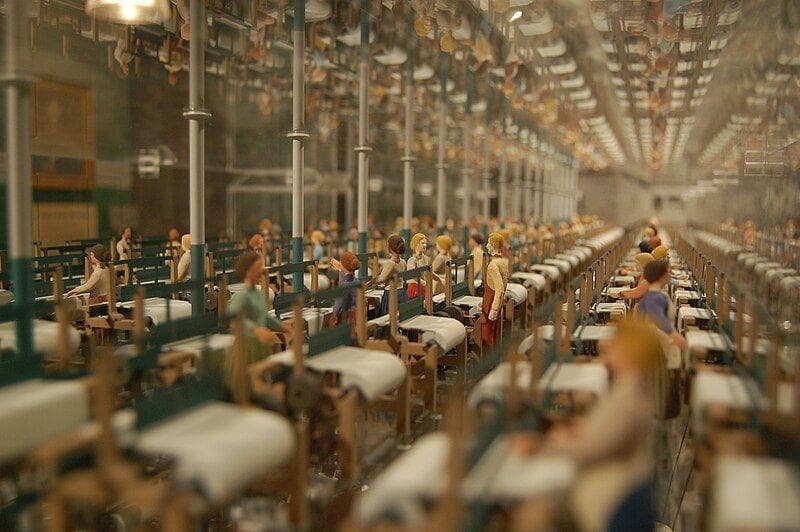
    The British led the way in the Industrial Revolution, but the desperate conditions of the factories led some American textile manufacturers to seek a different, “more respectable” form of labor. During the early 1820s in Lowell, MA, mills were set up to entice workers with the promise of regular cash payments along with room and board. The Lowell System, as it became known, offered steady employment to young single women from rural New England. Though supposedly a more genteel workplace than the textile mills of England, the work was still loud, dangerous, and grueling. The women toiled for 12 to 13 hours a day, six days a week while living in cramped dormitories. This testing environment also created a strong sense of community among the workers and a desire to work together for better conditions. In 1834, management looked to reduce how much was paid per piece, leading to many walking off the job. The strike lasted less than a week and didn’t lead to any concessions, but the Lowell Mill Girls weren’t about to give up that easily. In 1836, another pay cut was issued and workers were forced to pay for their own lodging. This led to a more determined effort where about a third of the workforce struck. The women would routinely switch off the machines before walking out, leading to major disruptions in production. Though they kept at it for months, their effort was defeated. Still, the fight for better working conditions did not end. During the 1840s, as men also began to be recruited to the mills, the fight for a 10-hour workday gathered pace. A pressure campaign led to hearings in the Massachusetts Legislature in 1845, but the testimony of the workers fell on deaf ears. Weak laws were passed in New Hampshire and Rhode Island, but not enforced. By the time of the Civil War, the Lowell System had run its course, and the pretense of a more respectable style of labor had long since been abandoned. While the Lowell Mill Girls did not achieve any meaningful concessions, their efforts did lay the foundations for future generations of exploited workers to build on. Note: Contributed by Michael Muir (who also provided research for other items).

    92% upvoted
  8. 8

    Postal Workers Staged The First Major Strike Against The US Government In 1970

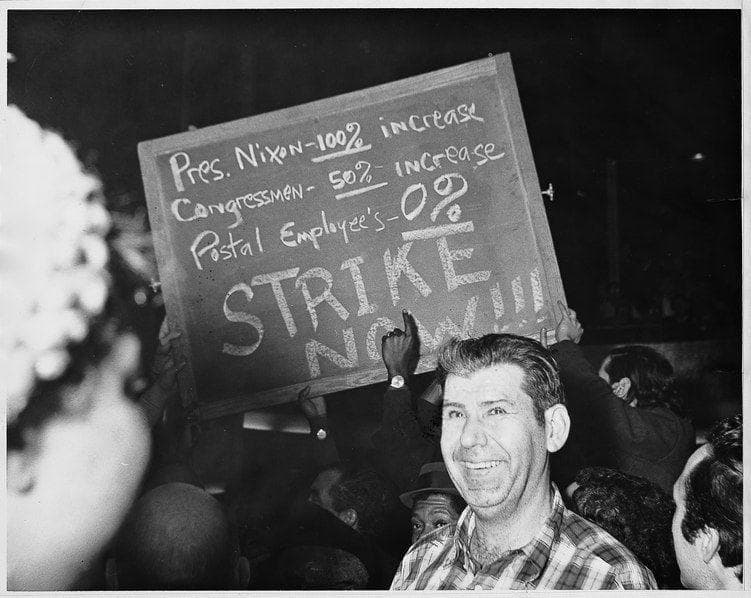
    The strike by the US Postal Service, which began in March 1970 and included more than 200,000 postal workers, started after the US Congress gave itself a large raise only to offer postal workers a moderate increase in pay. According to the AFL-CIO, full-time postal workers earned $6,176 annually, roughly $35,000 in 2010, and just under $50,000 in 2023. Still, many postal workers spent days at work but clocked in for only a few hours when they had to do actual tasks. Technically, the strike by workers of the US Postal Service was illegal. There was no collective bargaining agreement in place for postal workers, which meant they were not able to strike and could be fired as a result of doing so. After postal service branches in New York decided to strike, their colleagues across the nation refused to cross the picket line. With a nationwide strike underway, President Richard Nixon enlisted members of the US National Guard to process and deliver the mail, but they were not trained for the job. The strike lasted only eight days but proved effective. The workers received a 6% pay increase. That increase went up to 8% just months later when Nixon signed the Postal Reorganization Act in August. The Act of 1970 also granted the US Postal Service “financial and operational independence from the rest of the government, and gave postal employees the right to collective bargaining over wages, hours, and working conditions.”

    92% upvoted
  9. 9

    A Series Of Strikes By Miners Led To A More Neutral Outcome By The Government In 1902

    In 1894, coal miners in Colorado went on strike after mines shifted from an eight-hour work day to a 10-hour work day without any increase in wages. Members of the Western Federation of Miners walked off the job and picketed outside the mine at Cripple Creek, prompting the mine owner to send County Sheriff Frank Bowers to protect the mine. Bowers's initial efforts were thwarted, and when he tried again, an explosion again drove authorities away. The Cripple Creek miners were able to successfully negotiate for an eight-hour workday and agreeable wages, but pro-union miners in the region were ultimately broken by mine owners and all gains were lost. A massive coal strike in 1902 attested to dissatisfaction by miners in the face of poor wages, harsh conditions, and unreasonably long work days. After the United Mine Workers of North America was formed in 1890, efforts against unions at mines became violent, demonstrated by the killing of 19 protesting miners in Lattimer, PA, in 1897. The UMW continued to work for miner rights, although negotiations failed over and over again. In May 1902, some 100,000 miners went on strike. By June, as many as 147,000 miners were on strike, and the threat of a wintertime coal shortage prompted President Theodore Roosevelt to intercede. An agreement was reached in October, an independent commission was created to oversee disputes between miners and mine owners, and a commission decided in March 1903 that miners would work nine-hour workdays and receive a wage increase. Hope for cooperation among miners, owners, and the commission did not last long. Another coal strike in Colorado in 1913 and 1914 was rife with violence, and in West Virginia, long-established disputes between minders and workers descended into war.

    91% upvoted
  10. 10

    The 1959 Steel Strike Went To The Supreme Court

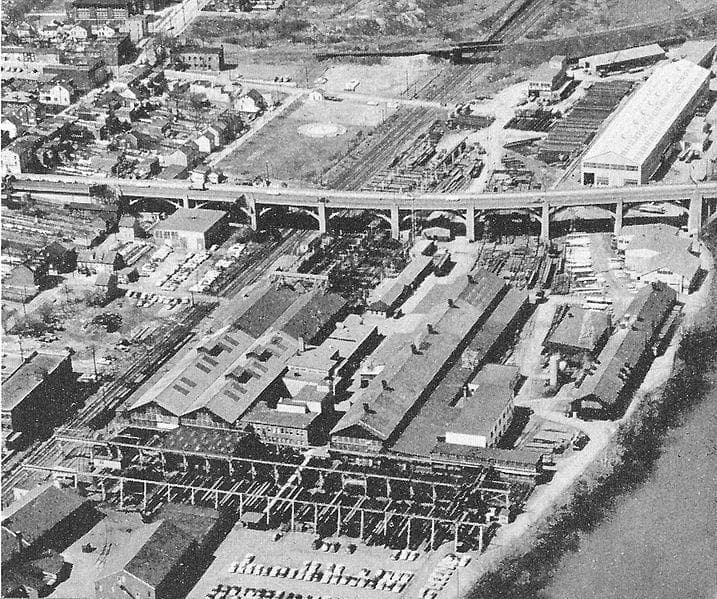
    When the United Steelworkers of America went on strike on July 15, 1959, until November, there was no way to know the matter would appear before the US Supreme Court. Negotiations between steelworkers and steel companies stalled when the president of the USWA, David McDonald, rejected the notion that workers would get wages if the union agreed to drop “Section 2(b)” from its contract. That section placed restrictions on companies' ability to reduce hours, introduce new rules, and change personnel designated for specific tasks - all actions McDonald believed losing would negate any power held by the union. Because the strike threatened steel supplies for the US government, President Dwight D. Eisenhower invoked the Taft-Hartley Act to seek an injunction against striking workers. After a Board of Inquiry set up by Eisenhower determined a settlement was not feasible on October 19, 1959, Eisenhower sent a letter to the US Justice Department, stating: This unresolved labor dispute has resulted in a strike affecting a substantial part of an industry engaged in trade, commerce, and transportation among the several States and with foreign nations, and in the production of goods for commerce, which strike will, if permitted to continue, imperil the national health and safety. The Justice Department secured an 80-day injunction, but the USWA appealed it all the way to the US Supreme Court. In early November, the court ruled the injunction was constitutionally sound. A subsequent report issued by the Board of Inquiry helped identify the specifics of the standoff, while Vice President Richard Nixon attempted to help negotiate between the two parties. A contract agreement was reached on January 15 providing “for a 7 cents per hour pay increase, a cost-of-living adjustment, and improved pension and health benefits.”

    90% upvoted