Skip to content
maxnews
Rankings

12 Unsettling Medical Stories Through History

Medicine, like other branches of science, has the power to explain some of the most unusual ailments human beings can experience (though, to be fair, there have also been several medical devices that are more than a little horrifying, particularly to modern eyes). While many medical conditions are easily explained, and some appear quite normal, there have been, throughout history, examples of baffling medical cases, many of which retain their power to fascinate. Some of these remain mysteries even to modern science, while others have been rendered explicable and understandable by various discoveries and developments in knowledge. These rare medical conditions demonstrate just how miraculous, and unsettling, the human body can be.

Entries
12
Votes
17.5K
Updated
yesterday

Tap upor downto vote. Your vote is added to Ranker's counts.

Voting identifies your browser with an anonymous fingerprint, stored only as a salted hash, to count one per visitor. Privacy

Source: Ranker, ranked by its voters.

  1. 1

    Phineas Gage Survived An Iron Rod Impaling His Brain, But He Wasn’t Quite The Same

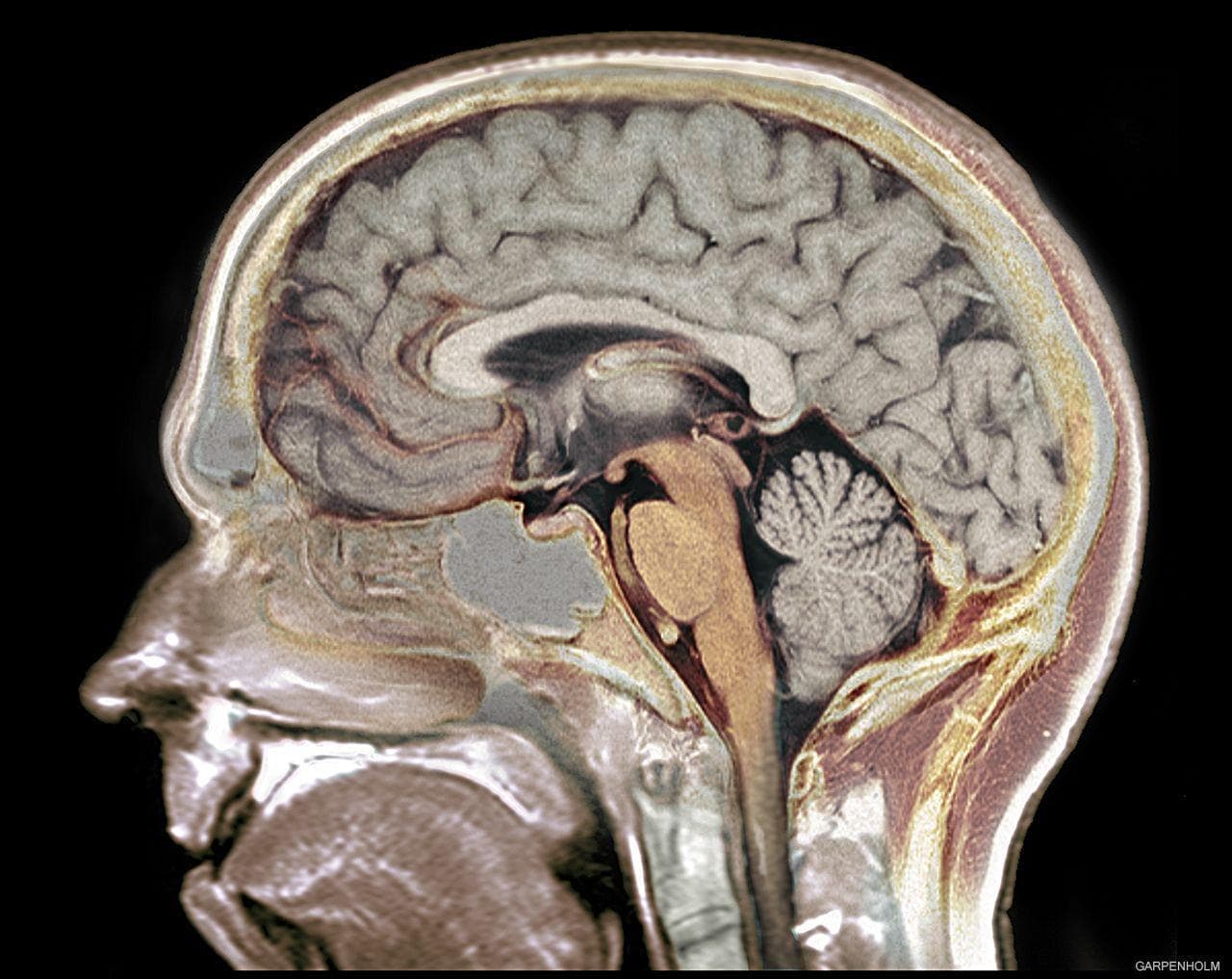
    The history of medicine is filled with individuals who survived traumatic accidents, but few endured quite as much as Phineas Gage who, while working on a railroad in Vermont, survived an iron rod driving through his skull. Though he survived - and was, apparently, even able to joke with the doctor on the day of the accident - he was left scarred and blinded in one eye. The impact of the injury went far beyond blindness, however. The brain trauma changed Gage’s personality in substantial ways, and many of his acquaintances reported he was an entirely different person than he had been before the incident. A doctor who treated him claimed that the balance between his “intellectual faculties and animal propensities” seemed to have disappeared. The change was so drastic that the railroad construction company where he'd suffered the injury refused to take him back as an employee. Gage passed at the age of 36, at the home of relatives. He would go on to become one of the most famous individuals in the history of neuroscience, and his skull is still on display at Harvard’s Warren Anatomical Museum.

    93% upvoted
  2. 2

    Gloria Ramirez Became Known As The ‘Toxic Lady’ When Hospital Staff Treating Her Started Fainting

    The case of Gloria Ramirez, who became known as the “Toxic Lady,” is one of the more tragic stories to have emerged out of modern medical science. After she was rushed to the hospital in February of 1994, staff noticed several unusual things - the patient's skin had an oily sheen, her mouth had a fruity, garlicky odor, and a blood sample taken smelled of ammonia and contained floating manila particles. Stranger still, the staff around her started fainting and reporting numerous health conditions. This unfortunate state of affairs continued even after her passing, when similar symptoms afflicted those attempting to conduct an autopsy. Though her death was attributed to cervical cancer - she had been diagnosed with the disease shortly before her arrival at the hospital - the explanation for why so many people experienced symptoms around her wasn't as clear cut. The first investigation determined that the strange odor had caused mass sociogenic illness in the stressed hospital workers, essentially mass hysteria. But after the staff was unsatisfied with this conclusion, assistant deputy director Pat Grant took another look and came up with another theory. Grant believed Ramirez had been covering herself with a substance called DMSO - dimethyl sulfone - presumably thinking it would cure her cancer. The substance becomes dimethyl sulfate when exposed to oxygen and, when breathed in by humans, causes many of the very symptoms reported by the staff encountering Ramirez. DMSO was marketed as a cure-all in the early '60s, before it was labeled as a toxic substance. Still, Ramirez's family denied that she ever used DMSO, and a definitive answer remains elusive.

    93% upvoted
  3. 3

    Some People Have Lived Normal Lives With Almost No Brain

    The brain is arguably the most important organ in the human body. As vital as it is, however, there are several recorded instances of individuals managing to survive with almost no brain tissue at all; many have even been able to lead otherwise unexceptional lives. A 44-year-old French man, for example, astonished doctors when he came in after experiencing weakness in his leg. Doctors were shocked when scans showed he only had a tiny amount of actual brain material; it had been largely overcome by fluid over the course of his life, which had not drained in the usual fashion. The condition reportedly eroded most of his brain and left him with about 10% of his neurons. The man was married with two children and had an IQ of 75, which is not classified as a mental disability. Other notable examples of those living with a smaller-than-average amount of brain tissue include a Chinese woman with no cerebellum (the part of the brain that controls various motor functions) and a young man who had only a brain stem.

    92% upvoted
  4. 4

    There Were Several Cases Of Exploding Teeth In The 19th Century, And No One’s Sure What Caused It

    Many people are afraid of going to the dentist, and it’s easy to see why. Tooth pain is an affliction many people don’t want to deal with, and it can often be very stressful having someone mess around in one’s mouth. For those living in the centuries before the advent of modern dental and medical techniques, dental pain could be very agonizing indeed; one man was even reported to have committed suicide as a result of suffering from a toothache for five months. For several people living in the 19th century, things got even worse when their teeth actually exploded. Some, including a woman known as Letita D., even claimed to have heard a sound accompanying the explosion, as well as, more fortunately, relief from the extraordinary pain. Though there were almost half a dozen cases reported in the 1800s, none have emerged since the 20th century. It is still unclear just what, exactly, caused the phenomenon. Though dentists at the time had their suspicions, many of these relied on debunked scientific theories. Even the most plausible explanation - a mixture of various metals used to create fillings might have interacted with one another and engendered random electrolysis - isn’t viewed as particularly likely by scientists.

    93% upvoted
  5. 5

    A Man’s Terrible Case Of Hiccups Was Caused By A Tumor

    Most people have at least some experience with the hiccups. While a nuisance, however, the condition typically passes without issue. For Chris Sands, however, long-term hiccups proved quite debilitating, leaving him without a job and without a girlfriend. During one of his worst bouts, he suffered hiccups every two seconds over 14 hours. Initial testing didn't reveal the cause of Sands's hiccups, and after doctors determined there wasn't a psychological cause, Sands says he was essentially out of options: …[W]e got back to the doctor and he said, "Well, that's it." He said, "I have done everything I can do. You're on your own." This was 4 and a half months into it. For the next several years, Sands searched for cures of his own, and eventually turned to the media to try to find help. While being filmed by a Japanese television crew, a doctor finally found a diagnosis: An MRI revealed a tumor on Sands's brainstem. He had surgery in 2009, and surgeons managed to remove a significant amount of the tumor. Since then, the hiccups have subsided, though it did take some time for him to recover from the surgery. Without the operation, Sands said he would have been dead within two years. Sands isn’t the only documented case of terrible hiccups. An Iowa man named Charles Osborne, is reported to have constantly hiccuped for 68 years, from 1922 until they inexplicably stopped in 1990.

    93% upvoted
  6. 6

    People With ‘Morgellons’ Feel Something Under Their Skin, But Some Believe It’s Shared Delusions

    Few feelings are quite as distressing as feeling like you’re physically sick and finding doctors unwilling (or unable) to believe you. This is precisely what has happened with Morgellons disease, a fiercely debated condition in which people report having fibers growing from sores on their body, combined with sensations of crawling or creeping on their skin. It is surrounded by controversy. While some doctors believe it is a serious medical condition, others believe it is psychological in nature. Still others are reserving judgment until further research has been conducted. The disease was named by a mother, Mary Leitao, who, in 2001, took her toddler to doctors after he developed sores on his mouth and felt bugs under his skin. When the doctors couldn't find anything, they told Leitao she might have Münchausen syndrome by proxy, meaning that she was fabricating her son's illness. Leitao refuted this idea and came up with a diagnosis of her own: Morgellons. She drew the name from a treatise written in the 17th century, describing a similar condition. Since then, Leitao has helped to found the Morgellons Research Foundation, which in turn persuaded Congress and the CDC to conduct research on the condition. They also continue to hold conventions and other gatherings for health professionals and those who believe they are suffering from the disease.

    92% upvoted
  7. 7

    An Author Woke Up One Day And Found He Couldn’t Read

    For many adults, reading is an activity they do almost without thinking about the mechanics of the process. For one man, Howard Engel, such an assumption is no longer possible, because he woke up one morning to find he could no longer read. A stroke had left him with a condition often referred to as “word blindness.” However, Engel could still write - in fact, he went on to publish a memoir, The Man Who Forgot How to Read, in 2008. While some might panic, Engel instead seemed to feel a sense of calm. As he noted in an interview with NPR: It would have been terrifying if the reality was constantly present when, in fact, it kept disappearing. It wasn't - I was only aware of it when I needed a piece of information, and then, even then, I was only aware of that fragment of information that had just gone missing. I wasn't aware of the totality, a whole library of things that were no longer available to me. After his stroke, Engel worked, as he put it in the same interview, to make his disability a friend. In addition to the memoir, he also wrote several detective novels before his passing in 2019.

    92% upvoted
  8. 8

    The Town Of Strasbourg Nearly Danced Itself To Death In 1518

    Located in the northeast part of France, along the border of Germany, Strasbourg is home to several international organizations, including the International Institute of Human Rights. With its rich history and culture, it is one of Europe’s most famous cities. However, it has its fair share of darker aspects to its past, including the “Dancing Plague of 1518,” in which the people of the town spontaneously began to dance, at times until they perished. In July 1518, a local woman named Frau Troffea went out into the street and began to dance - and didn't stop. About a week later, others began to join her, and by August up to 400 people were swept up in the dancing plague. Local doctors chalked the dancing up to “hot blood” and advised the townspeople to basically dance it out of their systems. The town even set up a stage with professional dancers and background music. But the plague continued to a dangerous degree, with many collapsing from exhaustion and some passing from heart attacks or strokes. The dancing finally came to a stop in September. Though it might sound fantastic to a modern ear, there are numerous records of this strange incident, as well as similar ones that occurred throughout Europe. Historians have long pondered just what could have caused such an odd event. One of the most common explanations revolves around the figure of St. Vitus, who was believed to have had the ability to curse people through dancing. Combined with the strains of the time - including famine - the people of the city might have fallen prey to mass hysteria. Others, however, believe it might have stemmed from the consumption of mold.

    92% upvoted
  9. 9

    Samuel Wood Became A Medical Marvel After His Arm Was Severed By A Windmill

    Losing a limb is one of the most traumatic injuries a person can suffer. Even with modern medical science, such wounds can often carry unexpected consequences. This was even more true in the centuries before the discovery and wide use of antiseptic, when a wound of such magnitude would almost certainly lead to death. This is precisely what makes the case of Samuel Wood so extraordinary. While he was working at a windmill on the Isle of Dogs in London, the young man had his arm caught in the mechanism, leading to its full separation from his body. To the surprise of many, he seemed to experience little pain and, even more surprisingly, he made a full recovery. In fact, he became something of a local celebrity, and his severed arm was even shown off to crowds.

    90% upvoted
  10. 10

    In Rare Cases, People Develop Life-Threatening Allergies From Blood Transfusions

    Blood transfusions are an often vital medical procedure, and they are often the only thing that can save a person’s life. At the same time, they also sometimes come with unexpected consequences. In particular, there have been several recorded cases of blood transfusions leading to food allergies in the recipient. One Canadian boy, for example, developed allergies to both peanuts and salmon after he’d received a transfusion as part of cancer treatment. There have been a few other recorded cases of a similar phenomenon. These new allergies stemmed from immunoglobulin E, a protein and antibody associated with food allergies. Fortunately, after several months, the level of the protein in the boy’s system had decreased. Thus, he was able to resume eating peanuts and fish again.

    88% upvoted