Skip to content
maxnews
People

12 Surprising Facts About William Jennings Bryan

Who was William Jennings Bryan? Today, he is a relatively obscure historical figure and a footnote to American presidential politics - chiefly because, despite three attempts, he was unable to secure the White House. However, Bryan was a nationally prominent politician, orator, and social commentator for over four decades whose biography intersects with some of the most important events and individuals of the early twentieth century. American high school students learned about his 'cross of gold' speech but probably don't remember much else about Bryan. But the historical forces he embodied are very relevant in modern times. In fact, more than one expert has compared Bryan to Donald Trump. Here are some facts about William Jennings Bryan that return him to his rightful place at the center of American history.

Entries
12
Votes
0
Updated
7 days ago

Tap upor downto vote. Your vote is added to Ranker's counts.

Voting identifies your browser with an anonymous fingerprint, stored only as a salted hash, to count one per visitor. Privacy

Source: Ranker, ranked by its voters.

  1. 1

    Bryan Was the Inspiration for the Cowardly Lion in The Wizard of Oz
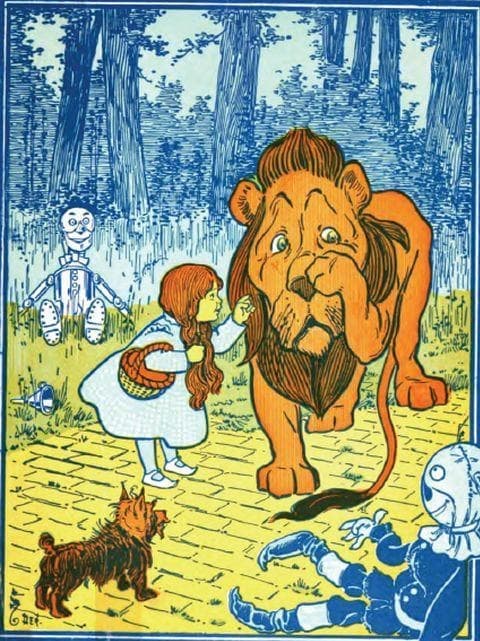
    For many years, L. Frank Baum's book The Wonderful Wizard of Oz was perceived as merely a fantasy written for children. However in 1964, an article by Henry Littlefield in a scholarly journal, The American Quarterly, made the claim that the 1900 book was also a clever political parody of both political figures and factions of the time period. Gold and silver were represented symbolically by the yellow brick road and Dorothy's silver shoes (changed to ruby slippers in the film). The Wizard was actually the President of the US, whose power was an illusion, the Wicked Witches of East and West were the moneyed interests of the east and west, plus many other uncanny similarities. One of the most sarcastic was the Cowardly Lion, who was believed to be William Jennings Bryan, a blustering, fiery speaker who opposed the US war against Spain in 1898. Baum was a writer who did pen various serious articles about politics, so it's not surprising that even his work ostensibly for children might reference the major political issues of his time.
    0% upvoted
  2. 2

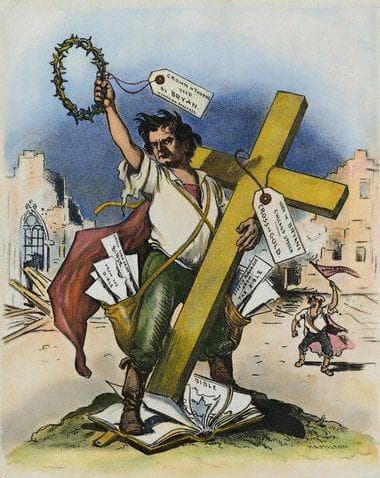
    Bryan's Presidential Election Of 1896 Was A Political Slugfest

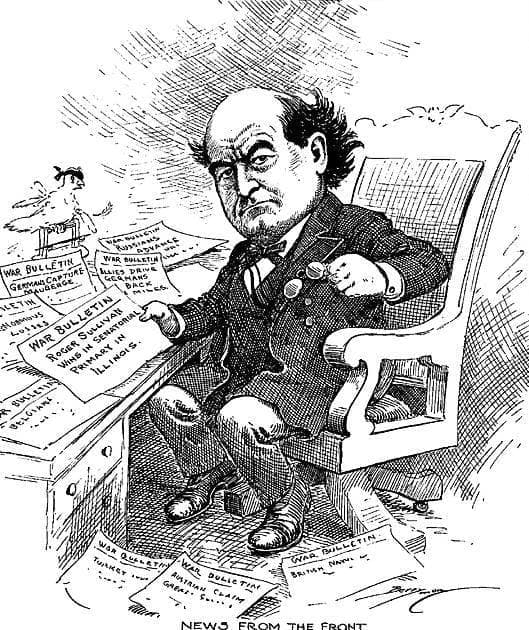
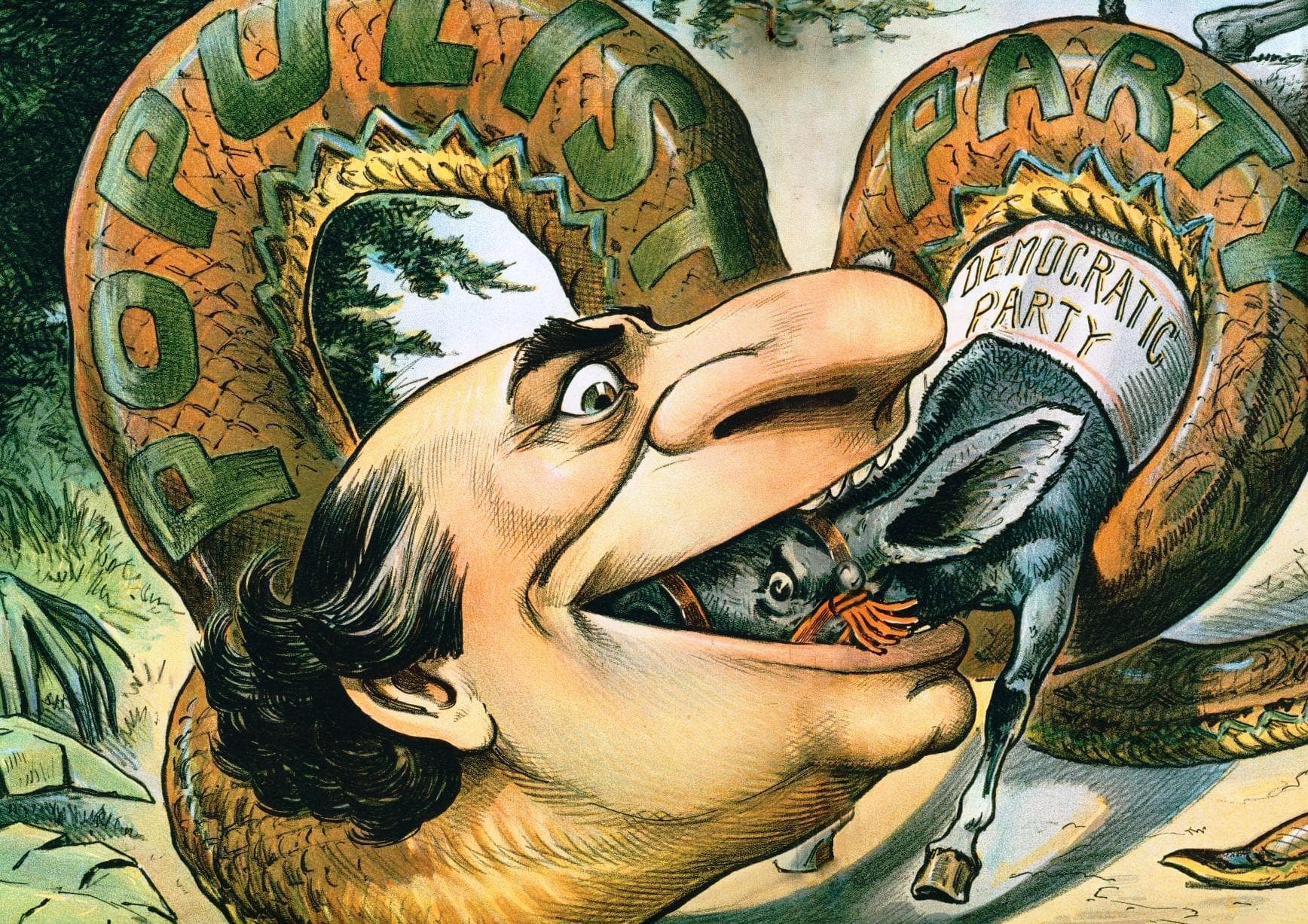
    If the election of 1896 was one of the most pivotal, it was also unusually contentious. William McKinley was the sitting governor of the state of Ohio, whose chief political advisor was Mark Hanna, a multi-millionaire industrialist who correctly viewed Bryan as a force for economic change of the American status quo. He raised enough money from like-minded wealthy businessmen and Northeastern bankers like J.P. Morgan to be able to outspend Bryan twelve to one. In most newspapers, Bryan was routinely depicted as a dangerous, unstable radical who would destroy the fabric of American life. Hanna saw to it that every American household received printed publications that vilified Bryan as a dangerous reptile or insect. Political strategist Karl Rove has cited Mark Hanna as his most important political influence.

    0% upvoted
  3. 3

    The Scopes "Monkey" Trial Harmed Bryan's Reputation

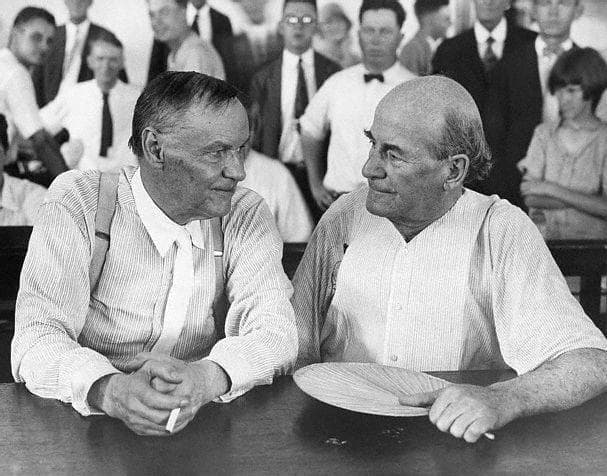
    The Scopes "monkey" trial was a 1925 American court case that adjudicated the guilt of a Tennessee teacher who had taught the concepts of evolution in a public school in violation of state law. When William Jennings Bryan heard about the case, he agreed to represent the prosecution. The ACLU then recruited Clarence Darrow, not only the foremost criminal defense attorney of the day, but also an avowed atheist. The trial became a nationwide media spectacle and was the first broadcast on radio. The climax of the case was the direct questioning of Bryan as a hostile witness in a surprise move by Darrow, who asked questions concerning biblical events that left Bryan to appear confused, short tempered, and ignorant. In truth, the entire trial had been staged by the town fathers of Dayton to generate attention and income and the outcome was never in doubt. From the beginning the ACLU had been looking for a case that could be used in the appellate process that would hopefully overturn the law. The law was upheld by the Tennessee Supreme Court, but Scopes's conviction was tossed out. The state legislature would repeal the law in 1967.

    0% upvoted
  4. 4

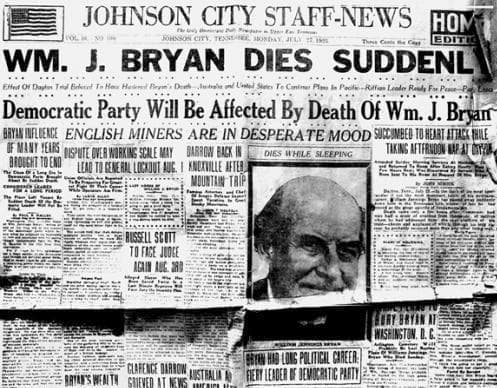
    Bryan's Humiliation in Dayton May Have Contributed To His Death

    William Jennings Bryan's testimony and demeanor at the Scopes Trial was so embarrassing that the judge in the case, John Raulston, adjourned the trial in a move to rescue Bryan from any more damage. The next day he would not allow any further testimony from either man, ruling that such a line of questioning was not relevant. The eight day trial and media circus that lead up to it certainly must have taken a toll on the sixty-five-year-old Bryan. He died in his sleep, in Dayton, only five days after the end of the trial. While his death may have been coincidental, it certainly signaled that America had left strict fundamentalism behind and was entering a new intellectual age. Bryan's fanatical religious fervor and anti-intellectualism also overshadowed his legacy as a progressive thinker and populist.

    0% upvoted
  5. 5

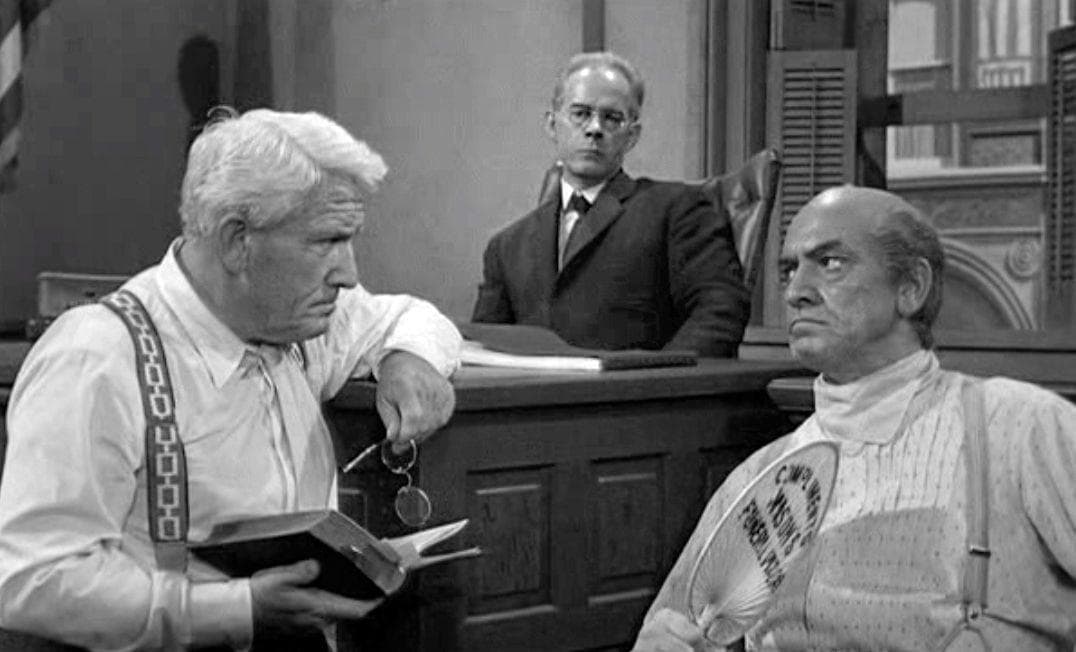
    A Hollywood Film Helped Shape Bryan's Negative Historical Image

    In 1960, a major movie production of the Broadway hit play Inherit the Wind was produced starring Spencer Tracy as Henry Drummond and Frederick March as Matthew Harrison Brady. Drummond and Brady were depictions of Darrow and Bryan, respectively, with Gene Kelly cast as a sarcastic journalist loosely based on Baltimore Sun columnist H.L. Mencken. Brady (Bryan) appears as a laughable religious eccentric and demagogue, his cross-examination a terrible embarrassment. In the end, the film has him collapsing while trying to give a rejoinder to Drummond's intellectual pummeling, an historical inaccuracy that still captures his status as a political has-been. The film was a critical success and Tracy's performance was nominated for an Academy Award. An entire generation of Americans would form an opinion of Bryan based on the film.

    0% upvoted
  6. 6

    William Jennings Bryan Was the Youngest Major Party Candidate for President Ever

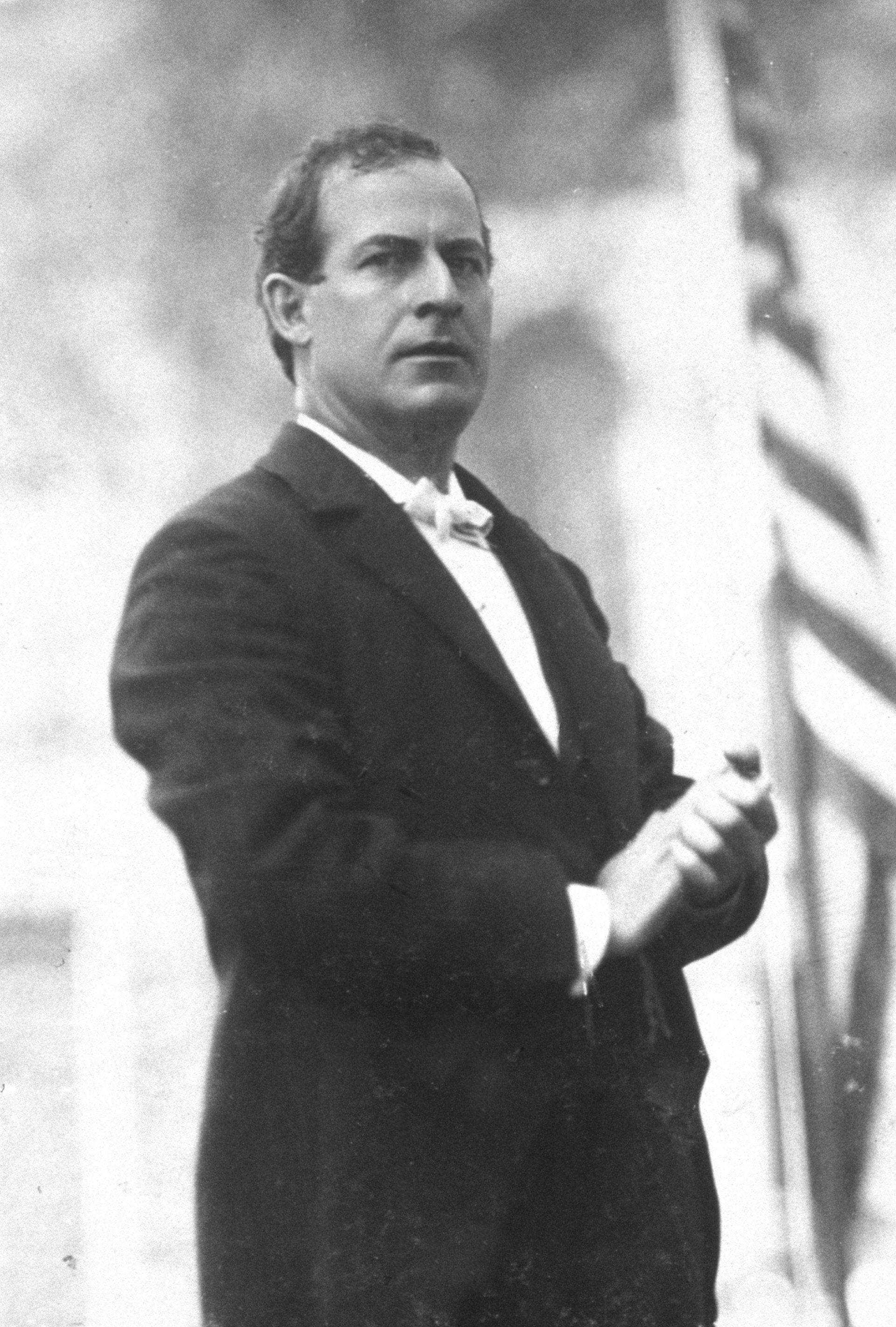
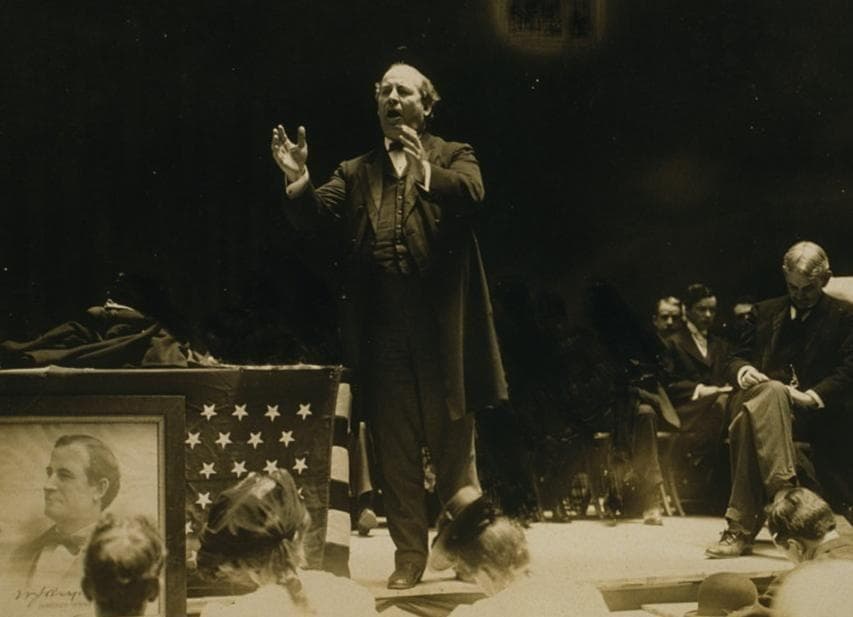
    William Jennings Bryan was born in Salem, Illinois, on March 19, 1860. As a young lawyer, he was interested in politics but saw no political future in Illinois. He moved to Nebraska and was elected to Congress, only the second Democrat to do so, but he was defeated in an 1894 bid for the US Senate. On July 9, 1896, at only 36 years old, Bryan gave a speech to the Democratic Convention which is known historically as the "Cross Of Gold" speech. The speech concerned the belief that the US should adopt both a silver and gold standard (as opposed to gold alone). Such an adoption would deliberately inflate the money supply, increasing the price of crops and helping many middle class Americans escape the debt of a recent economic downturn. Bryan's speech electrified the audience and propelled him to the Democratic presidential nomination the next day. His nomination precipitated the watershed election of 1896, a bitter battle between the populist Bryan and Republican William McKinley, who was favored by banking and financial interests who opposed Bryan's economic policies. While the popular vote was close, McKinley won a decisive electoral college victory.

    0% upvoted
  7. 7

    Bryan Has Received More Electoral Votes Than Any Other Candidate Never Elected President

    William Jennings Bryan ran for the presidency three times: in 1896, 1900, and 1908. Although he was defeated on all three occasions, he received a total of 493 electoral votes more than any other candidate never elected president. The only other politician who is even close to this record is Republican Thomas E. Dewey, with 288 electoral votes, although Dewey only ran for president twice.

    0% upvoted
  8. 8

    Bryan Only Spent Two Years in Any Position of Political Power

    By 1912, after losing three presidential campaigns, Bryan was no longer a serious national political contender, but he did have considerable influence over the Democratic Party. At the 1912 Democratic Convention, Bryan used his influence to help nominate Woodrow Wilson. When Wilson was elected President, he selected Bryan as his Secretary of State. Other than his brief stint in Congress, this was Bryan's only major political office, which he would only hold for a little over two years. Bryan was generally opposed to any foreign policy that he labeled as "imperialist" and when it appeared that President Wilson and others were using the sinking of the Lusitania as a pretext to involve the US in World War I, Bryan resigned.

    0% upvoted
  9. 9

    Bryan's Brother Was Nominated for Vice President, Chiefly Out of Name Recognition

    In 1924, the Democratic Party nominated former congressman and attorney John W. Davis for President. Because Davis was a conservative closely associated with northeastern political and financial interests, the Democrats wanted to balance their ticket with a Midwestern populist. Since the ultimate populist, William Jennings Bryan, wasn't feasible or available, the party settled on his brother, Charles Bryan, a nominee who was seen as a concession to the party's populist and prohibitionist elements. Bryan was the governor of Nebraska, perceived as even more radical than William Jennings Bryan, and made for a disjointed Presidential ticket that would be handily defeated by Calvin Coolidge. Still, William Jennings Bryan and Charles W. Bryan are the only two brothers ever nominated for President or Vice President.

    0% upvoted
  10. 10

    An Alleged Populist, Bryan Became Quite Wealthy from His Speaking Tours

    After his defeat in the election of 1900, Bryan was not involved in government and needed to earn a living. He became one of the most popular paid speakers on what was known as the Chautauqua circuit, a nationwide educational organization that provided enlightenment and entertainment. Because edifying and inspirational lectures were the focus of this experience, Bryan gave speeches on topics like the "Prince of Peace," comparing the words and deeds of Jesus Christ to the core principles of individual public service. Bryan charged $500 for a speech and even continued to give paid Chautauqua presentations when he was the Secretary of State. This income was one of the major sources of Bryan's considerable wealth.

    0% upvoted