The Temple Seen In 'Indiana Jones and the Last Crusade' Is A 2,000-Year-Old Mausoleum Located In Petra
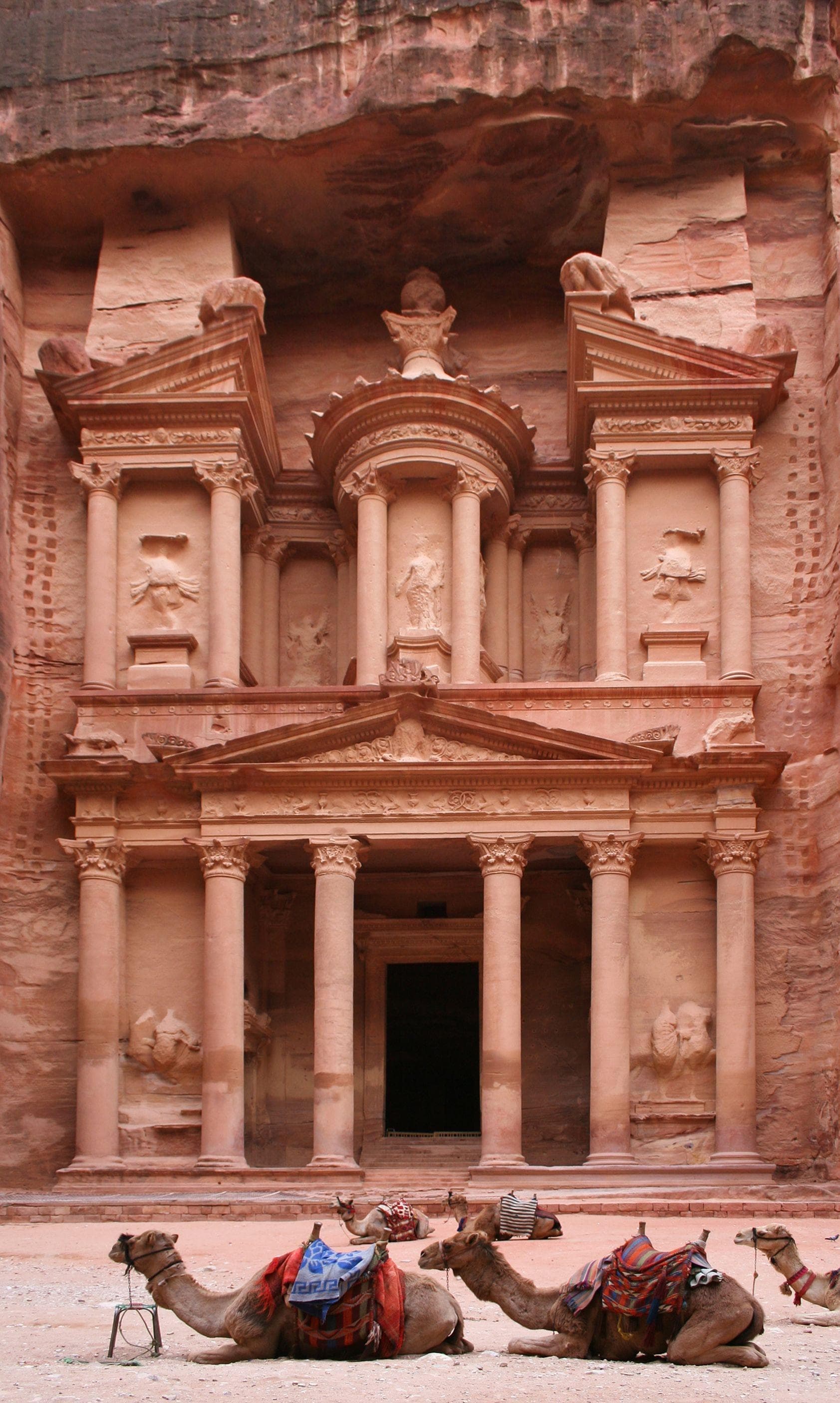
Though an ornate and intricately carved ancient temple in the middle of a desert may seem like the stuff of a great fictional adventure or video game, Petra is a very real place. The temple seen at the end of Indiana Jones and the Last Crusade is located near modern-day Jordan. Over 2,000 years ago, the Nabataeans established Petra, a city so remote that visitors must travel through a 328-foot deep and, at some points, only 10-foot wide gorge to reach it. Once adventurers make it through the seemingly uninhabitable terrain, they're met with the awe-inspiring sight of the Khazneh, or “treasury,” Indiana Jones fans recognize from the film. When the mainly nomadic Nabateaens first established themselves in Petra near the end of the 4th century BCE, they were still heavily tied to their Arabic roots. However, as they immersed themselves into the South Arabian frankincense and myrrh business, Petra became a thriving city with a mix of Arabic and Hellenistic influence. Establishing trade routes from India all the way to Rome, the city thrived before it was eventually annexed by Rome in 106 CE. As the Romans established different trade routes, the city of Petra eventually declined. While many of Petra's tombs are decorated with intricate carvings, the Khaznah is one of the most ornate and recognizable. According to legend, this city of rock dwellings and tombs is also where the Israelite leader, Moses, hit a rock to make a stream of water burst forth. In October 2024, it was announced that archaeologists discovered another burial site at Petra, one that was unique among its counterparts. Professor Richard Bates explained, If you look at all the other tombs in the Petra area, only a few have ever contained any human remains, and those are very fragmentary, whereas this has got 12 complete bodies within it. One additional interesting find was the skeleton holding a chalice with striking similarities to the one seen in Indiana Jones. Researchers planned to analyze the bones, teeth, and other materials to learn more about life at Petra.