Skip to content
maxnews
Rankings

10 Historical Rivals Who Became Friends (For A While)

In times of crisis, core beliefs can often take a back seat to more immediate goals. Even a sworn religious or political foe can seem like a friend in a pinch. Sometimes the cooperation stems from a mutual enemy; at other moments, the bigger prize is worth the cost of helping a rival. From the uneasy coalition of Romans and Barbarian kingdoms that stood against Attila, to the American and German rescue mission in the dying days of World War II, this collection looks at the strangest historical partnerships.

Entries
10
Votes
854
Updated
yesterday

Tap upor downto vote. Your vote is added to Ranker's counts.

Voting identifies your browser with an anonymous fingerprint, stored only as a salted hash, to count one per visitor. Privacy

Source: Ranker, ranked by its voters.

  1. 1

    The US Army And The Wehrmacht Teamed Up For A Mission In 1945
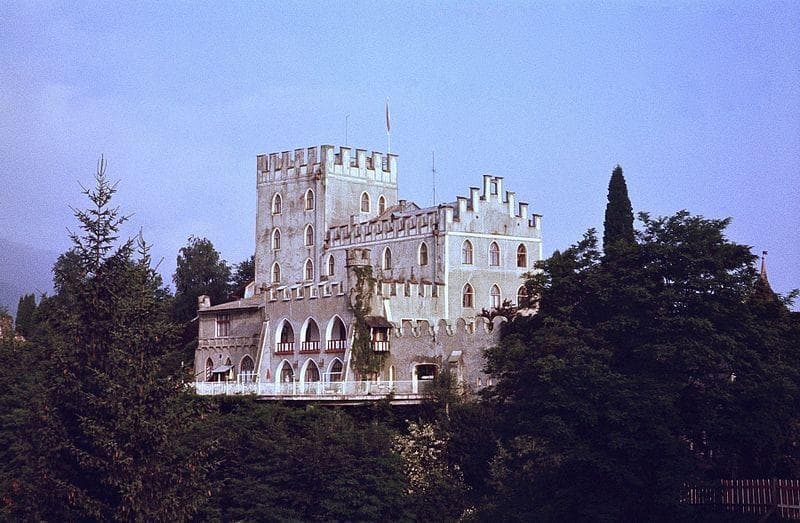
    Itter Castle in Austria was the site of a highly unusual operation in the very last days of the European theater of World War II. The Nazis used the castle to hold high-profile French prisoners of war. By May 1945, the prison’s guards had fled and a unit of Waffen-SS came in to wipe out the French prisoners and carry out reprisals against the local population for any hints of surrender. A German officer who opposed the Nazis, Josef Gangl, and a small group of men loyal to him intervened to protect the prisoners and locals. Heavily outnumbered, Gangl sent word to the American forces in the area seeking aid. His call for help was answered by Capt. John C. "Jack" Lee, Jr., who arrived with a band of volunteers and a single Sherman tank. The motley crew of French prisoners, American troops, and Wehrmacht soldiers bravely defended the castle against the SS. The tank was blown up, but the SS weren’t able to breach the castle. An American relief force arrived in the late afternoon and captured the SS unit. There was only one casualty on the defending side: Gangl was slain by a sniper while trying to spot the position of the anti-tank gun from an observation post. Many years after the battle, Lee was asked by a reporter in 1973 what he made of the whole endeavor. His short answer summed it all up perfectly: "Well, it was just the damnedest thing."
    95% upvoted
  2. 2

    The Crusaders And The Mongols Coordinated Against The Mamluks

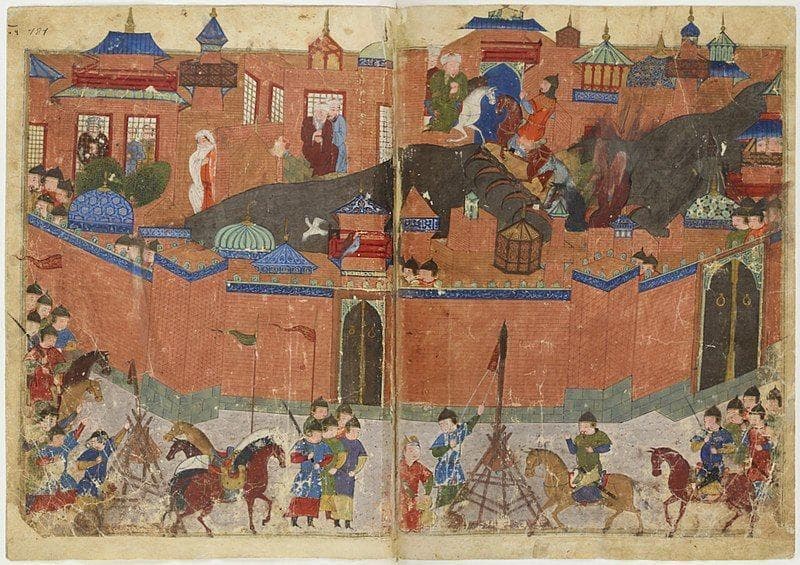
    In the battle for the Holy Land, the Crusaders weren’t actually all that picky when it came to finding allies. France repeatedly reached out to the Mongols in the 13th and 14th centuries seeking cooperation against shared foes in the Holy Land. But it was the formidable English monarch, Edward I, who came the closest to sealing an alliance between Christendom and the pagan Mongols. Edward, then a prince, arrived in the Levant in 1271 with only a small number of knights and retainers. He sent out envoys to the Mongol leader Abaqa to seek aid against the Mamluks. Abaqa was receptive to the idea and agreed to an offensive in Syria while Edward’s forces struck elsewhere. The coordination proved to be unsuccessful, as Edward’s small force couldn’t achieve much and the Mongols withdrew without a major battle. Although further attempts to work together were tried by the French, Edward’s failed mission would be the only real shared venture between the Mongols and Christendom. As the Mongol empire fractured in the 13th century between different khanates, some converted to Islam and effectively closed the door on any further treaties with the Crusaders.

    94% upvoted
  3. 3

    Sparta And The Persians Teamed Up To Subdue Athens

    The Spartan legend was forged in the hot gates of Thermopylae where the brave 300 led by Leonidas laid down their lives against the innumerable Persian forces during the failed invasion of Greece. The story has been told and retold numerous times over the ages, with varying degrees of accuracy. Neither the accord between the city-states nor the animosity with the Persians would last, however. Within a generation, the city-states of Athens and Sparta were locked in a deadly conflict, and the Persians were only too happy to lend the latter a hand. With Athens ascendant in the Aegean, the Persian King Darius II ordered his satraps in Asia Minor to seek an alliance with Sparta. The king’s son Cyrus was sent to oversee the campaign in person. Thanks to substantial financial and naval support, Sparta gained the upper hand in the conflict, and briefly became the dominant force in Greece. The Spartans would later support Cyrus in his bid to oust his brother from power. An impressive force of 10,000 marched into the Persian Empire but was forced to turn back after the Persian prince fell in battle. The long and treacherous march through hostile territory was recorded by Xenophon in the Anabasis. The story also served as the inspiration for the 1979 cult classic, The Warriors.

    94% upvoted
  4. 4

    The Romans Formed An Uneasy Coalition To Stop Attila

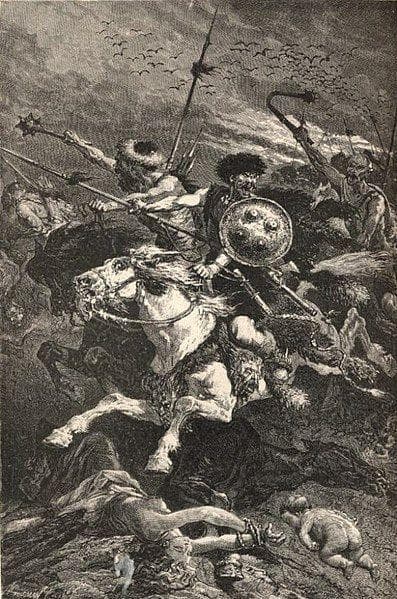
    In the 4th century CE, it was fair to say the Roman Empire had seen better days. But the ailing empire could still muster a formidable army when crisis loomed. Few were equal in magnitude to the threat posed by Attila and the Huns. As they ravaged through Gaul (now France), a coalition of Goths, Franks, and assorted tribes came together under the Roman leader Flavius Aetius to take on the Huns. Relations between the coalition members weren’t exactly harmonious (the Visigoths had sacked Rome in 410 CE), but the even greater threat of the Huns saw those differences put aside at the climactic Battle of the Catalaunian Plains (also called fields) in 451. The Visigothic king Theodoric fell in the conflict alongside thousands of others in an exceptionally brutal encounter. A heavy price was paid to put an end to the Hunnic invasion, and the uneasy truce between the coalition soon dissolved. Rome was sacked again in 455 as the Western half of the empire entered a terminal decline that saw the once-mighty empire fall.

    93% upvoted
  5. 5

    The Soviet Union And The Allies Put Aside Ideological Differences To Defeat Hitler

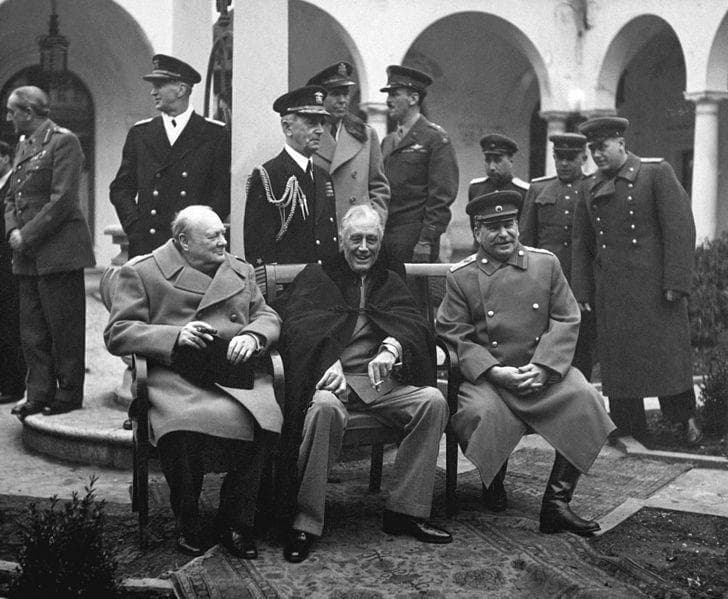
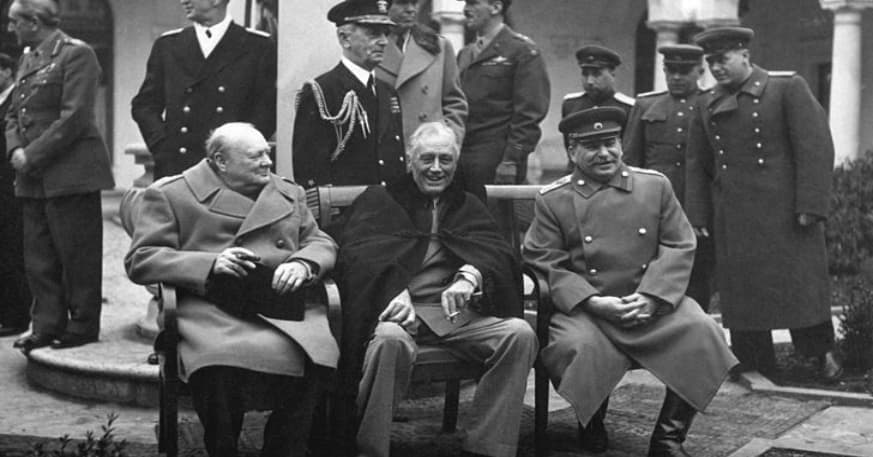
    In the Russian Civil War, the Allies unsuccessfully intervened in 1918 but lacked both the means and will to alter the outcome. The emerging Soviet Union was very much the black sheep of the diplomatic world of the post-World War I era. But those frosty relations were melted by the far worse prospect of a world dominated by fascism. Winston Churchill was one of the most vehement opponents of communism, but when the Germans invaded the Soviet Union in 1941, Churchill's verdict was characteristically pithy: I have only one purpose, the destruction of Hitler, and my life is much simplified thereby. If Hitler invaded Hell I would make at least a favorable reference to the Devil in the House of Commons. The shared goal of toppling the Führer led to a shotgun marriage between the ideologically divergent Allies and the Soviet Union. The Soviets did much of the heavy lifting, but were aided enormously by American production and the opening of a second front in 1944. For a brief, tantalizing moment, the promise of a harmonious postwar world loomed in 1945, but it was not to be. Soon after the triumph over the Nazis, the old differences came to the fore once again.

    89% upvoted
  6. 6

    Warring Japanese Clans Banded Together For A Korean Misadventure

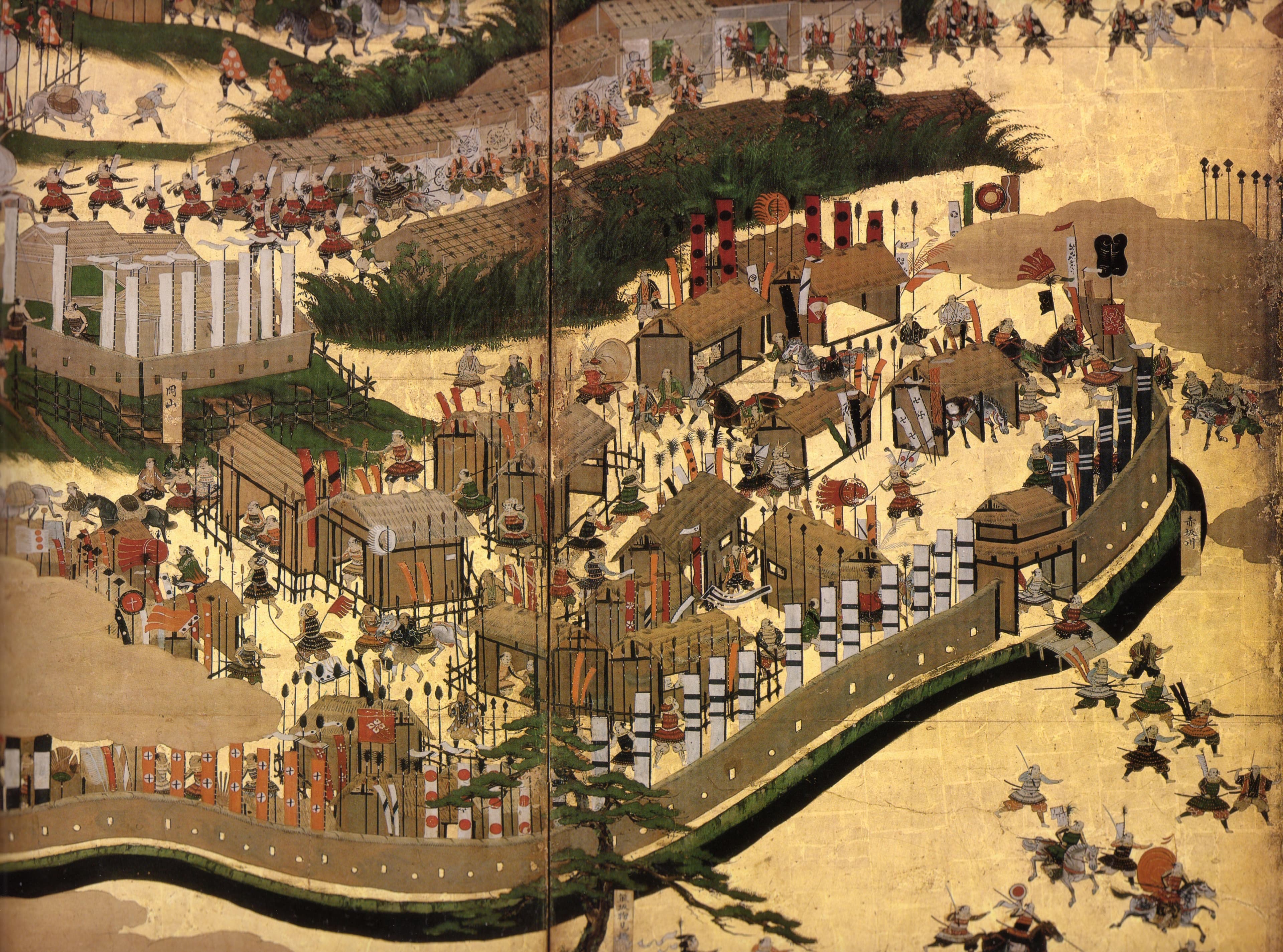
    Japan was nearing the end of the Sengoku Jidai (“Warring States Period”) when Toyotomi Hideyoshi wrapped up the unification of Japan that had begun under his predecessor Oda Nobunaga. Unlike his former lord, Hideyoshi made judicious use of mercy to turn former enemies into allies. Those who opposed him in one campaign would become the vanguard of the next. This snowballing effect allowed Hideyoshi to bring Japan under his rule by 1591. However, that left the former peasant in a bit of a quandary - what to do next with tens of thousands of battle-hardened samurai with a lengthy catalog of grudges against one another? The answer was to send them on an expedition to conquer China via Korea. A huge but divided army set off to conquer Korea in May 1592. The divisional leaders bore each other a great deal of ill will stemming from the decades of internal warfare in Japan. Among the most acrimonious were the leaders of the first and second waves, Konishi Yukinaga and Kato Kiyomasa. Each ruled one half of the same domain: Higo. Konishi was a Christian convert, while Kato despised Christians. The armies often worked independently of each other rather than uniting under the same banner. This allowed the Koreans to regroup, and in addition to a series of naval victories saw the conflict bog down into a stalemate after initial Japanese successes. Serious fractures developed between the leaders of the expedition that would later play out in the climactic encounter at Sekigahara in 1600. Ultimately, the incursion failed and the great battle of Sekigahara would be decided by the defection of Kobayakawa Hideaki, a young noble who never let go of the grudge he held against the Western Army’s commander, Ishida Mitsunari.

    89% upvoted
  7. 7

    France And The Ottomans Shocked Christendom By Joining Forces

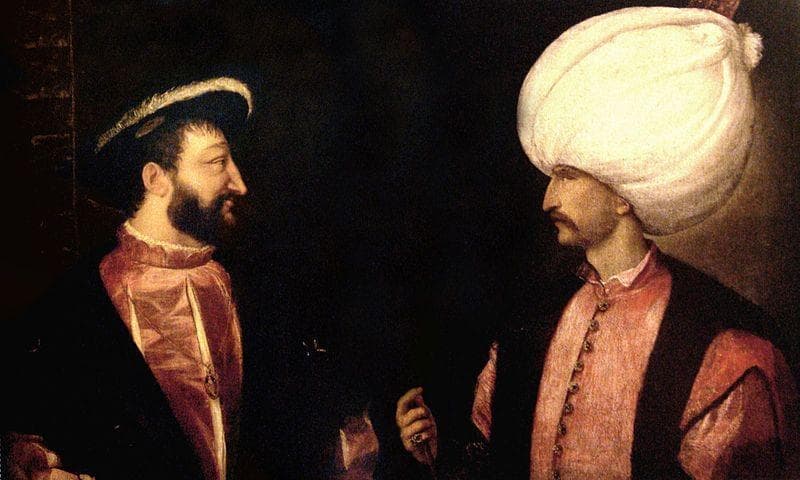
    In the early 16th century, France was surrounded by Habsburg kingdoms, so King Francis I was prepared to look outside established norms for friends against his bitter rival Charles V. Charles had not only pipped Francis to the title of Holy Roman Emperor, but also subjected the king to humiliating captivity after the battle of Pavia in 1525. To the east lay the Ottoman sultan Suleiman I and a powerful potential ally. An alliance between a Christian kingdom and a Muslim empire was unthinkable in the 16th century, but Francis was prepared to overlook that and sent out an envoy to seek terms. His motivation was made abundantly clear: I cannot deny that I wish to see the Turk all-powerful and ready for war, not for himself - for he is an infidel and we are all Christians - but to weaken the power of the emperor, to compel him to make major expenses, and to reassure all the other governments who are opposed to such a formidable enemy. The alliance was signed in 1536, and this strange union proved to be quite durable, lasting in some form or another until the turn of the 19th century. The agreement brought significant advantages to the French - access to lucrative trade and significant financial backing. The military cooperation between the two largely came down to naval expeditions, such as the 1542 siege of Nice. The city wasn’t part of France at the time and the experience was anything but nice for the people of Nice. Legend has it that a (possibly fictional) heroine, Catherine Ségurane, led efforts to resist the expedition and showed defiance by mooning the attackers. Although no corroborating evidence exists for this fine story, a monument in her honor stands to this day (though not in her infamous pose). After the alliance was formally dissolved in 1798, the French and Ottomans would team up one last time in the Crimean War.

    86% upvoted
  8. 8

    The Eight-Nation Alliance Was An Alliance In Name Only

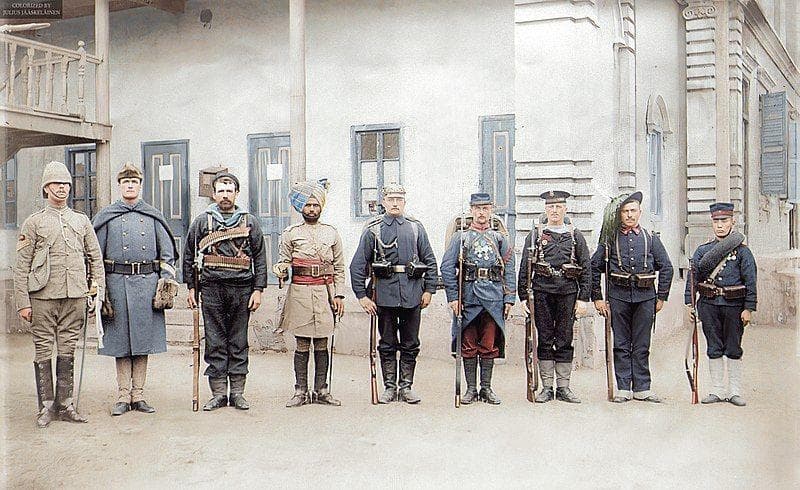
    At the turn of the 20th century, China was in the midst of a terrible drought that was just the latest in a series of catastrophes that befell it in the 19th and 20th centuries. In response, peasant groups calling themselves the Righteous Fists of Fury rose up across the country to direct their ire against hated foreign influences, especially Christians. The bemused foreigners took to calling the malcontents Boxers, and the name stuck. By June 1900, the situation had escalated to the point that foreign embassies in China were under siege by the Boxers. A coalition force of the world’s foremost imperial powers was thrown together to relieve the embassies and punish the ruling Qing dynasty for its suspected support of the rebels. From the beginning, the expedition was beset by internal disputes stemming from the rivalries between members of the so-called alliance. The choice of the leader came down to machinations between Germany and Russia to stop the British from taking control. Alfred von Waldersee was appointed to oversee the venture but was still in Berlin at the time. While Waldersee was on his way to China, the ragtag group of troops set out. The soldiers moved as eight separate forces rather than as one unified group. Each wanted to beat the other to the prestige of taking the capital first. After a few skirmishes in August, the Boxers completely disappeared from the conflict, leaving the Qing to fight the combined forces alone. All that was left for the allies was to take Beijing itself. The Russian and Japanese detachments raced out in front to be the first into the city. The assault on the capital was an uncoordinated mess that saw each member of the alliance try to beat the other over the walls. In the end, Welsh and Indian troops slipped past lightly defended sections of the city to claim the glory. The forces of "civilization" then brutally sacked the city. The German commander appointed to oversee the whole thing didn’t arrive until the conflict was already over. He still tried to pick a fight, which only served to worsen Germany’s international standing. Within five years of the intervention, Russia and Japan would be at war. Within 15, every member of the alliance would be drawn into World War I.

    84% upvoted
  9. 9

    The Soviet Union And Nazi Germany Carved Up Poland

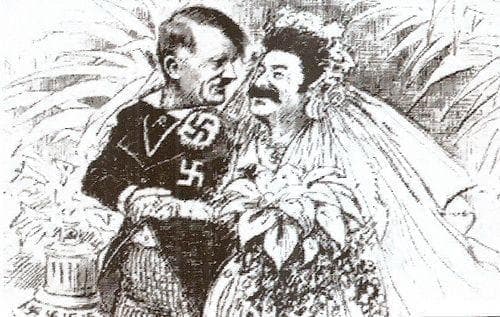
    The sworn ideological enemies formed a pact to divide Poland between them in 1939, but the accord between the two diametrically opposed states goes back even further. Following the German defeat in World War I, the terms of the Treaty of Versailles (1919) greatly restricted the German army’s numbers and equipment - only 100,000-strong and no aircraft or armored vehicles. A workaround to these restrictions lay to the east - the Soviet Union was a fellow international outcast willing to lend a hand to the German military. Starting with the Treaty of Rapallo (1922), relations between the former enemies normalized as the Germans sought to establish arms production outside of Allied control. Long before the Molotov-Ribbentrop Pact was signed, the seeds of Poland’s destruction were sewn. The Soviets were still smarting from a defeat outside the very gates of Warsaw in 1920, while the Germans saw Poland as a creation of Versailles and were eager to right that particular wrong. The era of military cooperation came to an end with Hitler’s rise to power in 1933, but the mutual goal of Poland’s destruction remained. The Germans attacked Poland a little more than a week after signing the pact with the Soviet Union on August 25, 1939. On September 17, 1939, the Soviets invaded from the east. The conquest wrapped up by October, but the agreement between Germany and Russia would soon crumble.

    85% upvoted
  10. 10

    Britain And France Formed A Strangely Effective Tag Team In The 19th Century

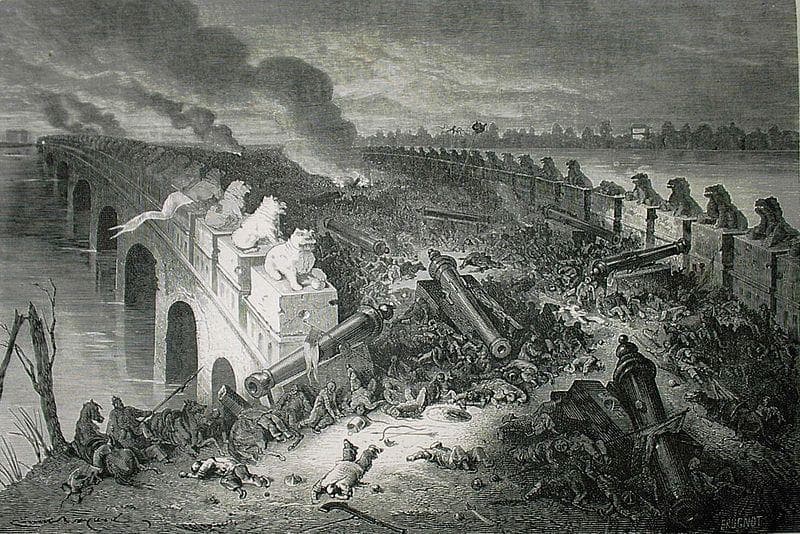
    With expansive global empires and a long and troubled history, Britain and France were natural rivals who put aside past differences to work together in a number of far-flung conflicts in the 19th century. The first pairing saw an Anglo-French intervention in the Crimean War to aid the Ottomans in a struggle against the expansionist ambitions of the Russian Empire. The conflict was mired by catastrophic tactical errors such as the doomed charge of the light brigade and logistical failures that saw most of the losses incurred away from the battlefield. In the end, however, the Russians were pushed back and the Ottomans clung on for a little longer. Hot on the heels of that costly triumph came another Anglo-French venture - this time in China in the Second Opium War. The Qing dynasty already had its hands full with the Taiping rebellion and was simply no match for the combined British and French expeditionary force. The US was officially neutral and only there to observe, but still took part in a few operations. Another Asian adventure occurred in the largely forgotten conflict with the Choshu clan in Japan's Shimonoseki Strait. With anti-foreign sentiment running high in Japan at the time, the Choshu clan took to attacking any foreign vessel that braved the narrow pass between Kyushu and Honshu, Japan’s two largest islands. An American ship was attacked in July 1863, prompting the Americans, British, French, and Dutch to put an expedition together to capture the coastal batteries the following September. The partnership continued into the 20th century and eventually led to a lasting alliance between the two formerly sworn enemies.

    81% upvoted