Renate Reinsve on the role that changed her life
Playing Julie in The Worst Person in the World was life-changing for the actress
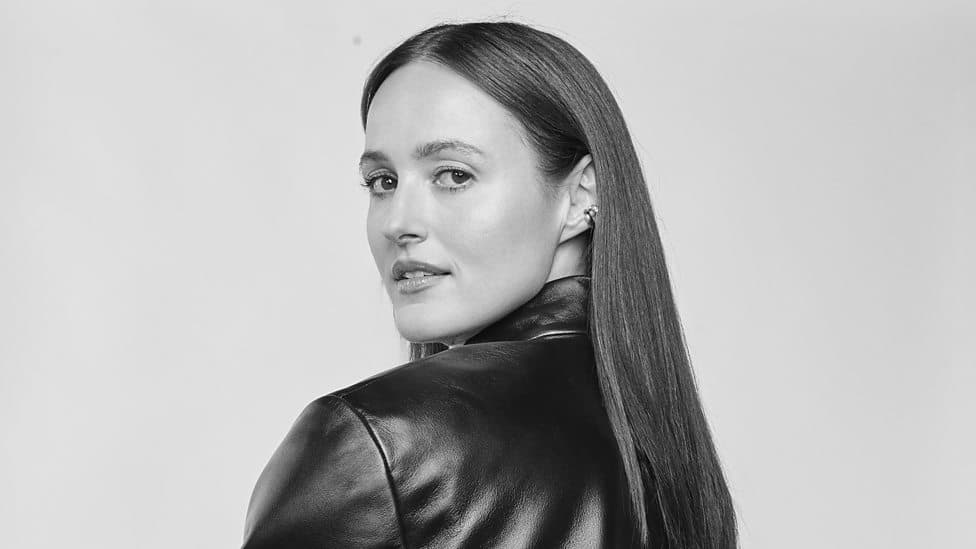
Reinsve came to fame as angst-ridden millennial Julie in the award-winning romantic comedy-drama. For the BBC's Close Up Film series, she reflects on her favourite ever film shoot.
When Renate Reinsve walked the Cannes Film Festival red carpet in July 2021 for Joachim Trier's bittersweet romantic comedy The Worst Person in the World, she was enjoying what she thought would be a one-off experience – because she was planning on giving up acting altogether.
"I thought, 'this is my first and last time on a red carpet'," she tells the BBC. "I did a little spin [for the cameras.] And then afterwards, everything happened. It was shocking."
The film was a sensation, with critics praising it for tapping into a generational feeling dubbed "millennial anguish". Reinsve was awarded the Cannes Best Actress prize for her performance, and the movie was nominated for two Oscars.
Since then, she earned her own Best Actress Oscar nomination for playing Nora in another Joachim Trier movie, last year's much-lauded Sentimental Value, and she's also made English-language films, including Kane Parsons' edgy horror phenomenon Backrooms. Her latest role is in Romanian filmmaker Cristian Mungiu's Fjord, which won the Palme D'Or, the Cannes Film Festival's biggest prize. She plays Lisbet, an evangelical Christian whose children are removed on suspicion of abuse.
How The Worst Person in the World changed her
Reinsve describes making Fjord as her second favourite filming experience, but she credits The Worst Person in the World as "the most significant film of my career. It was my first ever leading role and also my favourite ever film shoot.
"We just had the best time on that set. It was a long summer of running around Oslo and it was fantastic – such a playful, fun collaboration."
Made in the summer of 2020, it's a coming-of-age movie about a restless heroine, Julie. About to turn 30, she switches both careers and relationships before understanding that choosing anything still means uncertainty.
Julie was even more special, Reinsve says, because Trier, who she had previously worked with on 2011's Oslo, August 31st, called her about the part the day after she'd decided to quit acting. At the age of 32, Reinsve had spent years working in theatre, but couldn't land film work. She was considering different careers, including training as a carpenter in Italy.
"I didn't have an opportunity to work on anything I really wanted to do. It's very hard to get funding for these kinds of movies in Norway anyway, and I couldn’t find a way into them. But Joachim started writing the role for me, which I found very surprising, and I couldn't say no. And it changed my life completely."
Her special connection to her character Julie
Reinsve says that Julie "is someone I recognise more than other roles I've played". Curious, funny, and occasionally selfish, she tries careers in medicine, psychology and photography. She also tries taking psychedelic mushrooms. She ditches her older boyfriend who wants children after a memorable encounter with a barista, Eivind, at a party she crashes.
"I've lived a similar life to her," Reinsve says. "Playing all these moments of Julie falling in love, but the melancholy of it too, just came very naturally to me."
She agrees the character became emblematic of a particular pressure that those in their 20s and 30s today can feel around achieving a fulfilling life, when there are so many possibilities open to them.
"Julie's quite a privileged person, and she does have choices, but I think this is a very familiar feeling – not knowing what to do, or who to be with. It isn't the most lovable trait, but it's very recognisable," she says.
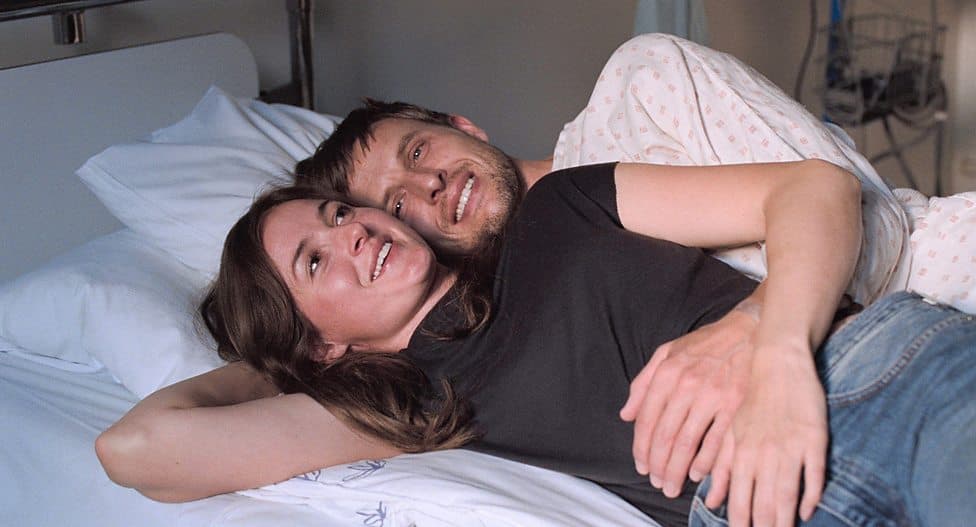
"I've also never been on a project where every single scene that we did would provoke a really strong emotion for someone on set," she adds. "It felt like we were making something really honest and trying to find parts of ourselves we either didn't like, or liked, but were ashamed of liking. It just felt like you got a bit less lonely from so many people recognising something together."
The film also has a mischievous sense of sexuality. In a party scene, Julie and Eivind, who both have partners, "kiss" by blowing cigarette smoke into each other's mouths. Its most famous moment, where Julie imagines running across Oslo to kiss Eivind, with everyone else frozen – a scene Trier created without special effects and with the help of volunteers standing still – gives the impression the city exists for Julie's desires.
Reinsve says that Trier drew on the French New Wave to show how chemistry between two actors could make everyday encounters compelling.
"He made me watch these films and the way they'd explored what the chemistry between two people could bring to the screen," she remembers. "Just truthfulness, not forcing anything, but how its lifelike existence on screen could be so magnetic. Playing with that was magical. And Joachim taught me so much during that shoot, like how to trust that the camera will pick up even small emotions."
Why her latest role is such a gear change
Her latest role as Lisbet in Fjord couldn't be more different to Julie or, Reinsve says, to herself. Based on a true story, it centres on a Christian family who move from Romania to Norway and are accused of physically assaulting their children. At a court hearing, questions are also asked about whether children should be raised according to the family's strict religious beliefs.
"Lisbet's so quiet," Reinsve says. "I've never played someone so still. She's never outspoken. She lets her husband talk on her behalf. I got curious about how it would feel [playing her], as she's so different to me. To go into those elements of a person and find compassion and be open, not judging them."
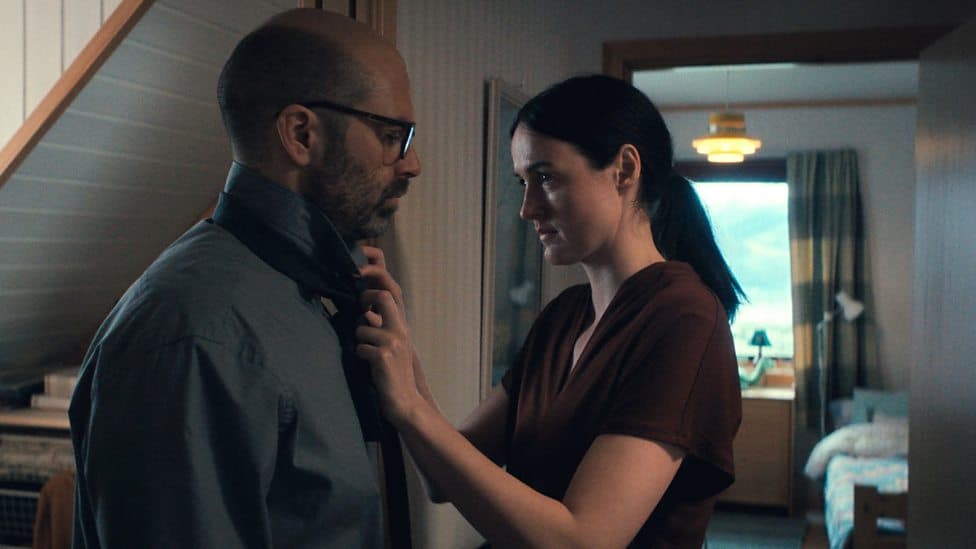
She adds that Mungiu was "kind of sceptical" about her playing the character at first, thinking that she might prefer to play Mia, a liberal lawyer who defends the family.
"But I was really just so taken by Lisbet," she says. "It's heartbreaking, a mother having her kids taken away. And the injustice she found because she was so judged by her environment was devastating."
More like this:
• Ethan Hawke on the 2001 role that 'changed my life'
• Hollywood stars reveal the films that mean most to them
• 12 of the best films to watch in November
Fjord has stirred debate with its depiction of a clash between liberal and conservative values. Mungiu has said that he is not "defending any ideology" with the film, and simply wants audiences to question their own assumptions. Reinsve says she agrees that "so many movies show you what to feel and what to think, but this tries not to. That's unusual".
Working with film-makers who truly challenge her like Mungiu, she explains, is one of the great rewards of the fame brought by The Worst Person in the World.
"There's not many [directors] who have the energy or the heart to make these kinds of films. Not many fight as hard as Joachim did to make The Worst Person in the World. And now I get to work with so many of these directors. That is a big privilege.”
Fjord is released in UK and Irish cinemas on 13 November 2026.
--
If you liked this story, sign up for The Essential List newsletter – a handpicked selection of features, videos and can't-miss news, delivered to your inbox twice a week.
For more Culture stories from the BBC, follow us on Facebook and Instagram.
Source: BBC CultureRead the original
Comments (0)
No comments yet. Be the first.