Cupra Raval
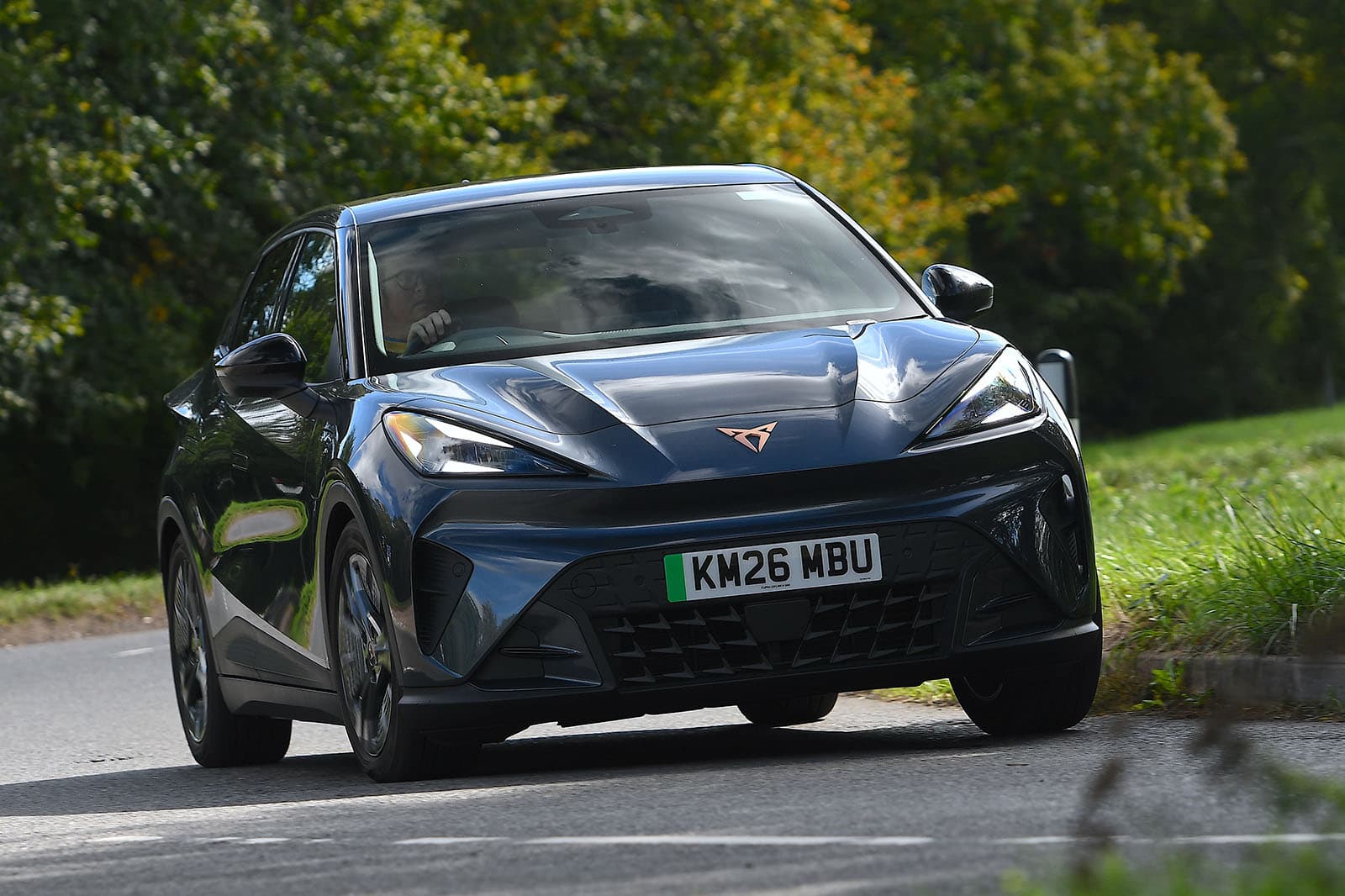
The VW Group’s electric assault on the compact car market starts here Affordable electric cars have been big news at the Volkswagen Group’s volume-selling brands for several years now.It was the conglomerate’s Spanish outpost, Cupra, that set the tone when it showed its racy Urban Rebel concept in 2021. That was the first public hint that the group was investing big in small EVs.Soon enough, we learned that the front-drive, supermini-class platform that the group was developing – first known to us as the MEB Entry, then as the MEB21 and finally as the MEB+ – would spawn cars for the Cupra, Volkswagen and Skoda brands. True to the original schedule, however, Cupra’s would come first. And here it is: the Cupra Raval electric supermini.In the end, this car has beaten its Volkswagen ID Polo sibling to UK roads by only a couple of months. Both cars are manufactured at Cupra’s headquarters in Martorell, near Barcelona, while their jacked-up, B-SUV crossover platform-mates, the Volkswagen ID Cross and Skoda Epiq, will enter production at Volkswagen’s Navarre plant, near Pamplona, soon.Now for the Autocar road test to fully scrutinise what the Volkswagen Group’s arrival into the market for small EVs is likely to bring. An appealingly low price might be the first thing you’re expecting. But while the Raval will soon enough be offered in sub-£25,000 form, the cheaper derivatives will follow the more expensive ones to forecourts. So our road test turns first to the middle of the Raval model range.If, on the other hand, you're more interested in the range-topping Raval VZ hot hatchback, check out our comparison test on it here.
Affordable electric cars have been big news at the Volkswagen Group’s volume-selling brands for several years now.
It was the conglomerate’s Spanish outpost, Cupra, that set the tone when it showed its racy Urban Rebel concept in 2021. That was the first public hint that the group was investing big in small EVs.
Soon enough, we learned that the front-drive, supermini-class platform that the group was developing – first known to us as the MEB Entry, then as the MEB21 and finally as the MEB+ – would spawn cars for the Cupra, Volkswagen and Skoda brands. True to the original schedule, however, Cupra’s would come first. And here it is: the Cupra Raval electric supermini.
In the end, this car has beaten its Volkswagen ID Polo sibling to UK roads by only a couple of months. Both cars are manufactured at Cupra’s headquarters in Martorell, near Barcelona, while their jacked-up, B-SUV crossover platform-mates, the Volkswagen ID Cross and Skoda Epiq, will enter production at Volkswagen’s Navarre plant, near Pamplona, soon.
Now for the Autocar road test to fully scrutinise what the Volkswagen Group’s arrival into the market for small EVs is likely to bring. An appealingly low price might be the first thing you’re expecting. But while the Raval will soon enough be offered in sub-£25,000 form, the cheaper derivatives will follow the more expensive ones to forecourts. So our road test turns first to the middle of the Raval model range.
If, on the other hand, you're more interested in the range-topping Raval VZ hot hatchback, check out our comparison test on it here.
Design & styling
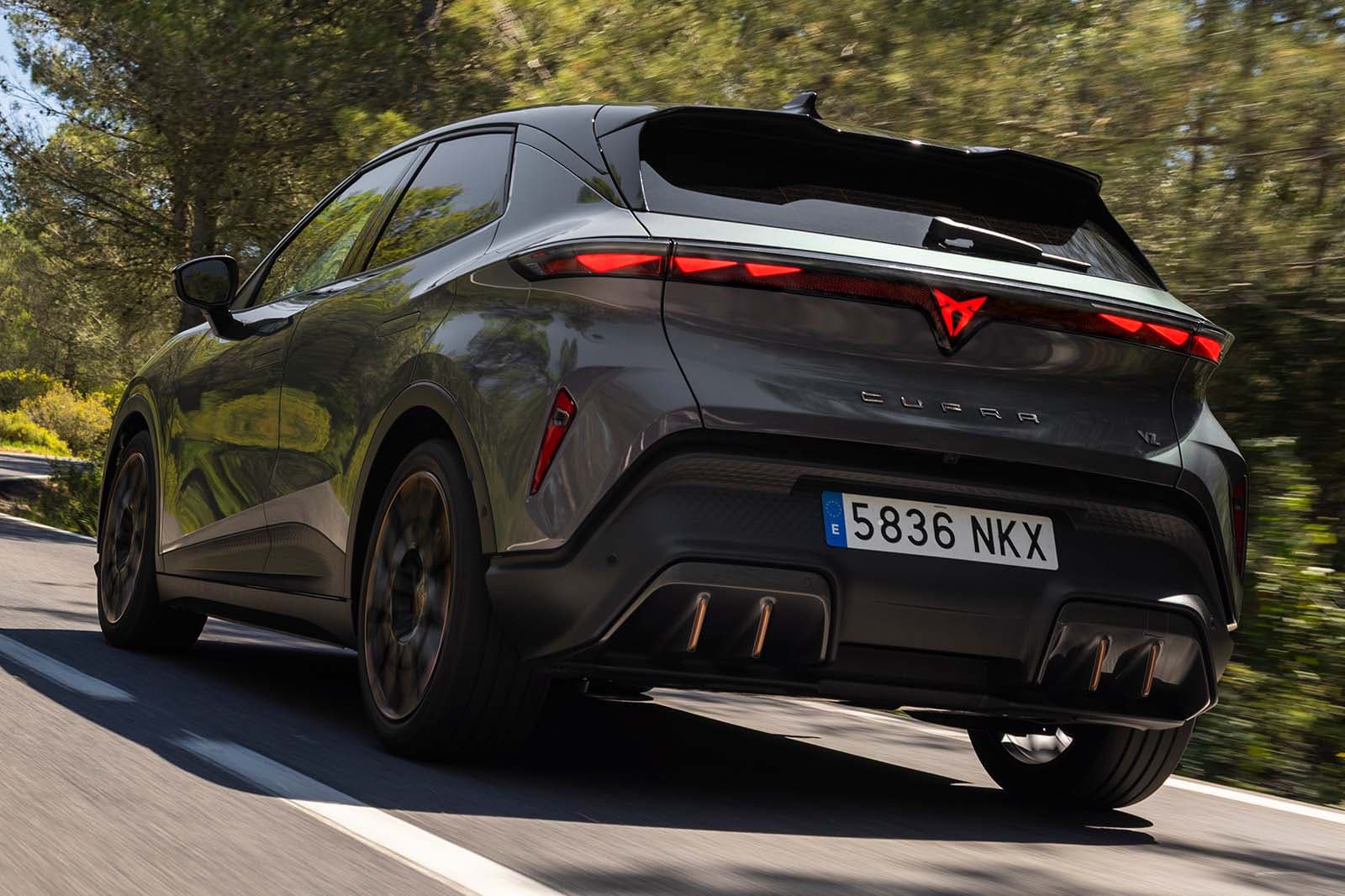
The Raval brings just a little bit of heft to the electric supermini market. At a smidge over four metres long and 1.5m tall, it actually has the same roof height as a Mini Aceman yet is still just about compact enough to pass itself off as a normal hatchback. It’s nowhere near as neat- or effete-looking as a Renault 5 or Mini Cooper E, but it’s not at risk of being mistaken for a crossover.
That’s important because the Raval, in line with Cupra’s established approach, is positioned as sportier than the average small electric car, even in its lower-tier versions. The brand calls this a “sport-forward” philosophy and, in addition to designing a car that it describes as “rebellious and expressive”, it has also striven to make the Raval look and drive like an enthusiast option. This extends to designing external proportions that, it claims, make the car look a little like a racing helmet, as well as taking decisions about suspension and steering configuration that should appeal to keen drivers.
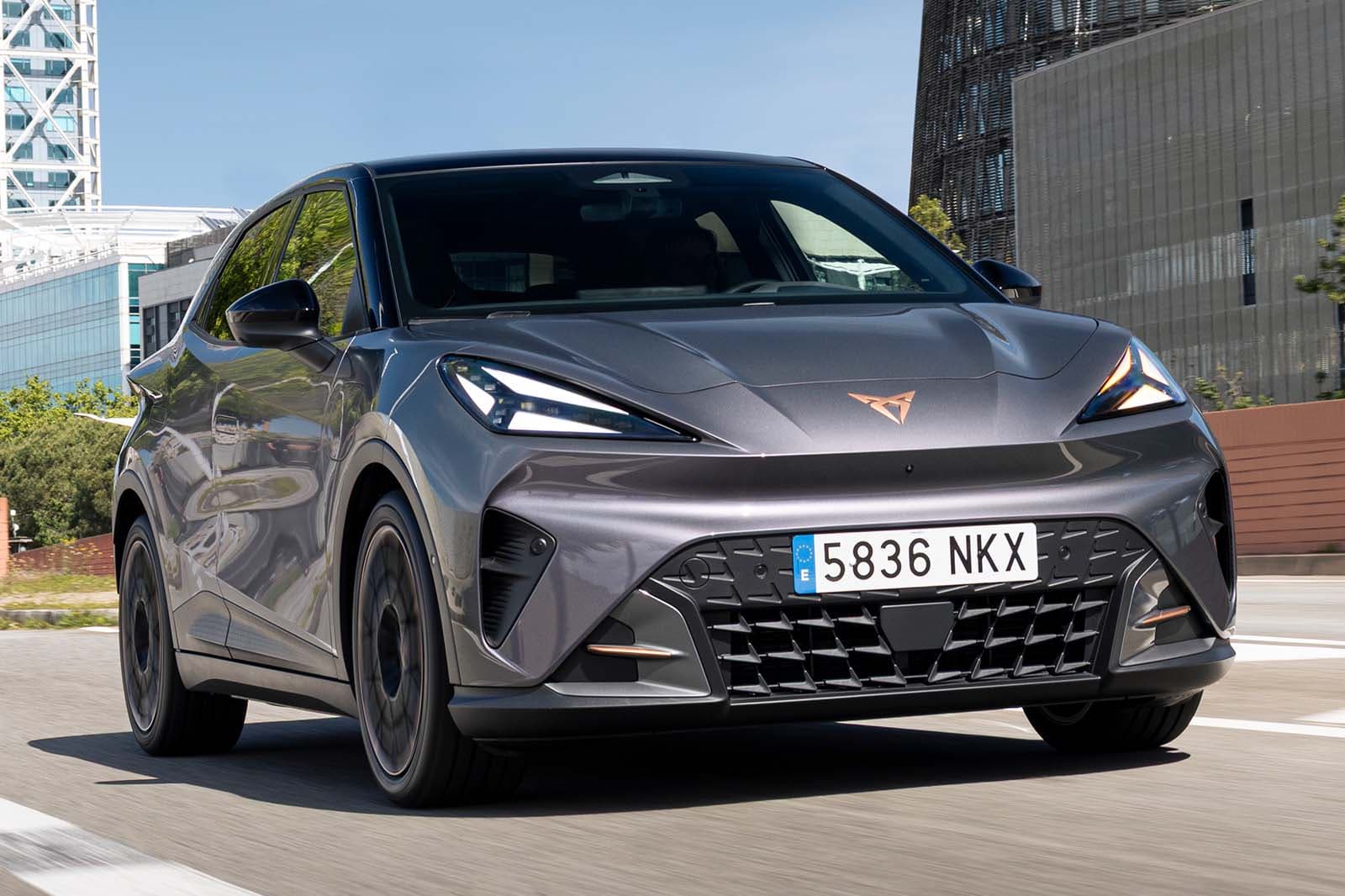
„The Raval’s matrix LED headlights are made up of numerous small elements, with much larger triangular DRL elements around them, all genuinely designed to look like eyes, which open as you unlock it and can even wink. Cutesy enough for you?“
The first such decision was to use the ‘sport chassis’ configuration designed and engineered by Wolfsburg as part of the MEB+ platform’s off-the-shelf technical offering. As a result, in all of its derivative guises except the bottom-rung Origin grade, the Raval rides 15mm lower on its coil springs than an equivalent ID Polo. It also means the axle tracks are 10mm wider, as well as bringing firmer spring settings and quicker ‘progressive’ steering.
Interior
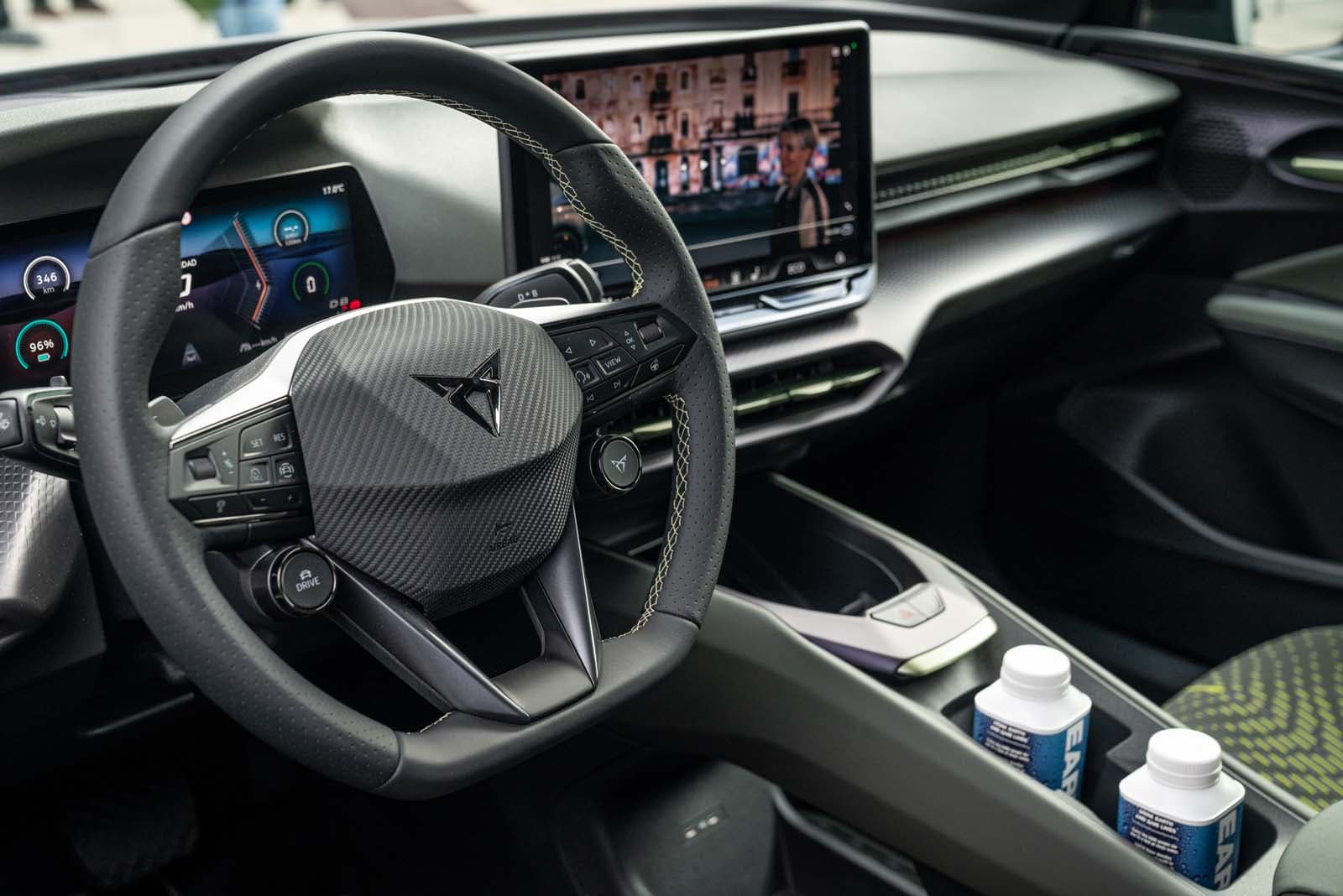
Cupra has aimed for a materially rich, sporty, pseudo-premium ambience with the Raval’s interior. Just as on the exterior, there are plenty of places where the brand’s trademark copper-bronze metallic trims are deployed, alongside interesting 3D-printed dashboard foils and, even in our mid-spec test car, sports seats with bucket-style integrated head restraints.
Upper trim levels of the car push the premium-tech appeal further still, using projected animated ambient lighting patterns for the door panels (although not in the V1 specification of our test car). However, there are places where the car’s materials look a lot less expensive. One such is the textured but shiny upper dashboard rolltop, which has a habit of reflecting its pattern, a little distractingly, onto the underside of the windscreen in bright daylight. Overall, though, this is among the more inviting and materially appealing interiors in the supermini class.
„The motorised pop-out door handles have a habit of popping back in after a short period, if you have got out for a moment and left the keys in the car. Don’t worry, just push on the forward end and they will pop out again.“
However, it’s particularly interesting that Cupra hasn’t followed the lead of sibling brands Volkswagen and Skoda in returning notably more physical switchgear to the cockpit than it has used in recent products. While both the ID Polo and Epiq each have a row of simple fixed buttons under the main multimedia screen, for easy access to ADAS functions, park assist, heater temperature and the like, the Raval retains touchscreen access for all of these. It also retains the often criticised touch-slider controller for audio volume and heater control (see Multimedia).
The driving position isn’t particularly low-set, even for an electric hatchback. But it is well configured, in front of carefully and conventionally positioned controls, and being adjustable and well supported by the front seat. Occupant space in the front feels quite generous by small car standards and storage space is likewise thanks to a roomy lower storage area in the split-level centre console, as well as good-sized armrest and door bins.
The Raval earns even more convincing and distinguishing practicality points for both back-seat and boot space. According to our measurements, it beats a Renault 5 for second-row space by significant margins and even levels with a Kia EV2 for head room and leg room. Adults of average height can sit behind each other quite comfortably and access involves no particularly tricky bodily contortions.
In the boot, meanwhile, a variable-height floor allows you to have a smaller cargo area flush with the loading lip or an expanded one whose capacity swells to 441 litres underneath the window line – which is the sort of carrying capacity you’d expect of a Golf-sized, C-segment hatchback.
Multimedia - 3.5 stars
The 12.9in ‘One Infotainment’ touchscreen in the Raval isn’t a great change of direction compared with the firm’s other recent models, and in some ways – with a physical cursor controller, for example – it could be made simpler to operate and a little less distracting.
It does grant access to key systems quite easily, though, and can be configured to keep the shortcuts for the menus you most commonly use on the periphery of the home screen, so you’re never more than a couple of inputs from any given adjustment or function.
Our V1 test car came with a factory navigation system, but base-spec Origin models won’t so you’ll need smartphone mirroring for navigation. (A little counter-intuitively, Origin is also the only grade of the Raval that doesn’t include wireless smartphone charging.) The factory nav works well and is easy to program, as much as you are likely to prefer navigating via your mobile phone.
On that score, the system had a habit of forgetting an Apple CarPlay connection between journeys and needing re-pairing, but it worked fine once it was paired.
Engines & performance
The Volkswagen Group marques have all become practised hands at providing the routes to easy drivability that you want in an EV. And Cupra hasn’t left any of them off the Raval just because it’s little and relatively cheap.
Our test car had shift paddles for manual control of brake energy regeneration, making it easy to ramp up and down to keep tabs on the car’s forward momentum and coasting characteristics. It’s also very easy to toggle to a one-pedal- style motor calibration if you want to, just by flicking the car’s column-shift drive selector into ‘B’.
„Cupra offers two drive mode buttons when one would do. Instead, one of the ‘satellite’ buttons under the wheel spokes could be used for a more useful, user-defined shortcut key.“
All of which makes the Raval perfectly agreeable, and easy to tune to your particular preference. You don’t need to learn to trust its adaptive regeneration if you don’t want to or constantly to feather its accelerator to prevent it from scavenging forward impetus in out-of-town running. This isn’t an EV that’s likely to rub anyone up the wrong way.
Performance feels fairly fast. While the average £25,000-£30,000 EV manages 60mph from rest in somewhere between eight and nine seconds, the 208bhp Raval ticks it off in 6.3sec. So it’s keen enough on paper, even if, in the wider context of the modern electric passenger car, it’s not exactly very remarkable or memorable to experience first hand.
In the same breath, however, there is an assertiveness here beyond what you’re likely to expect for electric supermini outlay. The Raval is urgent enough to seize just about any opening in urban traffic you care to squirt it into. It also still feels quite brisk when overtaking out of town and up to motorway speeds, never seeming to run out of puff at high speeds as small EVs can. Where a Renault 5 needs 7.6sec to get from 50-80mph and a Kia EV4 from the class above 6.9sec, the Raval manages it in only 5.3sec.
Ride & handling
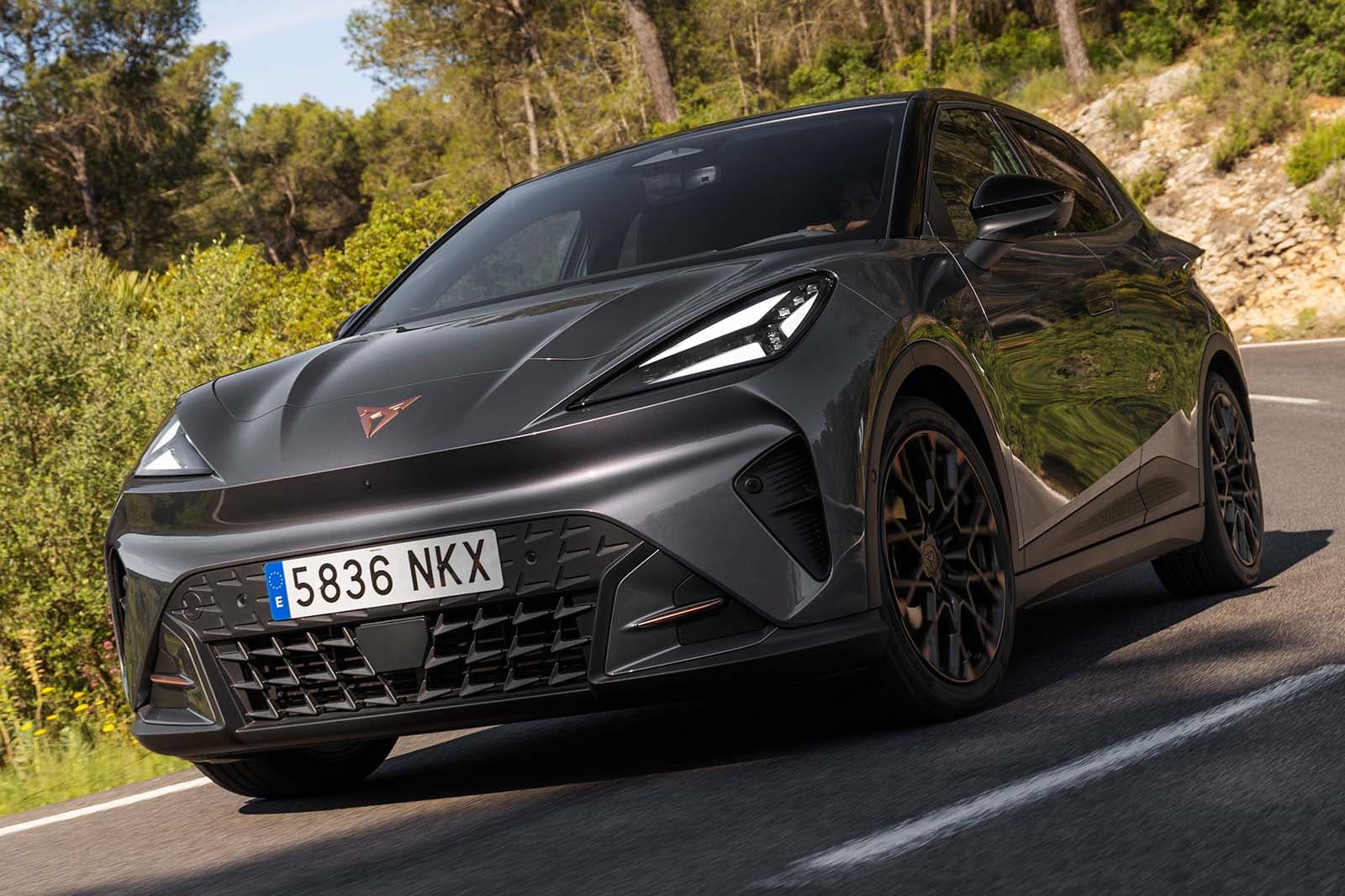
Aside from our V1-spec test car, we have so far tested the Raval on UK roads in only range-topping VZ trim. Only in that latter form can the car be had with Cupra’s DCC adaptive dampers or with the same VAQ locking front differential that has appeared on the VW Golf GTI for several model generations now.
Those bits of hardware make a clear and significant difference to both the versatility and the outright driver appeal of the Raval. Without them, the car certainly has its moments. It’s agile and level-handling, carrying and controlling its mass at speed closely, gripping through corners that bit more keenly than the average supermini and always seeming to have that little bit of body control and tenacity up its sleeve, to go with its well-stocked back-road performance reserves.
„The Raval is an unusual sort of supermini in that, if you want a more comfortable ride and better dynamic versatility from it, you’re actually best advised to buy the sportiest one: the VZ.“
The car does exact a price for all of that, however, and it’s the degree of ride comfort. Choppier UK B-roads can cause the body to fidget and pitch a little, even at ordinary speeds. Outright wheel travel seems to come up short around town too, when the axles look to deal with bigger inputs such as ramps or sleeping policemen without jostling occupants around.
In short, there isn’t the fluency or buoyancy of a Renault 5’s clever chassis tune here nor, quite, the dartiness of an electric Mini Cooper. The Raval is probably closer to the latter than the former. It can be fun, but its sporting priorities certainly leave their mark.
MPG & running costs
The Raval is at a bit of a disadvantage in the UK market because, unlike some of its rivals, it doesn’t qualify for the full £3750 support of the Electric Car Grant but gets £1500 instead. So while long-range versions of the likes of the Renault 5, Kia EV2 and the Hyundai Ioniq 3 will be available for less than £25,000, buyers will either have to accept the short-range version of the Raval for a comparable price or stump up more like £30k. (The Volkswagen ID Polo will be in a similar position.)
It remains to be seen whether Cupra can address that situation, either by qualifying for the ECG in full or by sweetening its personal finance offering. But, in many respects, it can certainly argue that the Raval’s is a price worth paying.
„Cupra’s paint palette is dominated by dark metallic shades like our test car’s Magnetic Tech Grey, which at least complements the copper detailing nicely. You’ll know a car with the special Plasma Iridescent, cyan-indigo-red flip paint when you see one.“
Our 52kWh V1 test car recorded better touring-schedule-test-derived electric test range than either a Renault 4 or 5, or a Mini Aceman SE, Kia EV2, Fiat 600e, MG 4 Urban or Ford Puma Gen-E. Mix just a little lower-speed running in among the higher-speed use and this would be fairly comfortably a dependable 200-mile, longer-range, daily-use prospect – something we’ve seldom found of EVs in this class. Stick to intra-urban speeds and, as our everyday test result shows, you’d get more like 300 miles from it.
The car will charge from the mains at up to 11kW, and in our DC rapid charging testing, we recorded a weighted average charging rate of 92kW. By comparison, most of its rivals manage more like 70kW.
Verdict
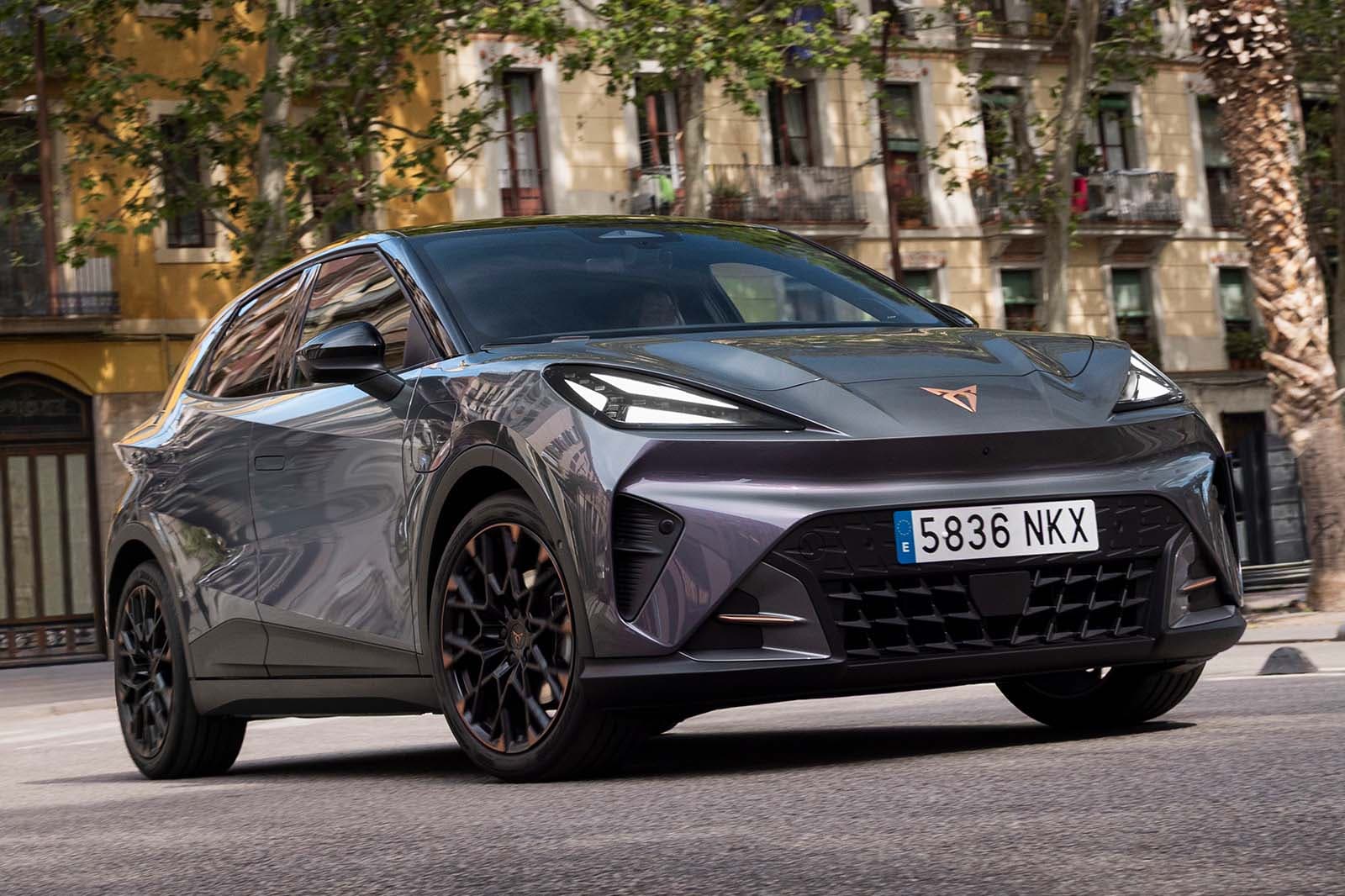
Despite its sporty agenda, and the way it clings to its touchscreen-first controls and digital special effects, the Raval still feels like a more versatile and grown-up electric supermini. Whether it’s VW (which developed the platform) or Cupra (which designed and engineered the ‘top hat’) that deserves most credit, the result is very convincing.
The Raval has better efficiency and range than its rivals, and faster charging; better practicality than most; excellent, configurable EV drivability; and a tech-filled interior, finished with a flourish.
The car has more assertive performance than its competitors too, and the grippy, game handling to match. Other compact EVs may cost less, have more charm, or have more balanced dynamic priorities. From both a technical and practical standpoint, however, this one is simply better.
Source: AutocarRead the original
Comments (0)
No comments yet. Be the first.